ROSEN will deploy its Non-Intrusive Pipeline Assessment (NIPA) service across approximately 221 kilometres of gas pipelines operated by Amber Grid, Lithuania’s gas transmission system operator. The three-year contract is intended to improve pipeline integrity assessments for assets that cannot accommodate conventional in-line inspection tools, without interrupting gas transmission.
Announced by ROSEN on August 27, 2026, and confirmed by Amber Grid the following day, the agreement expands the use of non-intrusive assessment techniques to support pipeline integrity management. The programme combines external field measurements, historical operating information and data analysis to help identify areas requiring further investigation.
Combining Field Measurements and Pipeline Integrity Data
ROSEN’s NIPA service integrates construction and operating records, magnetic surveys, cathodic protection data and geographic information systems (GIS). Combining these sources provides a broader view of pipeline conditions and helps operators assess potential integrity concerns along a pipeline route.
The service uses the combined datasets to identify areas of interest and prioritise excavations and non-destructive testing (NDT) inspections. Field verification and integrity management planning are also included in the offering.
The approach is particularly relevant to pipelines where conventional in-line inspection (ILI) is restricted by infrastructure or operating limitations. Such constraints can include diameter changes, bends, valves, the absence of launching and receiving facilities, or other conditions that prevent the passage of inspection tools.
Assessing Pipelines Without Conventional In-Line Inspection
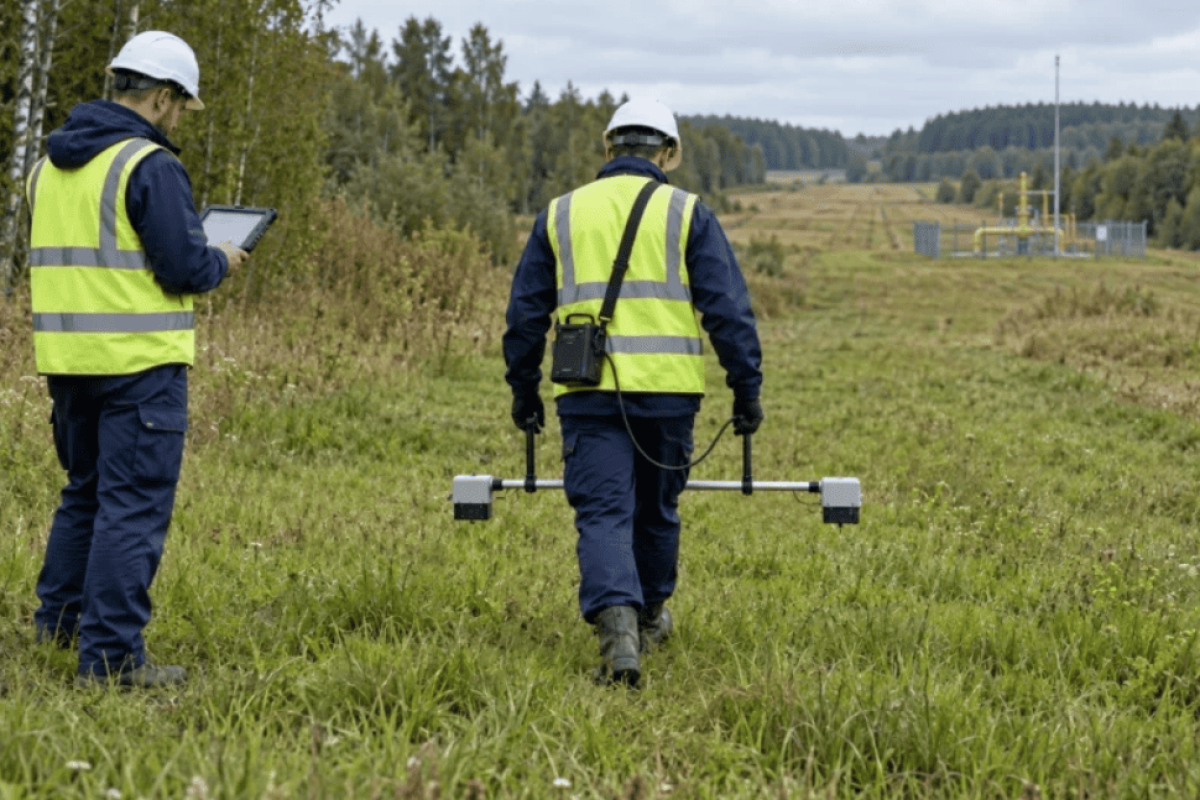
A key element of NIPA is large stand-off magnetometry (LSM), which uses above-ground magnetic measurements to help assess selected pipeline integrity concerns. The technique can support investigations of indications associated with mechanical stresses and geometric anomalies in buried pipelines.
In a technical case study, ROSEN described using above-ground magnetic measurements and comparing their locations with previous records to investigate potential pipeline movement. This illustrates an application of the technology, rather than a reported finding from the Amber Grid programme.
By combining external measurements with available asset information, operators can develop a more informed picture of pipeline condition and determine where additional examination may be warranted.
Data Analytics and Artificial Intelligence in Integrity Assessment
The programme is supported by ROSEN’s Integrity Data Warehouse, which the company says contains information from more than 26,000 in-line inspections conducted worldwide. This historical data resource supports the development, validation and interpretation of models assisted by artificial intelligence (AI).
Historical inspection data can provide context for assessing indications, but conclusions about individual pipeline sections must also account for the available asset records, survey conditions and verification findings. The aim is to translate the information collected into practical priorities for further inspection and integrity management.
Field verification and NDT inspections can provide additional evidence for evaluating indications and determining whether maintenance or further assessment is required.
Amber Grid Expands Its Experience with NIPA
Amber Grid Chief Executive Officer Nemunas Biknius said the operator had tested the technology in the previous year before expanding its application through the new contract.
The three-year programme represents a broader deployment of the approach across the operator’s gas transmission network. It is intended to help Amber Grid assess pipeline sections that are difficult to inspect using conventional internal inspection tools while supporting decisions on asset integrity.
Results from the 221-kilometre programme, including confirmed defects, specific inspection findings or quantified reductions in pipeline risk, have not yet been reported. The effectiveness of the programme will therefore be assessed through its verified findings and the maintenance or integrity decisions they support.
Reference: https://inspenet.com/en/news/rosen-nipa-amber-grid-gas-pipelines/