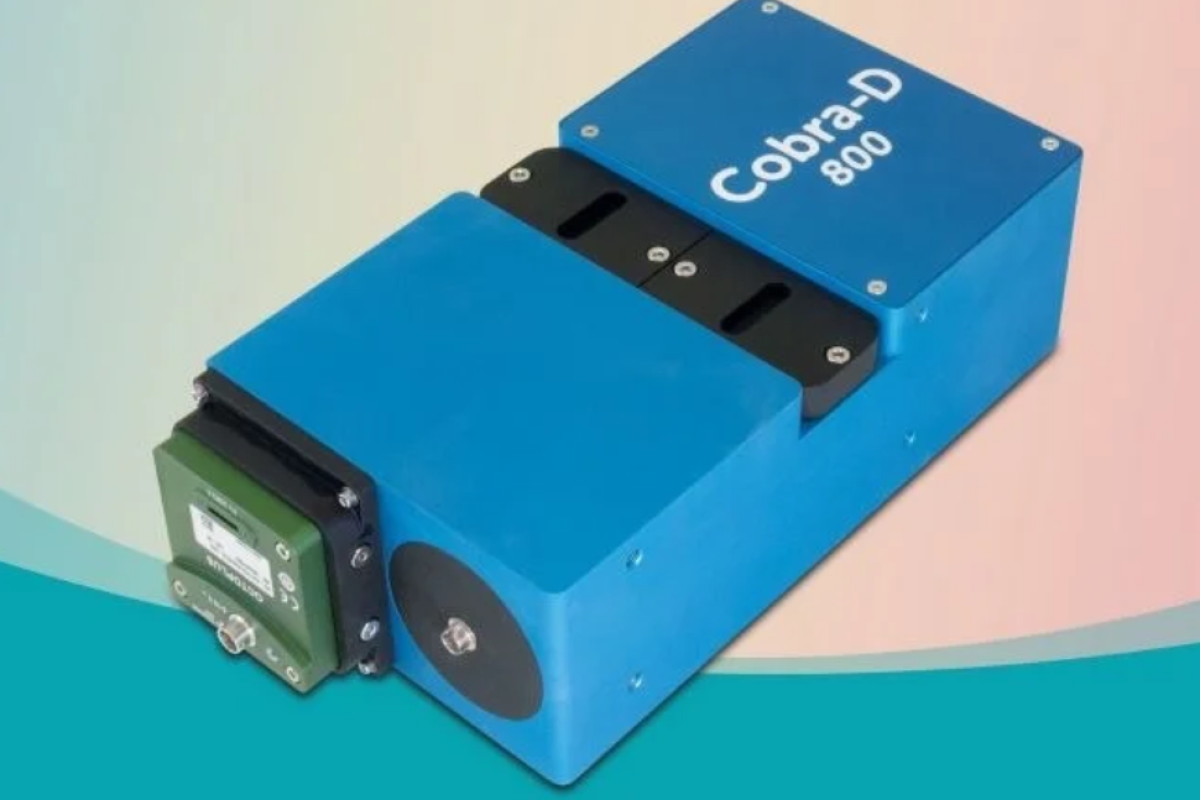
Wasatch Photonics has introduced a new 23 nm bandwidth option for its Cobra-D 800 optical coherence tomography (OCT) spectrometer, extending imaging depth to 15.5 mm. Centred at 842 nm, the new option offers a spectral resolution of 0.01 nm and is designed to support industrial and medical OCT applications while retaining the cost advantages and simplicity of 800 nm silicon detection.
The expanded imaging range is relevant to applications including laser welding, laser machining, surface and microelectronics inspection, non-destructive testing (NDT) and eye imaging.
Deeper Imaging for Industrial Inspection
The new 23 nm bandwidth option provides OCT systems with an imaging range of 15.5 mm. In laser welding applications, the additional depth can improve visibility into the weld at the centre of the scan field and provide a wider usable work area towards its edges.
With a non-telecentric scan lens, the optical path length increases towards the edges of the field. Additional imaging depth can help maintain visibility across a larger area, allowing users to cover more of the field with the same lens or retain additional depth margin over an existing field of view.
The same extended imaging range can benefit other applications, including laser machining, surface inspection, microelectronics inspection, NDT and ophthalmic imaging.
Compact Design and System Compatibility
The 23 nm option uses the same compact housing as existing Cobra-D spectrometer versions. Existing Cobra-D 800 users can transition to the deeper-imaging version without changing their optics or mechanical configuration.
Like other Cobra-D 800 spectrometers, the new option weighs less than 6 kg and supports operating speeds of up to 250 kHz. Software development kits are available for C++, C#, LabVIEW and MATLAB, supporting integration into OCT systems and OEM equipment.
Designed for Industrial Integration
The spectrometer is built using Wasatch Photonics’ patented volume phase holographic (VPH) gratings and in-house manufacturing processes. According to the company, these technologies provide the sensitivity, low roll-off and stability required for production environments.
By extending imaging depth while retaining the existing housing and system compatibility, the new Cobra-D 800 option gives OEMs additional flexibility in designing OCT systems for industrial inspection and medical imaging applications.
Reference: https://www.azooptics.com/News.aspx?newsID=30810