FBR Limited has completed Factory Acceptance Testing (FAT) of its first Mantis™ automated welding unit, with independent non-destructive testing (NDT) confirming that the test welds met the acceptance criteria of AWS D1.1/D1.1M:2025. The company disclosed the outcome on October 8, 2026, following successful testing of the system's welding performance and motion control capabilities.
InSpec NDT Pty Ltd conducted the independent weld inspections, assessing the test weldments against visual, surface, volumetric and magnetic particle inspection criteria. The results confirmed that the welds satisfied the applicable acceptance requirements, supporting the system's intended use in critical structural steel applications.
Independent NDT Confirms Weld Quality
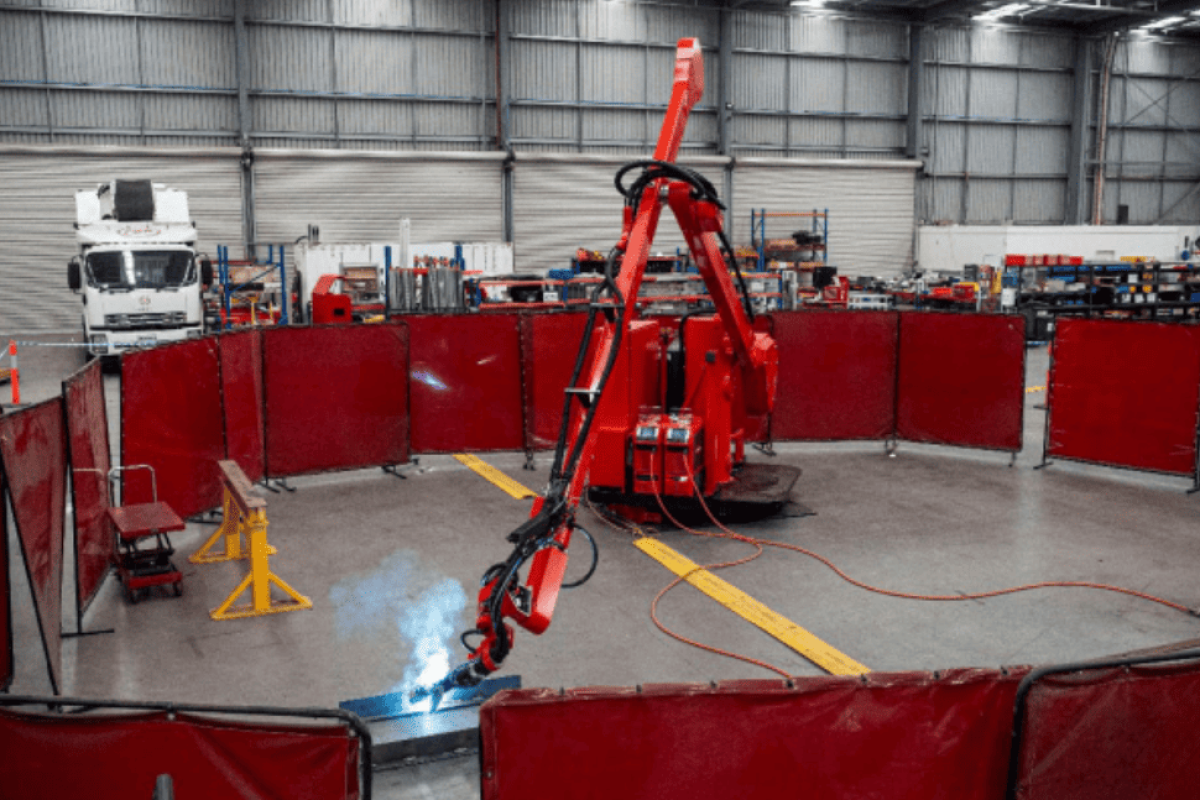
According to FBR, the Mantis™ unit satisfied all Factory Acceptance Testing parameters, demonstrating automated twin-wire welding, rapid travel speeds and consistent weld deposition. Testing also validated its 8-metre reach and integrated Dynamic Stabilisation Technology® motion compensation.
The independent NDT assessment was conducted by InSpec NDT Pty Ltd. The inspection covered multiple aspects of weld quality, including visual examination, surface inspection, volumetric testing and magnetic particle inspection.
The welds were confirmed to meet the acceptance criteria specified in AWS D1.1/D1.1M:2025, the structural welding code for steel. The results provide an independent assessment of the weld quality produced during the FAT process.
First Mantis™ Unit Completes Factory Acceptance Testing
Following satisfaction of the FAT requirements, the purchase order for the first Mantis™ unit became unconditional. FBR stated that the testing demonstrated the system's ability to perform automated welding while maintaining consistent weld deposition and motion stability.
The successful testing marks a milestone in the development and commercialisation of Mantis™, which is designed for industrial welding applications.
Sales Agreement Revised for Perth Pilot Programme
FBR has varied the sales contract for the first Mantis™ unit, which is now held by Industrial Robotics LLC rather than State Machinery & Equipment Sales. Industrial Robotics LLC, founded by the owner of State Machinery, was appointed FBR's non-exclusive distributor for the United States and Canada in July 2026.
Under the revised arrangement, Industrial Robotics LLC paid a US$198,000 deposit to secure the unit. The machine will remain in Perth, Western Australia, through the remainder of 2026 for a paid pilot programme and customer demonstrations before being shipped to State Machinery's Mississippi River facility.
FBR said several large industrial companies have provided details of test pieces for trial welding at its workshop, allowing the system to be evaluated using real-world geometries.
Demonstrations Planned for Industrial Customers
The Perth pilot programme is intended to give prospective customers an opportunity to observe Mantis™ in operation before delivery. According to FBR, immediate shipment would result in approximately eight weeks of operational delay due to ocean freight and US import processing.
Industrial Robotics LLC will bring prospective US customers to Perth to witness the system's performance. Demonstrations with Tier 1 companies in mining, shipbuilding and heavy fabrication are planned for the current quarter.
The programme will provide additional opportunities to demonstrate the unit's automated welding capabilities and the weld quality verified during factory acceptance testing.
Second Mantis™ Unit Under Construction
FBR also confirmed that construction of a second Mantis™ unit is underway. The completion of FAT for the first unit, combined with independent NDT verification and the planned pilot programme, represents a further step in the company's commercialisation efforts.
The independent inspection results are particularly relevant to industrial applications where weld quality and compliance with recognised structural welding standards are important considerations. The Perth programme will allow prospective customers to observe the system before the first unit proceeds to its planned destination in the United States.