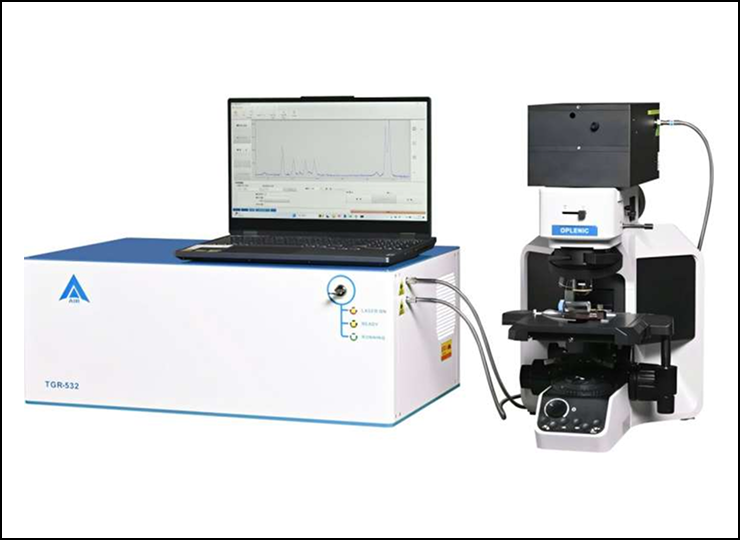
Researchers at the Aerospace Information Research Institute of the Chinese Academy of Sciences (AIRCAS) have developed a non-destructive spectrometry technique capable of revealing the internal chemical composition of fragile archaeological ivory at the micrometer scale. The research, led by Prof. Wang Zhenyou, introduces a microscopic time-gated Raman spectrometer designed to overcome fluorescence interference—one of the major limitations of conventional Raman analysis in heritage science. The study has been published in ACS Applied Materials & Interfaces.
The breakthrough is particularly significant for the study and conservation of ivory artifacts excavated from the Sanxingdui Ruins in China, which date back more than 3,000 years and are central to understanding the ancient Shu civilization. Although these artifacts often appear intact on the surface, prolonged exposure to groundwater, soluble salts, and microbial activity during burial can cause extensive internal degradation. This makes non-destructive testing (NDT) methods essential for accurate diagnosis without risking further damage.
Raman spectroscopy is widely used to identify molecular composition in cultural heritage materials. However, archaeological ivory frequently produces strong fluorescence when exposed to laser excitation, overwhelming the weaker Raman signal and rendering traditional measurements ineffective.
To address this challenge, the AIRCAS team developed a time-gated Raman spectroscopy approach that distinguishes Raman scattering from fluorescence based on their different temporal characteristics. Raman signals occur almost instantaneously after laser excitation, while fluorescence persists for a much longer duration. By synchronizing an ultrashort detection window with the Raman signal, the system effectively suppresses fluorescence and retrieves clear spectral information from highly fluorescent samples.
Through combined hardware innovation and algorithm optimization, the researchers improved fluorescence suppression efficiency, enhanced spatial localization of chemical components, and reduced system costs—an important step toward broader adoption of time-gated Raman NDT in archaeological and heritage applications.
The instrument was tested on four ivory fragments excavated from the Sanxingdui site. Under conventional continuous-wave Raman spectroscopy, two of the samples produced little to no usable spectral data due to fluorescence. In contrast, time-gated Raman measurements suppressed fluorescence interference and improved the signal-to-noise ratio by more than 20 times in strongly fluorescent specimens, enabling detailed internal compositional analysis.
The results revealed that ivories from different burial environments show marked differences in organic content, mineral crystallinity, and corrosion severity. The study also identified evidence of metal-ion infiltration and non-metal ion substitution—such as sulfate replacing components of hydroxyapatite—as key mechanisms driving deep ivory degradation. In some samples, spectral features suggested possible heat exposure, indicating potential fire-related damage.
The findings demonstrate that time-gated Raman spectroscopy can deliver molecular-level insights into the long-term deterioration of ancient ivory while remaining entirely non-destructive. Beyond ivory conservation, the technique is expected to be applicable to a wide range of archaeological and heritage materials where fluorescence has previously limited spectroscopic analysis, reinforcing the growing role of advanced NDT technologies in cultural heritage science.
Reference: https://phys.org/news/2026-01-destructive-spectrometry-technique-fragile-archaeological.html