Corpus Christi Army Depot (CCAD) has launched the first organic composite repair program for helicopter blades in the United States, strengthening domestic sustainment capabilities for the US Army’s rotary-wing fleet and supporting long-term readiness of the Black Hawk helicopter platform.
The initiative responds to sustained demand driven by the Army’s enduring Black Hawk fleet and forms a critical part of CCAD’s remanufacture and sustainment operations for legacy aviation platforms.
“Composite blades aren't going anywhere. CCAD is a very important part of the industrial mix, and the depot takes pride in our products,” said COL Kevin Considine, Commander, Corpus Christi Army Depot.
Strengthening Quality and Readiness
The new composite blade repair capability is a key component of CCAD’s Depot Product Verification Audit, a specialized quality assurance process conducted by higher Army echelons to ensure that parts manufactured or overhauled at the depot meet exact engineering and safety specifications before returning to the operational fleet.
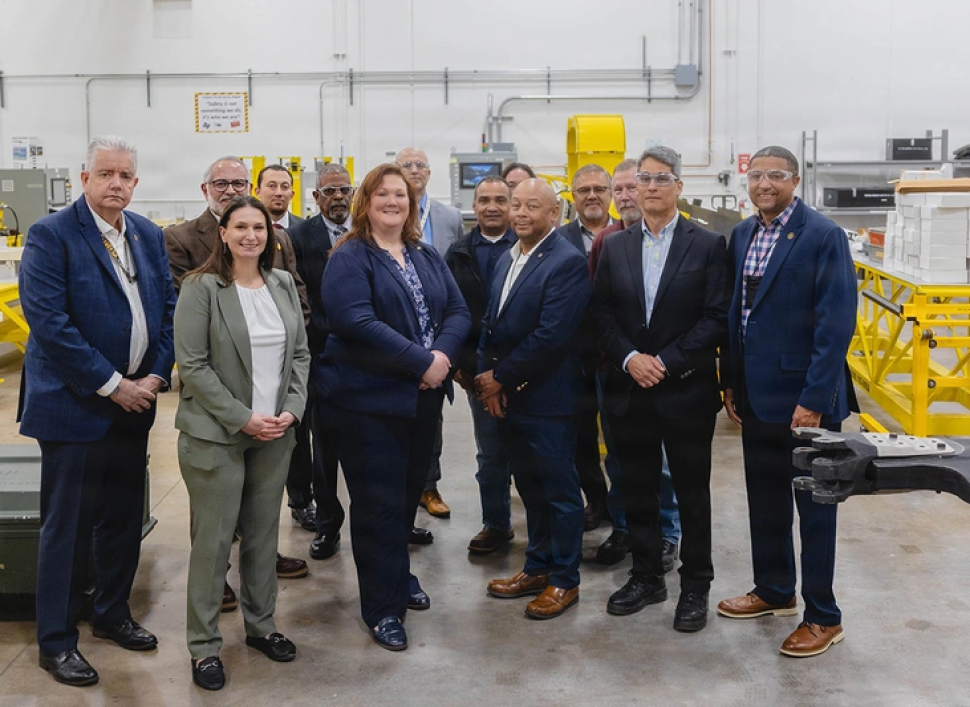
As part of the program launch, CCAD hosted Jennifer Martone, Program Director for Black Hawk Sustainment and International Helicopter at Sikorsky, a long-standing industry partner.
“The Sikorsky name is trusted to execute some of the most demanding military missions. That trust is earned through decades of excellence, and it continues to set the standard for rotary wing aviation,” said Roderick Benson, Deputy and Chief Operations Officer at CCAD.
Martone’s visit marked her first to the depot and highlighted the importance of CCAD’s specialized capabilities, including non-destructive testing (NDT), which allows inspectors to identify internal defects such as cracks, corrosion, or heat damage without disassembling components.
“What stands out about our work with Corpus Christi Army Depot is our shared focus on the warfighter,” said Martone. “Our visit to CCAD reinforced how our combined expertise keeps Army Aviation mission-ready whenever it’s called.”
Long-Term Industry Collaboration
The collaboration between CCAD and Sikorsky is underpinned by a Direct Sales Partnership Agreement (DSPA) signed in 2018, which enabled joint work on the M-model blade program.
“The process took several years and was delayed through a series of setbacks such as COVID, supply chain, and tooling issues, and now the depot has received three M-model blades,” said Lyndon Smiling, DSPA Program Manager.
“We are grateful for the opportunity to support Sikorsky as a partner, and we take pride in contributing to a legacy that serves those who serve,” said Benson.
Advanced Repair Capabilities
CCAD categorizes rotary blade repairs into three levels: full overhaul, Category 2, and Category 3. Full overhauls involve stripping blades to their core, inspecting internal structures, replacing leading-edge strips, and rebalancing to industry standards. Category 2 repairs address significant non-structural damage, while Category 3 repairs involve complex structural reinforcement using specialized tooling. Non-destructive testing is integral across all repair processes.
The new capability positions CCAD to mitigate future production risks associated with parts shortages and enables the depot to expand its role as a gatekeeper for airworthiness, ensuring that all aircraft components meet stringent safety standards before entering service.
The launch aligns with the Army’s Continuous Transformation framework, which integrates near-term, mid-term, and long-term modernization efforts to ensure adaptable, resilient, and mission-ready forces.
With the introduction of organic composite blade repair, Corpus Christi Army Depot further reinforces its role as a critical pillar of Army Aviation sustainment and industrial readiness.