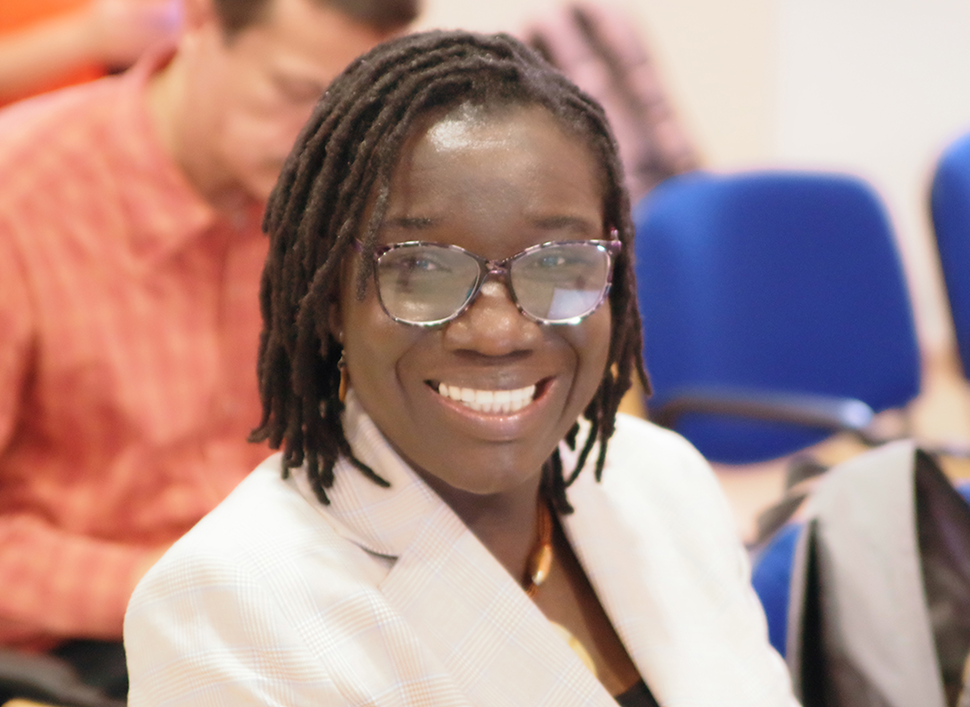
The International Atomic Energy Agency (IAEA) continues to spotlight diverse career paths that advance its mission of Atoms for Peace and Development, and one such journey is that of Hannah Affum — a chemical engineer turned nuclear scientist whose work in radiotracers and non-destructive testing is helping strengthen industrial safety, infrastructure resilience, and disaster preparedness worldwide.
Raised in Ghana, Affum’s fascination with science began early. “I was fascinated by reactions — how combining substances could create new colours, even explosions,” she said. Excelling in mathematics and chemistry, she pursued chemical engineering, inspired by her aunt, the first physicist in her family. “She showed me science wasn’t just a career; it was a way to solve problems,” Affum said.
After completing her bachelor’s degree, Affum joined the Ghana Atomic Energy Commission (GAEC) during her national service, where her interest in air pollution monitoring deepened. She later completed an MPhil at the University of Ghana, applying nuclear activation analysis to study biomarkers of heavy metal exposure. “That was my turning point,” she recalled. “I realized engineering could directly improve lives.” This research led her to GAEC’s radiotracer laboratory, where she worked alongside industrial experts to advance radiotracer applications across Ghanaian industries.
Despite early scepticism about her career choice, Affum credits strong mentorship and family support for her progress. Professor Francis Allotey, a mathematician and nuclear physicist at GAEC, played a pivotal role in encouraging her to publish, present at conferences, and mentor other women in science. Her parents also played a defining role, shaping both her curiosity and communication skills. “He taught me to communicate complex ideas simply. Science must serve the public,” Affum said. “And my mum was my biggest fan!”
Affum’s path to the IAEA was unexpected. “I thought it was out of reach,” she said. Encouraged by international mentor Professor Jovan Thereska, she applied and joined the IAEA in 2022 as an industrial technologist. In this role, she uses radiotracer technology and non-destructive testing (NDT) to help industries track material flow through pipelines and reactors, detect infrastructure defects, and strengthen disaster preparedness systems.
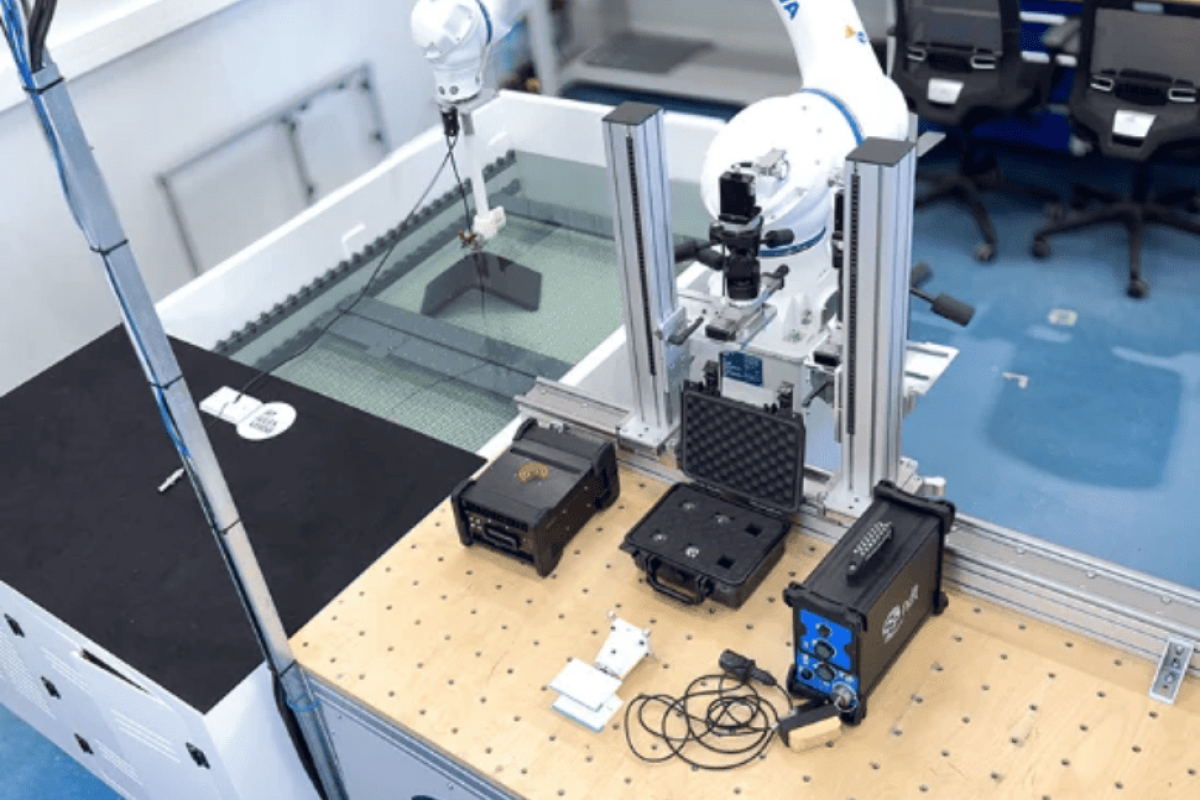
A major milestone in her career came in 2024, when she launched the IAEA’s Non-Destructive Testing Centre in Seibersdorf, Austria. “After years of planning post-Fukushima, we now have a hub to train countries in NDT emergency response,” she said. The centre equips nations — particularly those vulnerable to natural disasters — with advanced tools to inspect critical civil infrastructure safely and accurately. “It’s about saving lives before crises strike,” Affum said.
Beyond her technical work, Affum is a strong advocate for women in STEM. Through Women in Nuclear Ghana, she mentors young women and promotes early exposure to mathematics and science. “Many girls think STEM is ‘too hard,’ but it’s about passion, not innate genius,” she said. She also addresses misconceptions around radiation, noting its wide-ranging benefits in healthcare, agriculture, and industry. “Yes, it can be harmful if misused, but its benefits — in cancer treatment, agriculture and industry — are transformative.”
Outside the laboratory, Affum and her husband mentor underprivileged youth in Ghana, reflecting her commitment to social impact. “If I weren’t a scientist, I’d be a social worker,” she said. “Empowering people is my purpose.”
The IAEA continues to advance gender equality through targeted programmes such as the Marie Sklodowska-Curie Fellowship Programme and the Lise Meitner Programme, which support women at different stages of their nuclear science careers. Affum’s journey stands as a testament to how curiosity, resilience, and opportunity can drive scientific impact — and inspire the next generation of women in STEM.
Reference: https://www.myjoyonline.com/hannah-affum-breaking-barriers-with-radiotracers-and-resilience/