Almost no failure is sudden. What looks like a single dramatic event is usually the last visible moment of a long, quiet process that remains unnoticed.
Every machine that seizes without warning, every pipeline that suddenly leaks, every structure that cracks overnight, was once stable. It was carrying its load and running at rated speed for months without any incident, but that equilibrium isn't silent. A genuinely stable system still produces a faint, steady signature — the low-level settling of a new weld, the bedding-in of a bearing surface — quiet and, on its own, nothing to worry about.
The trouble starts almost invisibly at a microscopic scale — an internal stress concentration, a moment of external overload, or simply corrosion at a very slow pace begins its work. A handful of grains separate; a microscopic void nucleates. None of it trips an alarm — but each event is a tiny release of stored energy, and each one can be heard.
As these microscopic events accumulate, they do more than simply make the system "unstable" — they change its behaviour. A stress-corrosion site grows into a crack that propagates under normal service loads. A corroded wall thins until it can no longer hold pressure without leaking. A worn contact surface generates enough friction and vibration to feed its own further wear. Each is now a genuinely dynamic process — self-sustaining, accelerating, no longer waiting for an external trigger. The system has transitioned from a relatively stable state into an actively evolving damage state.
Acoustic Emission (AE) is a non-destructive technique to capture this crossing, detecting the events behind crack initiation, corrosion, and wear early enough for the transition to still be a warning, not a postscript. Consider a high-pressure pipeline at steady state, last inspection clean: deep in the wall, a fatigue crack has just extended by a few micrometres, too small to see, too early for any vibration trend — yet not silent. The release of stored elastic strain energy generates a transient stress wave, and an AE sensor detects it almost instantly: the material has communicated something no routine inspection could reveal — that damage is actively progressing.
This is what distinguishes Acoustic Emission from almost every other Non-Destructive Testing (NDT) technique. Most inspection methods answer the question, "Is there a defect in the system?" Acoustic Emission answers a more important one: "Is that defect developing right now?" That distinction makes AE uniquely valuable for predictive maintenance, structural health monitoring, and asset integrity management — one of the few NDT techniques capable of tracking damage evolution in real time and supporting maintenance decisions before failure occurs.
The Physics behind Acoustic Emission
Every engineering material stores elastic energy under mechanical loading; atomic bonds deform and recover once load is removed. But repeated loading, stress concentration, corrosion, and manufacturing defects gradually alter the microstructure — dislocations accumulate, microvoids form, grain boundaries shift — until stress exceeds the strength of individual atomic bonds, and the stored elastic strain energy releases almost instantaneously, propagating through the material as transient elastic waves. These waves constitute Acoustic Emission. How they travel depends on component geometry.

In a thick-walled or effectively unbounded medium — a forged pressure vessel wall, a heavy casting — the source radiates two bulk wave types: a faster longitudinal (P) wave, particle motion parallel to the direction of travel, and a slower shear (S) wave, perpendicular to it. When a wave reaches a free surface, some of that energy converts into a Rayleigh wave — a surface wave with particle motion tracing a shallow ellipse. Its energy is confined to about one wavelength of depth and velocity around 90% of the shear wave speed. Since AE sensors are surface-mounted, it is often this surface wave that dominates what the sensor records.
In thin-walled components — tank shells, pipeline walls, aircraft skins, composite laminates — the two plate surfaces interact once thickness approaches the wavelength, and the wave propagates instead as a guided Lamb wave, in symmetric or antisymmetric modes. Lamb waves are dispersive: different frequency components travel at different velocities, so a sharp pulse at the source arrives visibly stretched out in time — and modern AE systems increasingly use that dispersion pattern, alongside arrival time, to refine both source location and damage characterisation.
AE frequencies typically span 100 kHz to 1 MHz, well above the audible range. Each event follows the same physical principle: a rapid release of stored elastic strain energy, generating a transient stress wave. It is mechanically equivalent to a stretched elastic band snapping, though occurring at ultrasonic frequency and microscopic scale. Fatigue cracking is one source among several; any process involving rapid energy release can generate a detectable emission, including crack initiation and propagation, plastic deformation, fibre breakage, delamination, stress-corrosion cracking, friction, leakage, and weld cracking — each producing a signature distinct enough to trace back to its source mechanism.
Passive by Nature: What Makes Acoustic Emission Different?
Most conventional NDT techniques are active: ultrasonic testing sends pulses and reads the echoes; radiography transmits X-rays through a structure; eddy current testing induces electromagnetic fields. Acoustic Emission works the opposite way — it injects no energy, it listens. The component itself becomes the source, emitting stress waves only when it undergoes active deformation or damage.
This passive nature brings two real advantages: large structures can be monitored with relatively few sensors, since stress waves propagate considerable distances through the material. AE enables continuous online monitoring under normal operating conditions without shutting equipment down — attractive for pressure vessels, storage tanks, pipelines, wind turbines, bridges, and rotating machinery.
Acoustic Emission Sensing and Interpretation
At the heart of every AE system is a piezoelectric sensor — typically a ceramic such as lead zirconate titanate (PZT) — converting microscopic surface displacement, often just a few nanometres, into a measurable electrical charge. Resonant sensors offer maximum sensitivity in a relatively narrow band, commonly 100–450 kHz, preferred where reliable event detection matters more than detailed waveform analysis; wideband sensors trade some sensitivity for a flatter response across 100 kHz to 1 MHz, preserving far more information about the waveform itself.
Because high-frequency stress waves cannot efficiently cross even microscopic air gaps, proper mounting is critical: a couplant — silicone or vacuum grease, or specialised ultrasonic gel — sits between sensor and surface to minimise impedance mismatch. Poor coupling attenuates signal and compromises source-location accuracy; many field problems blamed on instrumentation actually trace back to inadequate mounting.
AE Fingerprints
Once triggered, the complete waveform is stored — to an untrained eye a brief oscillating pulse, but to an analyst the fingerprint of a physical event: brittle crack propagation tends to produce short-duration, high-amplitude bursts; plastic deformation, lower-amplitude continuous emissions. Rather than storing millions of raw waveforms indefinitely, AE systems automatically extract quantitative descriptors such as Amplitude, Rise Time, Duration, Counts, RMS, Energy — that summarise each AE event and support condition assessment. These features alone may not capture the complete information contained in an AE waveform. Frequency content and transient characteristics can provide additional insight into the underlying source mechanism — Power Spectral density, Fast Fourier transform can complement time-domain analysis, providing a comprehensive representation of evolving AE activity.
From AE Data to Decisions: Pattern Recognition and AI
Collecting AE data is only the beginning. A modern system can generate thousands of events during a single proof pressure test and millions during long-term pipeline or wind-farm monitoring — far more than any engineer can inspect manually. The real challenge is no longer acquisition but interpretation, where AE evolves from a sensing technology into an intelligent condition-monitoring tool.
Individual events rarely tell the whole story: a single high-amplitude burst may just be a mechanical impact or valve operation, while a series of moderate-energy events repeating from the same location may be early fatigue crack growth. Experienced analysts look for patterns instead — is the event rate increasing with load, are high-energy events clustering in one region, does activity continue after unloading, are cumulative energy trends accelerating — since these usually reveal more about structural integrity than any single waveform.
A robust diagnosis includes the time-domain features; the frequency domain, via the Fast Fourier Transform and the time–frequency methods like the Wavelet Transform, revealing which frequencies appear and when. AE is not simply another defect-detection method. Its distinctive value is that it listens to the structure while damage is occurring. When AE signatures are captured as time series, analysed in the time and frequency domains, and combined with statistical learning/ML, the technology can evolve from condition monitoring toward predictive maintenance.

As instrumentation multiplies, so does data volume, and artificial intelligence is increasingly filling the interpretation gap. Supervised methods such as Support Vector Machines and neural networks classify known damage types from labelled data; unsupervised techniques such as K-means clustering group similar events without labelled data; and deep learning approaches, including convolutional neural networks, can be applied to distinguish mechanisms. None of this replaces engineering judgement — ML algorithms recognise patterns, engineers understand physics — but combined, they produce more reliable decisions.
Where Acoustic Emission Is Used Today
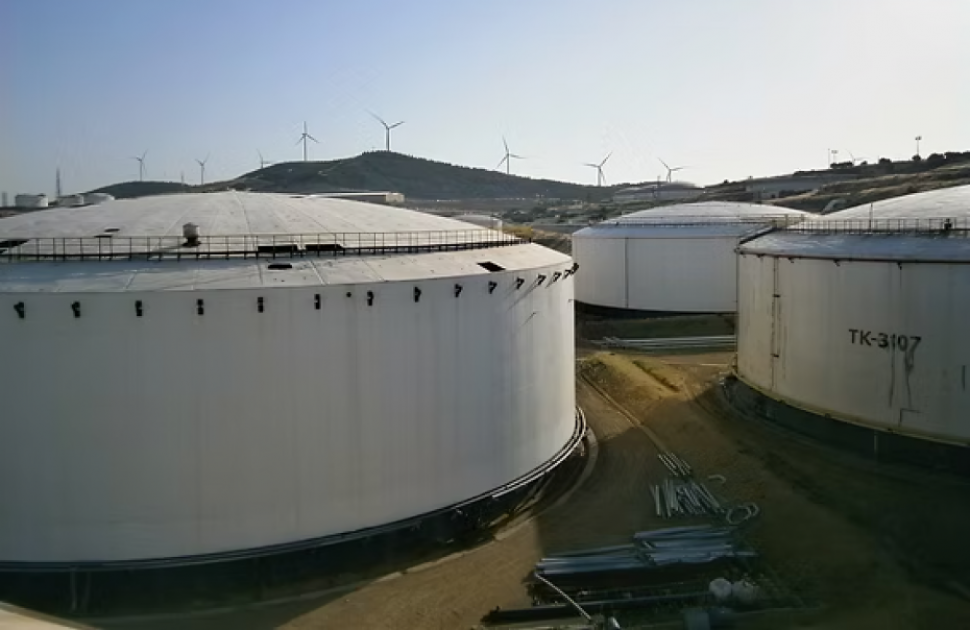
That versatility has carried AE into industries where early damage detection is critical. In pressure vessels and storage tanks, it enables proof and in-service testing by catching active crack growth under load, far faster than point-by-point ultrasonic testing. In pipelines, it detects leaks and active corrosion or crack propagation over long, otherwise inaccessible distances. On wind turbines, it catches damage in bearings, gearboxes, blade composites, and tower welds before any major failure. In rotating machinery, it extends the detectable fault window into the earliest stages of wear and lubrication breakdown. In composite structures, it is often the only practical way to catch fibre breakage, delamination, and debonding early enough to matter. And in civil infrastructure — bridges, dams, tunnels, prestressed components — it assesses crack activity and long-term behaviour without interrupting service.

From Reactive to Predictive: Why AE Matters Now
Industrial maintenance has moved a long way from purely reactive strategies — run equipment until it fails, then repair — through preventive maintenance's scheduled inspections. This has effectively reduced surprises but also caused unnecessary replacement of healthy components while failures still occurred between inspections. Predictive maintenance, where decisions follow an asset's actual condition rather than a fixed schedule, depends on exactly this kind of technology: something capable of identifying degradation before failure occurs. That is the gap Acoustic Emission fills.
The convergence of Acoustic Emission with wireless sensing, edge computing, cloud analytics, and artificial intelligence is turning it from a specialised inspection tool into a continuous asset intelligence platform. As industries are embracing NDE 4.0, future systems will be ready to estimate real-time asset health using AE signals for more reliable mechanical systems and asset management.
Challenges and Best Practices
Like any diagnostic technology, Acoustic Emission has limitations. Signal attenuation, background noise, complex geometries, and sensor coupling can all affect measurement quality. Reliable implementation depends on careful sensor placement, baseline noise characterisation, appropriate threshold selection, and, wherever possible, integration with complementary methods such as ultrasonic testing or vibration analysis. AE is most powerful when interpreted within the broader context of an asset's operating conditions and the engineering knowledge behind them.
Conclusion
Every engineered structure tells a story throughout its service life. Most inspection techniques capture only isolated events — an asset's condition at the moment of inspection. Acoustic Emission records the narrative as it unfolds, detecting the transient stress waves generated during crack initiation, propagation, corrosion, and leakage in real time. Combined with advanced signal processing, source localisation, and intelligent analytics, it turns maintenance from reactive to proactive.
The future of predictive maintenance isn't simply about collecting more data — it's about listening more intelligently. That is exactly what Acoustic Emission offers: a way to turn invisible stress waves into meaningful engineering insight, and help industries build safer, more reliable and more sustainable assets.
Author: Dr. Sakshi Sharma