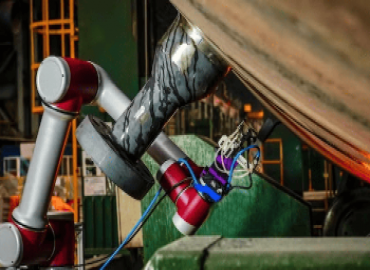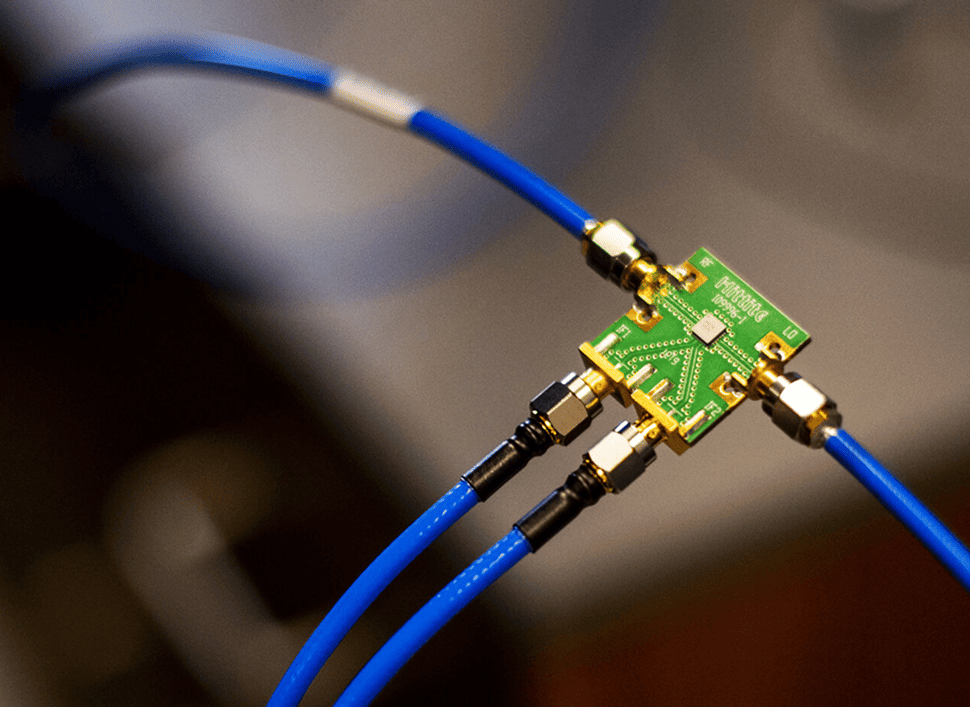
Researchers from the University of Glasgow, University of Tsukuba and National Institute of Advanced Industrial Science and Technology have developed a superconducting chip capable of generating tunable terahertz waves, marking a significant advancement in compact, non-destructive inspection technologies.
The innovation, detailed in the paper “Terahertz Imaging System with On-Chip Superconducting Josephson Plasma Emitters for Nondestructive Testing” published in IEEE journal IEEE Transactions on Applied Superconductivity, introduces a lightweight and energy-efficient approach to terahertz imaging. The technology is positioned to overcome longstanding limitations of conventional terahertz systems, which are typically large, power-intensive, and limited in tunability.
Terahertz radiation, which lies between microwave and infrared frequencies, can pass through a wide range of materials without causing damage. This makes it particularly valuable for non-destructive evaluation (NDE), enabling inspection and identification of materials based on their unique spectral signatures.
At the core of the development is a superconducting crystal made from Bismuth Strontium Calcium Copper Oxide (BSCCO), a high-temperature quantum material. The chip generates stable, coherent, and tunable terahertz waves directly on a micro-scale platform, enabling compact imaging systems capable of non-contact inspection.
Laboratory demonstrations showed the system’s ability to image a variety of materials, including metals, biological samples, and plant structures. The chip successfully visualized objects such as surgical blades concealed in packaging, as well as internal features of organic materials, highlighting its applicability in security screening and material characterization.
The system also demonstrated high specificity in material identification, distinguishing between visually similar granular substances such as salt, sugar, flour, and curry powder through their terahertz spectral fingerprints. This capability underscores its potential for applications in industrial inspection, pharmaceutical quality control, and non-invasive analysis through sealed packaging.
Dr. Manabu Tsujimoto of the National Institute of Advanced Industrial Science and Technology said, "Terahertz technologies have long promised transformative impact, but device limitations have prevented their wider adoption.
Our on-chip superconducting emitters demonstrate how innovative quantum materials can overcome these barriers. The ability to perform nondestructive imaging of plant and biological samples, as well as precise material identification, in a compact format opens exciting opportunities not only in industrial, communication, quantum, and security settings but also in medical and environmental monitoring.
We are excited to continue refining this technology toward practical, portable, and widely accessible terahertz systems."
Dr. Kaveh Delfanazari of the University of Glasgow added, "Terahertz radiation is a very powerful tool to enable the imaging and identification of a wide range of materials without harming the samples.
Fully harnessing the potential of terahertz technologies with compact, powerful devices would enable rapid, contactless inspection of biological tissues, plant samples, and medical materials. It could also find use in health care diagnostics, pharmaceutical inspection, and environmental monitoring.
Currently, our system takes about 15 minutes to create images in the lab with a 1mm resolution, so there is work to be done to make a faster, more high-resolution system. However, this paper shows clearly that chip-scale superconducting light sources can deliver the compact electrically tunable and coherent terahertz emitters needed to bring practical miniaturized real-time imaging systems closer to reality."
While current imaging speeds and resolution remain under development, the research demonstrates the feasibility of chip-scale terahertz sources for real-time, non-destructive inspection. The advancement signals a potential shift toward portable, high-precision terahertz systems capable of supporting next-generation NDE applications across industrial, healthcare, and security sectors.
Reference: https://phys.org/news/2026-03-superconducting-chip-generates-tunable-terahertz.html