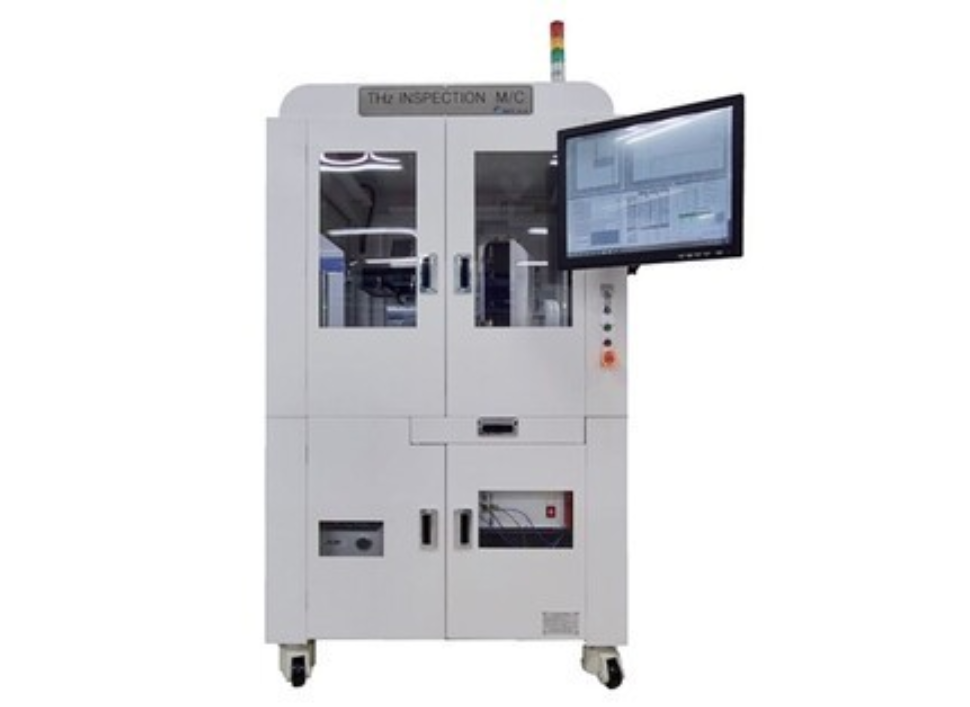
Samsung Electro-Mechanics and Actro are collaborating on the development of an advanced inspection system designed to detect defects in glass substrates, a material expected to play an increasingly important role in future semiconductor packaging technologies.
The joint effort focuses on the use of terahertz (THz) waves to identify internal defects such as microcracks and structural damage within glass substrates. The technology enables inspection without physically altering or damaging the material, providing a non-destructive testing (NDT) approach for quality evaluation.
As part of the collaboration, Samsung is supplying glass substrate samples that Actro is using to refine and optimize its inspection equipment. The objective is to improve defect detection capabilities and support future manufacturing requirements for glass-based semiconductor components.
Terahertz waves offer several advantages for inspection applications. Because the electromagnetic waves can penetrate glass materials, they allow internal features and defects to be assessed without cutting, breaking, or otherwise damaging the substrate. The technology also avoids the use of harmful radiation associated with some conventional inspection methods and does not require liquids or additional materials during the examination process.
The companies are currently working to address one of the key challenges associated with terahertz inspection: inspection speed. Existing systems evaluate one localized point at a time rather than scanning an entire substrate simultaneously, resulting in longer inspection cycles for large glass components.
To improve throughput, Actro is developing inspection methodologies that concentrate on areas where defects are most likely to occur. This targeted approach is expected to reduce inspection times and improve the practicality of terahertz-based inspection for high-volume semiconductor manufacturing environments.
The development comes as industry interest in glass substrates continues to grow, driven by their potential use in next-generation semiconductor packaging. As commercialization efforts progress, inspection technologies capable of ensuring substrate quality and reliability are expected to become increasingly important.
According to the companies, Samsung anticipates that glass substrate technology could reach commercialization around 2028. In preparation for that transition, both organizations are continuing efforts to enhance the speed, efficiency, and scalability of terahertz-based inspection systems to support future semiconductor production requirements.