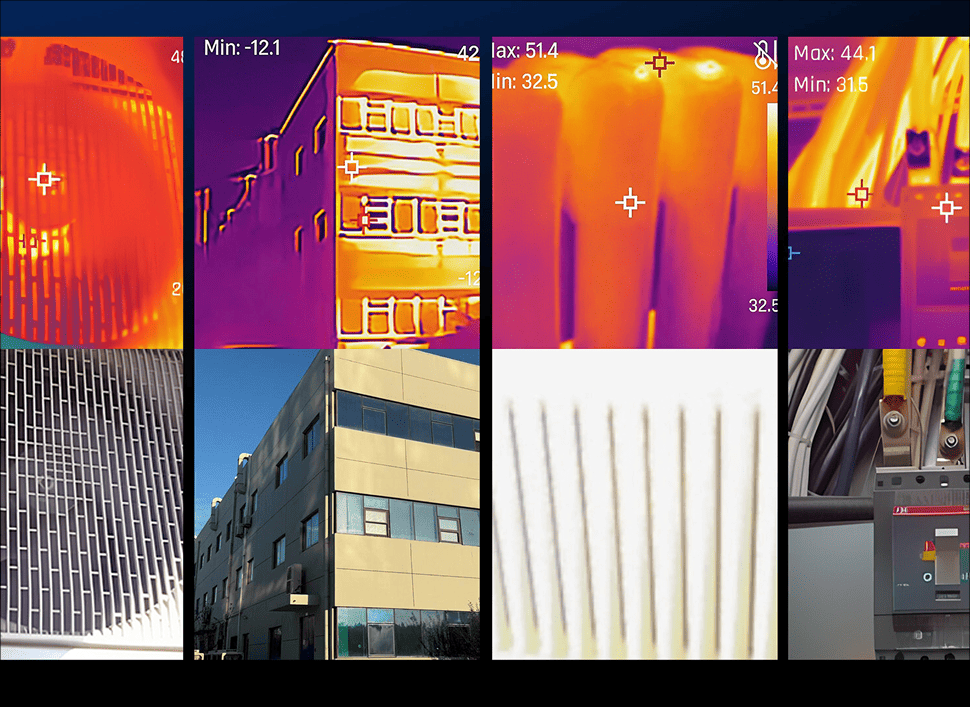
Raytron has introduced the EX10 handheld thermal imaging camera, a new device designed to support non-destructive building inspections and improve energy-efficiency diagnostics. The system converts invisible temperature variations into high-resolution thermal images, enabling engineers, energy auditors and facility managers to detect hidden structural issues without dismantling walls, floors or other building components.
Infrared thermal imaging is increasingly being used to diagnose problems in heating, ventilation and air conditioning (HVAC) systems as well as building envelopes. With the EX10, technicians can identify irregular heat patterns in underfloor heating networks, allowing them to locate clogged pipes, leaks or uneven heating without invasive inspection procedures.
Traditionally, identifying such issues often requires removing sections of flooring, a process that can be both time-consuming and costly. The EX10 allows inspectors to visualize heat distribution across pipeline systems in real time, helping them quickly identify cold spots or other anomalies. The non-contact method enables preliminary diagnostics without disrupting building structures, reducing repair costs and shortening inspection times.
In one field application, an HVAC inspection team investigating a potential pipe leak used hot water injection to trace the pipeline network. The EX10 captured the resulting thermal signature, revealing the precise location of the leak as the heated water moved through the pipes. The thermal imaging data allowed technicians to identify the failure point quickly and provide visual evidence to guide repair decisions.
Beyond HVAC diagnostics, the device is designed to assist in evaluating building envelopes where insulation defects, thermal bridging and air leakage contribute to energy loss. With a thermal sensitivity of 40 millikelvin (mK), the EX10 can detect subtle temperature differences that may indicate insulation gaps or structural inefficiencies.
The technology can also assist in identifying hidden moisture within walls or floors. Thermal imaging can detect evaporative cooling patterns caused by moisture accumulation, enabling targeted repairs rather than broad exploratory work.
Raytron said the launch of the EX10 reflects its broader focus on expanding the use of infrared technology across industrial temperature measurement, building diagnostics, night vision and security monitoring. By enabling more precise, non-destructive inspection methods, the company aims to support more efficient maintenance practices and contribute to sustainable construction and energy management efforts.