The Gurugram administration has directed builders to speed up repair and strengthening work in housing societies after structural audits identified defects ranging from surface cracks and seepage to weakened columns, exposed reinforcement and broader stability concerns.
The direction was issued during a review meeting led by Deputy Commissioner Ajay Kumar, where progress under the first phase of the structural audit exercise was assessed. Representatives of builders and resident welfare associations (RWAs) from 15 group housing societies attended the meeting, along with district town planning officials.
According to officials, several societies have already received structural audit reports, but in a number of cases the corrective measures recommended in those reports have not been carried out within the expected timeline. The administration said the delays were a matter of concern given the nature of the defects identified during inspections and assessment.
“This issue is directly linked to the safety of residents. Any negligence or unnecessary delay will not be tolerated,” Kumar said.
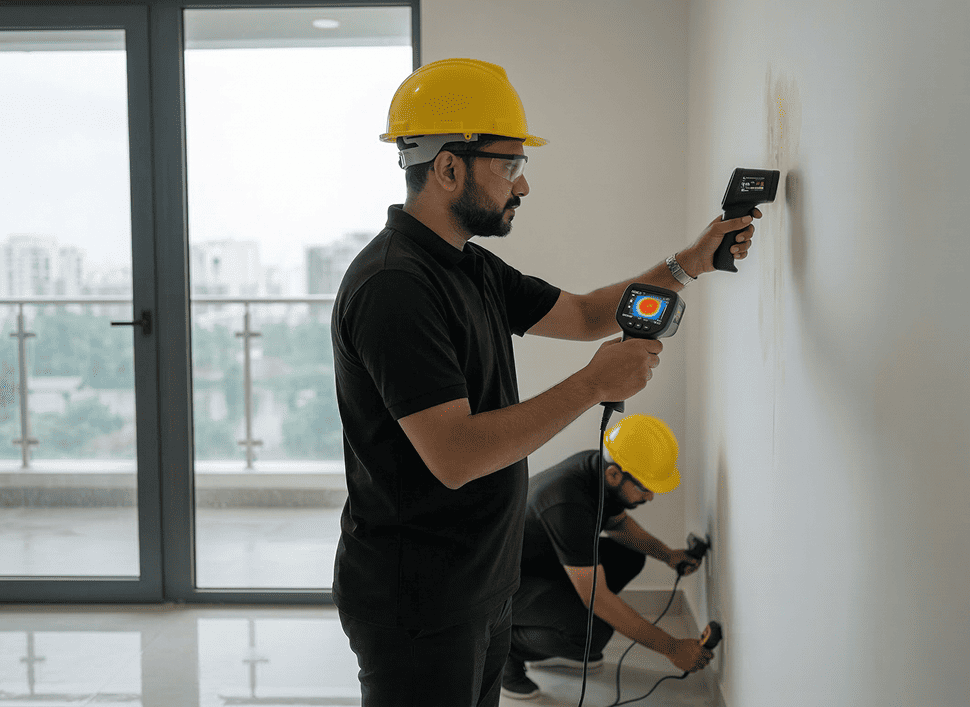
From an NDT and structural assessment perspective, the review covered projects where visual inspections and non-destructive testing (NDT) inputs had already been received. Officials said that where audit findings and NDT-based evaluations were available, repair work should begin immediately instead of remaining pending after submission of reports.
The administration has asked builders to submit updated status reports specifying completed work, pending items and execution timelines. It also instructed empanelled audit agencies to issue final reports without delay in cases where inspections have already been completed.
“If builders do not initiate work within the next 15 days as per the audit report, strict action will be taken against them,” Kumar said.
Officials said projects showing slow progress will remain under close monitoring, with periodic checks planned to track execution quality and adherence to timelines. During the meeting, RWAs also sought permission to undertake repairs on their own in cases where builders fail to act. The administration allowed this, subject to compliance with prescribed standards and supervision by authorised agencies.
“A structural audit is not merely a formality but an essential mechanism to ensure the safety of buildings,” Kumar said.
The development highlights the growing role of structural audits and NDT-supported assessment in residential building safety, particularly where repair decisions must be guided by technical findings rather than delayed administrative follow-up.