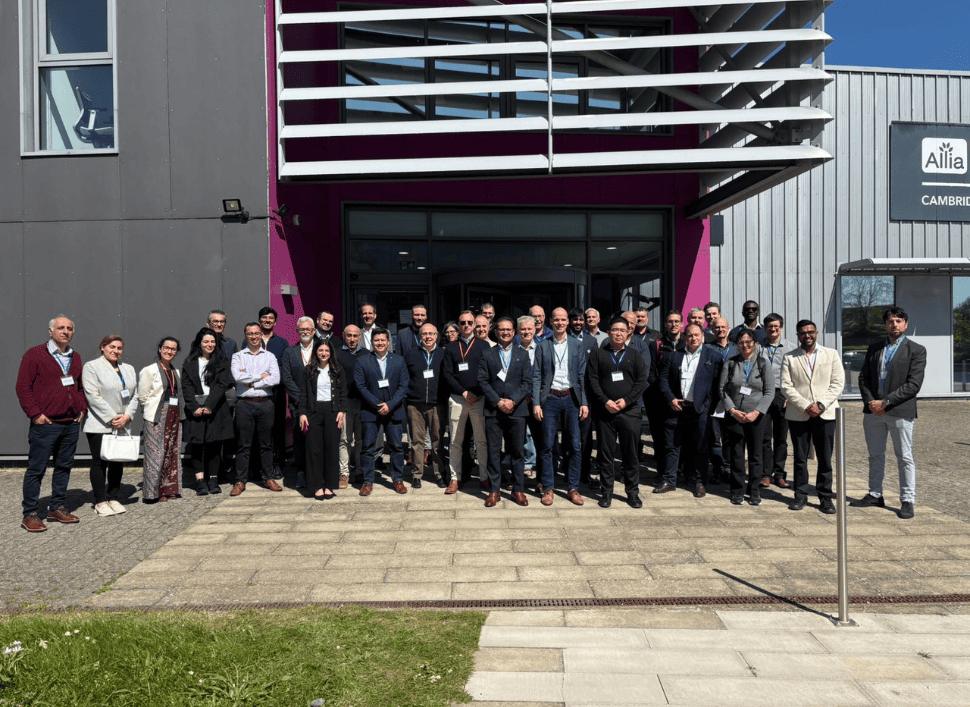
Leaders from across the oil, gas and petrochemical sectors convened at the inaugural Cambridge Corrosion Conference 2026 to examine the industry’s transition toward more autonomous corrosion management practices, underpinned by digitalisation, predictive monitoring and artificial intelligence (AI)-enabled technologies.
The conference, hosted by CorrosionRADAR and jointly organised by the Institute of Corrosion Midlands Branch and the European Federation of Corrosion WP15, brought together representatives from major energy and technology companies including Equinor, Dow, BP, Cenosco, Eddyfi Technologies, Inductosense, Worley, Becht and Emerson.
With corrosion estimated to cost the global economy over $2.5 trillion annually, discussions focused on how the sector is moving beyond traditional reactive and preventive inspection approaches toward prescriptive and autonomous asset integrity strategies. This evolution is being driven by the growing adoption of AI-enabled technologies, with the AI corrosion management market projected to reach $6.9 billion by 2033.
Opening the conference, Chiraz Ennaceur, Co-Founder and CEO of CorrosionRADAR, outlined the industry’s progression toward autonomous operations. The keynote emphasised that while AI has the potential to enhance corrosion management practices, its effectiveness depends on accurate data, domain expertise and human oversight.
The keynote presentation identified five foundational principles for advancing autonomous corrosion management. These include the continued importance of human expertise alongside AI, the integration of corrosion science with data-driven technologies, the role of agentic AI in enabling automation, the need for traceability and auditability in AI-driven decisions, and the development of continuously learning systems through the combination of real-time data and expert knowledge.
Dr. Ennaceur highlighted the importance of maintaining transparency and accountability as AI becomes more embedded in asset integrity practices, particularly in applications such as corrosion under insulation (CUI) monitoring and inspection.
“We are entering a brand-new era of resilience,” she added. “Corrosion Under Insulation is a significant, global problem, but with the ongoing advancements in AI and the wealth of human expertise and knowledge that is characteristic of our industry, we will have more tools than ever to optimise the way we manage CUI in future.
“As we advance, it is more important than ever that the industry works together. This is a journey, not an overnight transformation. Moving beyond reactive approaches to asset integrity management will require careful adoption of new technologies, strong engineering judgement and close collaboration across our sector.
“The future of corrosion management isn’t just about detecting damage faster; it’s about using digital tools thoughtfully to improve resilience and long-term asset performance.”
The conference underscored the increasing role of advanced inspection technologies, including non-destructive testing (NDT), in supporting data-driven decision-making and long-term infrastructure reliability across critical industrial sectors.
Reference: http://www.corrosionradar.com/