

image credit @ Zetec
Non-Destructive Testing (NDT) is a technique that is employed to inspect the condition, quality and integrity of materials, components and structures without causing damage to the product. NDT can identify defects without cutting, breaking or destroying the tested object while traditional testing methods would do such things.
The importance of NDT testing in industries like aerospace, oil and gas, manufacturing, power generation, transportation and construction cannot be overlooked. Whether it's for checking aircraft parts or inspecting pipeline welds or bridge components, NDT ensures that organizations can catch potential issues before they become failures, accidents, or expensive downtime.
Watch: What is NDT? Non-Destructive Testing Explained in Simple Terms
What is the meaning of NDT?
Non-Destructive Testing (NDT) is a testing technique that doesn't harm the product being examined.
Non-Destructive Testing (NDT) is a collective term for a set of inspection methods that are applied to the testing of materials and structures without impacting their future function.
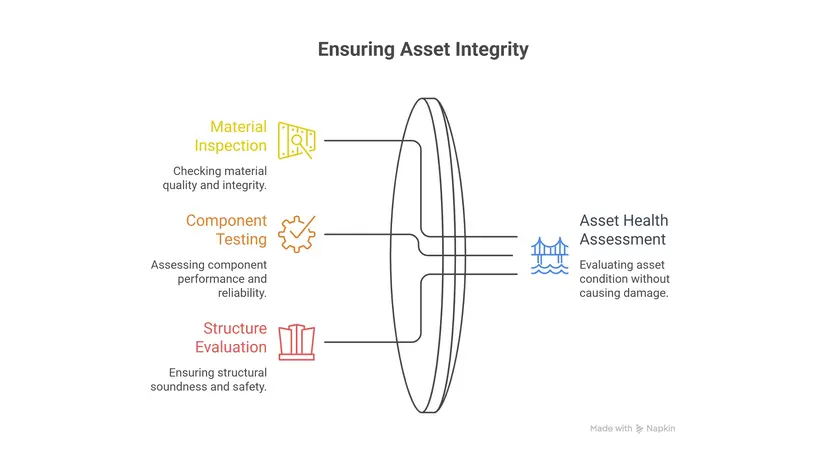
Sometimes, the words NDE (Non-Destructive Examination) and NDI (Non-Destructive Inspection) will be encountered. Although the terms differ from industry and area, each means the same thing: Identifying flaws, defects, or degradation in an inspected part without causing any damage to it. In simple terms, the NDT meaning is the assessment of the health of an asset without compromising its safety and functionality.
Non-Destructive Testing - The How and Why?
The basic principle of NDT is quite simple. A physical phenomenon used to discover hidden defects in a material, such as sound waves, electromagnetic fields, radiation, heat or liquid penetrants.
These inspection techniques can detect:
- Cracks
- Corrosion
- Voids
- Porosity
- Inclusions
- This is the result of the weld not fusing the material.
- Material thinning
NDT will not destroy the specimen being tested, unlike destructive testing, which is testing that involves intentionally damaging the specimen to determine its properties. This is particularly well suited for critical infrastructure and high value equipment.
NDT vs Destructive Testing – Key Difference
Non-Destructive Testing (NDT) and destructive testing are both methods of assessing materials and their properties, but they are quite different in both their approach and purpose. NDT can provide inspectors with the ability to inspect a component for defects, discontinuities, or signs of deterioration without causing any damage to the material. This equates to the fact that the tested component could still be used after the inspection and thus make NDT an ideal solution for in-service equipment, critical infrastructure, and high-value assets.
What is destructive testing? Destructive testing is used to measure the mechanical properties, strength, durability or failure limits of a material by deliberately damaging, deforming or breaking the sample. Common destructive testing includes tensile testing, impact testing, bend testing and hardness testing. Destructive testing gives information regarding the performance of the material when it is put under stress, but the sample is not usable afterwards.
NDT testing can be the most suitable method for certain industries that have to inspect operational equipment regularly and cannot afford to waste materials, incur high costs or and cannot afford to stop production to carry out the inspection. However, in product development, material qualification and research, destructive testing is still important because it is required to understand exactly how a material fails. Both methods work together to ensure the quality, safety and reliability of the product.
Feature | Non-Destructive Testing (NDT) | Destructive Testing |
|---|---|---|
Approach & Purpose | Inspects a component for defects, discontinuities, or signs of deterioration without causing damage. | Measures mechanical properties, strength, durability, or failure limits by deliberately damaging, deforming, or breaking the sample. |
Post-Test Usability | The tested component can still be used after the inspection. | The tested sample is destroyed and is not usable afterwards. |
Common Examples | Not explicitly mentioned in the text, but used for in-service equipment, critical infrastructure, and high-value assets. | Tensile testing, impact testing, bend testing, and hardness testing. |
Key Benefit | Ideal for regular inspections of operational equipment without wasting materials, incurring high costs, or stopping production. | Gives precise information regarding how a material performs and fails when put under stress. |
Best Suited For | In-service equipment, critical infrastructure, high-value assets, and industries requiring regular operational inspections. | Product development, material qualification, and research. |
Why is NDT important?
NDT inspection is not only important for quality control. It assists industries to avoid failures, boost safety, decrease maintenance expenses, and satisfy regulatory needs.
Imagine a turbine blade of an aircraft with a tiny crack in it. If the crack is not noticed it may get larger with time, and a major failure may occur. Likewise, corrosion within the pipeline can lead to leaks, environmental damage and costly shutdowns.
By using NDT testing, organizations can:
- Enhance safety at work and in the community
- Extend equipment lifespan
- Reduce maintenance costs
- Prevent unplanned downtime
- Ensure regulatory compliance
- Improve product quality
- Ensure that the integrity of assets is supported through programs.
The critical nature of equipment failure in industries like aerospace, nuclear power, oil and gas, and transportation means that the use of NDT is widespread. Early detection of defects will help the company plan repairs before they reach a critical stage.
Brief History of NDT
The origins of NDT go back to the late 19th century when railway companies started to check train axles for cracks. The breakthrough in 1895 was the discovery of X-rays which enabled a material to be analysed without being cut open.
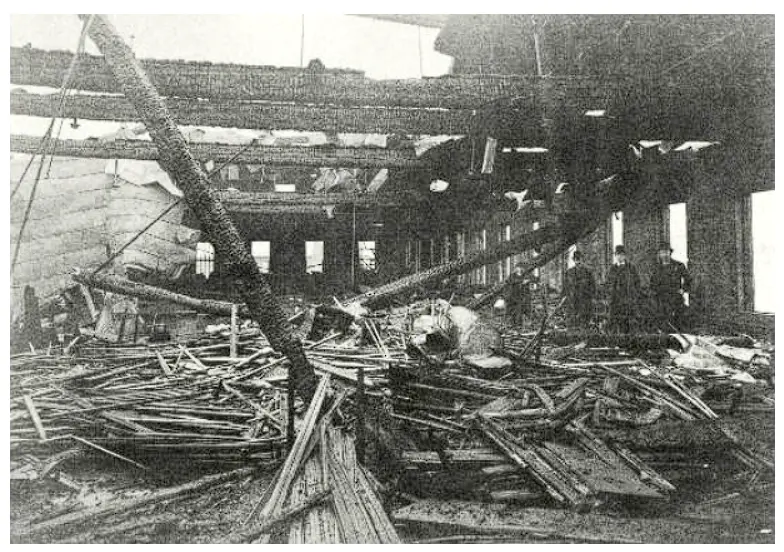
In Hartford, Connecticut, The Boiler feeding the machinery at Fales and Grey Car Works Exploded on 2nd March 1854, with several casualties. (Image credits: Connecticut Historical Society)
As years went by, the advanced testing methods like ultrasonic testing, magnetic particle testing and eddy current testing evolved. In the present times, NDT uses conventional methods, but also incorporates digital technology to provide rapid and precise inspection.
Types of NDT Methods
The selection of the appropriate NDT technique varies depending on the material, component geometry, type and scope of the inspection.
Visual Testing (VT)
Visual Testing is the easiest and most frequently used NDT technique.
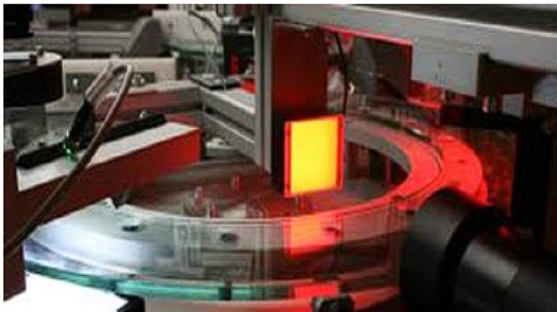
Working principle: Inspection is done visually or with the use of optical instruments like magnifiers, borescopes and cameras.
Applications:
- Weld inspections
- Structural steel inspections
- Pipeline assessments
- Manufacturing quality control
Liquid Penetrant Testing (PT)
Liquid Penetrant Testing is a method for detecting surface discontinuities in non-porous products.
Working principle: The liquid penetrant is applied to the surface. The penetrant penetrates cracks and defects, and becomes visible with the application of a developer.
Applications:
- Aerospace components
- Weld inspections
- Castings and forgings
- Machined parts
20260529180222.webp)
or a step-by-step breakdown of fluid characteristics, see our technical article on developer usage in penetrant testing.
Magnetic Particle Testing (MT)
Magnetic Particle Testing is used on materials that are ferromagnetic, like steel.
Working principle: The component is magnetized and magnetic particles are applied. Leakage fields form when defects are present, attracting the particles and exposing the discontinuities.
Applications:
- Structural steel
- Pressure vessels
- Railway components
- Automotive parts
120260529180347.webp)
220260529180445.webp)
Ultrasonic Testing (UT)
Of all NDT methods, ultrasonic inspection is one of the most flexible.
Working principle: High frequency sound waves are sent into a material. Defects within the unit cause reflected signals.
Applications:
- Weld inspection
- Thickness measurement
- Aerospace structures
- Pressure vessels
One of the most used NDT techniques is ultrasonic testing because it can precisely identify and measure interior flaws.
120260529180603.webp)
Radiographic Testing (RT)
Radiographic Testing is a method of visualizing the internal structure of a component with X-Rays or gamma rays.
Working principle: It is a type of transmission in which the radiation goes through and creates an image that shows defects within the material.
Applications:
- Pipeline welds
- Castings
- Aerospace components
- Pressure vessels
Eddy Current Testing (ET)
Eddy Current Testing on electrically conductive materials.
Working principle: To produce eddy currents in the material by means of electromagnetics. Any changes in these currents mean that there is a defect or variation in the material.
Applications:
- Aircraft inspections
- Heat exchanger tubes
- Surface crack detection
- Conductivity measurement
120260529180732.webp)
220260529180804.webp)
Advanced NDT Methods
Industries have been looking for more complex and precise inspection methods as they require more accuracy and efficiency.
Phased Array Ultrasonic Testing (PAUT)
PAUT is based on the use of multiple ultrasonic elements to provide detailed images of internal defects. Provides quicker inspections and more accurate defect characterization than traditional ultrasonic testing.
Choosing the right setup can be challenging; compare capabilities in our detailed PAUT vs TOFD comparison guide
Time of Flight Diffraction (TOFD)
The TOFD is an advanced method of ultrasonic testing that can provide accurate information on the location, length and depth of cracks, especially in weld inspections of critical components.
Digital Radiography (DR)
Digital Radiography uses digital detectors instead of film to capture images and offer improved data management and quicker image acquisition.
Infrared Thermography
Thermography is the process of detecting hidden defects in the system based on the temperature differences and is widely used in the electrical and renewable energy system inspections.
Some additional guidelines for performing a NDT Inspection:
Most NDT inspections are conducted in a similar manner although the procedures differ slightly depending on the inspection method:
- Inspection Planning – Decide the aims and scope of the inspection.
- Procedure Selection – Selection of the suitable NDT technique.
- Equipment Calibration – Check the accuracy of equipment.
- Surface Preparation – clean and prepare the inspection area.
- Inspection Execution – Conduct the inspection.
- Evaluation – Analyze inspection results.
- Reporting – Record observations and suggestions.
- Acceptance Decision – Approved, repaired or rejected the component.
- A formal process provides consistent and reliable inspection results.
NDT Equipment, Standards, and Certifications
Today, the sophistication of NDT inspection depends on the use of specialized equipment, such as ultrasonic flaw detectors, thickness gauges, X-ray systems, borescopes, videoscopes and eddy current instruments.
Inspections are carried out to recognised standards such as:
- ASME Section V
- API 510, API 570, and API 653
- AWS D1.1
- ASTM Standards
- ISO 9712
Additionally, NDT personnel are trained and experienced and certified according to their training.
- Level I
Carries out inspections with supervision.
- Level II
Performs self inspections and makes inferences from findings.
- Level III
Establishes procedures, trains personnel and manages NDT programs.
There are certification systems like ASNT and ISO 9712 that ensure that the inspector has the necessary skills to undertake reliable inspections.
Where Is NDT Used? (Industries & Applications)
Non-Destructive Testing is applied in all manner of industries where safety, quality and reliability are paramount. NDT inspection can detect defects before they cause failures, thus minimizing risks, optimizing performance, and prolonging the useful life of critical assets.
Oil and Gas
The oil and gas industry heavily depends on the use of NDT testing for pipelines, oil storage tanks, pressure vessels, refineries, and offshore platforms. Typical applications include weld inspection, corrosion monitoring, and pipeline integrity assessment to avoid leaks and safe operations.
Aerospace
In the aerospace industry, NDT is employed to examine aircraft structures, turbine blades, composite materials, and components of the landing gear. To avoid compromising flight safety, techniques like ultrasonic testing and eddy current testing are used to detect possible cracks and material defects.
Nuclear Power
NDT techniques are employed in the evaluation of reactor components, pressure systems and critical infrastructure in nuclear facilities. Compliance with regulations, long-term reliability and safety of plants are sustained through regular inspections.
Construction and Infrastructure
NDT is commonly used for inspecting bridges, buildings, tunnels and structural steel. Such inspections are vital for engineers to understand the structural integrity, detect deterioration and keep the asset safe for the public throughout its life cycle.
Automotive Manufacturing
NDT is used in automotive manufacturing for engine components, chassis parts, castings, forgings and welds. This helps to ensure product quality, reliability, and minimise risk of component failure.
Railways
NTD inspection is a crucial tool for rail operators in assessing the condition of rails, wheels, axles and welded joints. The early detection of cracks and fatigue damage will contribute to railway safety and prevent service disruptions.
Marine and Shipbuilding
Corrosion and fatigue are often issues in the marine industry, whether on ships, offshore structures or marine equipment. The use of NDT for hull, weld and structural inspection is used for safe and efficient operation.
Manufacturing
In the production and quality control of castings, forgings, machined parts and weld assemblies, manufacturers employ NDT methods to ensure the integrity of the parts before sending them out to customers.
Renewable Energy
With the increasing deployment of renewable energy projects, NDT becomes a key component in monitoring wind turbines, solar panels, and marine wind farms. These inspections enable the best possible performance of equipment and reduce equipment downtime.
Benefits of NDT
There are numerous benefits to NDT testing, which is why it is so popular.
Key benefits include:
- Identifies problems without harming property.Reports faults without damaging property.
- Improves operational safety
- Reduces maintenance costs
- Extends equipment lifespan
- Supports regulatory compliance
- Minimizes downtime
- Improves product quality
- Enables preventive maintenance
The advantages of these make NDT a crucial component of asset integrity and quality assurance programs of today.
What Is an NDT Inspector?
An NDT inspector is a trained professional that conducts inspections and is able to describe the results and assess whether the quality and safety requirements are met.
An NDT technician could be an expert on one or more of the various tests, such as ultrasonic testing, radiographic testing, magnetic particle testing or liquid penetrant testing.
Typical career options are:
- NDT Technician
- NDT Inspector
- QA/QC Inspector
- PAUT Technician
- Asset Integrity Engineer
- NDT Level III Specialist
The need for skilled NDT professionals is continuing to be high across the globe as industries are continuing to invest in infrastructure, energy and manufacturing.
Future of Non-Destructive Testing
- Digital transformation and automation are influencing the future of NDT.
- Emerging trends include:
- AI-assisted defect recognition
- Drone-based inspections
- Robotic inspection systems
- Predictive maintenance programs
- Digital twins
- Real-time asset monitoring
These technologies are enabling companies to increase the accuracy of data from their inspections, lower costs, and make quicker decisions on maintenance actions.
Conclusion
For all engineering, manufacturing, construction and asset management professionals, it is critical to understand what NDT is all about. Non-Destructive Testing allows companies to detect defects, manage quality and enhance safety without causing damage to valuable assets.
NDT is still a very important part of current industry, from the traditional Visual Testing and Ultrasonic Testing, to the more advanced techniques like PAUT and Digital Radiography. With the emergence of new technologies like artificial intelligence, drones, and predictive maintenance, the future of NDT testing promises to be even more efficient, accurate, and data-driven.
Frequently Asked Questions
What is NDT?
NDT is an acronym for Non-Destructive Testing which refers to the group of testing methods that are conducted on materials and structures without causing damage.
What is the meaning of NDT?
The NDT full form is Non-Destructive Testing.
How is NDT different from destructive testing?
In NDT the component to be inspected is not harmed at all, whereas in destructive testing, the sample is harmed or destroyed.
What is the most popular NDT technique?
The most widely used visual testing method (VT) and one of the most versatile is ultrasonic testing (UT).
Is NDT a good career?
Yes. NDT has great career opportunities in the oil and gas sector, aerospace, manufacturing, power generation, and infrastructure sectors, to name a few.


There are no comments yet!