
Table of Contents
- How Virtual Inspection is Changing NDT Training
- That leads to the second major focus area - API inspection training
- Benefits of Virtual Inspection for NDT Safety
- Preparing the Next Inspector NDT for a Digital Workforce
- Conclusion
- FAQ
For years, training in the inspection world has followed the same pattern. A classroom, a stack of code books, and eventually a trip out to the field. That process works, but it has limitations. Some equipment is too large to bring into a training environment realistically. Some inspection scenarios are too dangerous to simulate in person. And sometimes the barrier to entry for new inspectors is simply getting hands-on time with the tools.
How Virtual Inspection is Changing NDT Training
Over the past few years, I’ve been building VR training environments focused on two major areas of inspection: Nondestructive Testing (NDT) and API inspection training. The goal is not to replace traditional training, but to fill the gaps where it struggles.
What surprised me most while developing these systems is how accessible the technology actually is.
One of the best demonstrations of that came from my own kids. - Daniel Hoke
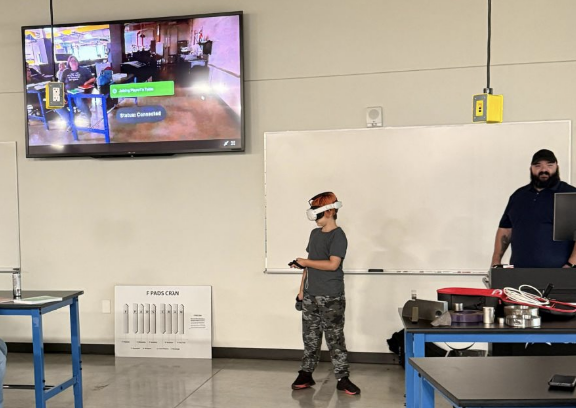
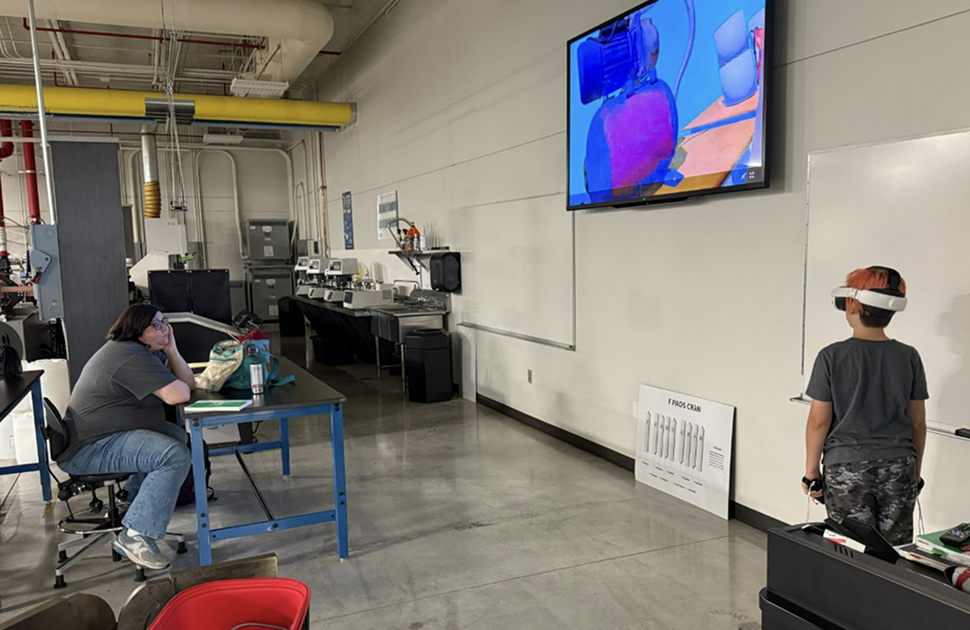
My 11-year-old has been running through the NDT simulations. In VR, he performs common inspection methods like Ultrasonic Testing (UT), Magnetic Particle Testing (MT), Penetrant Testing (PT), Radiography (RT), Real-Time Radiography (RTR), Visual Testing (VT), and Positive Material Identification (PMI). These are real procedures inspectors perform every day in refineries, plants, and fabrication shops.
The interesting part is that when people see a kid performing these inspections in VR, the reaction is usually the same: “Wait… he can actually do that?”
And the answer is yes.
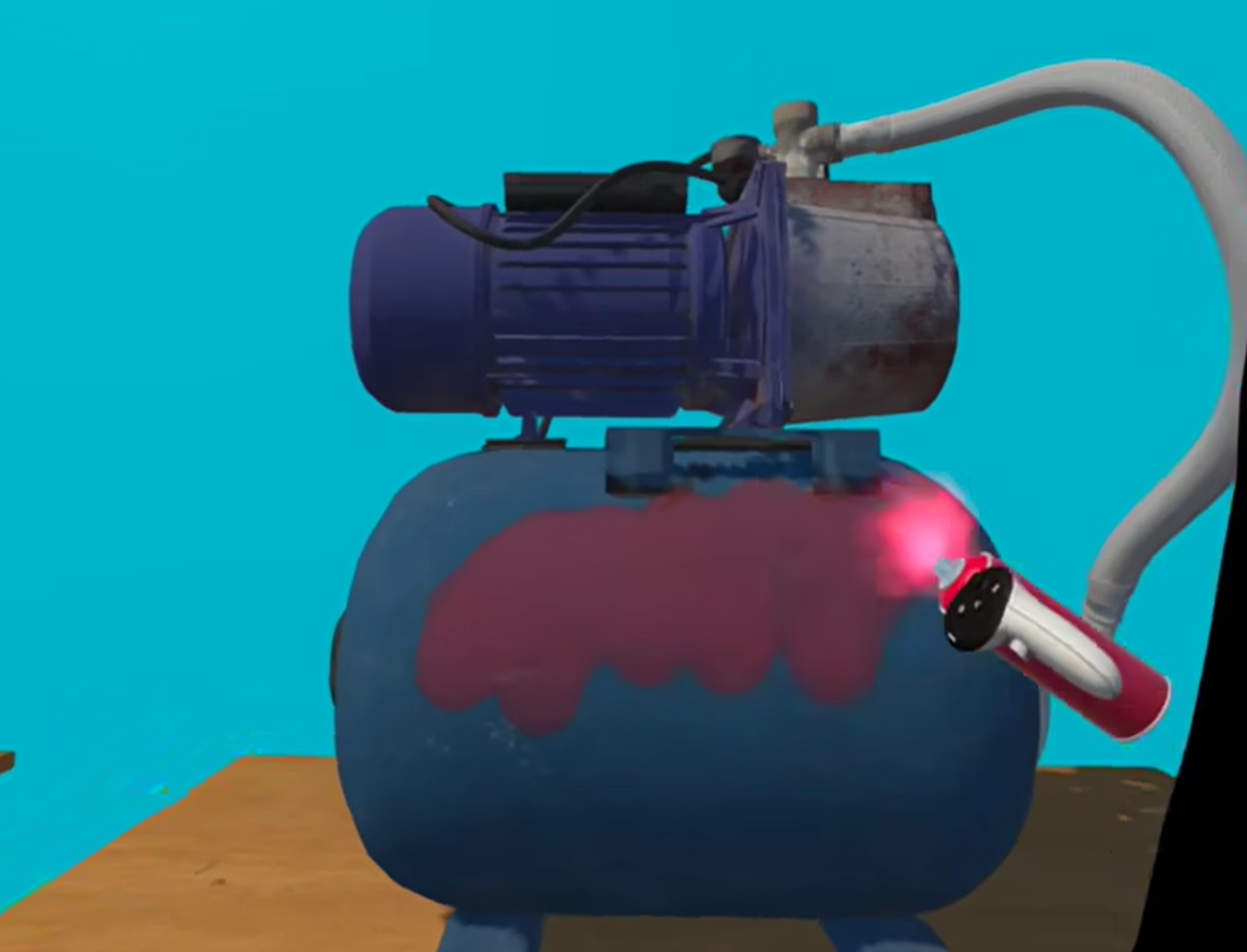
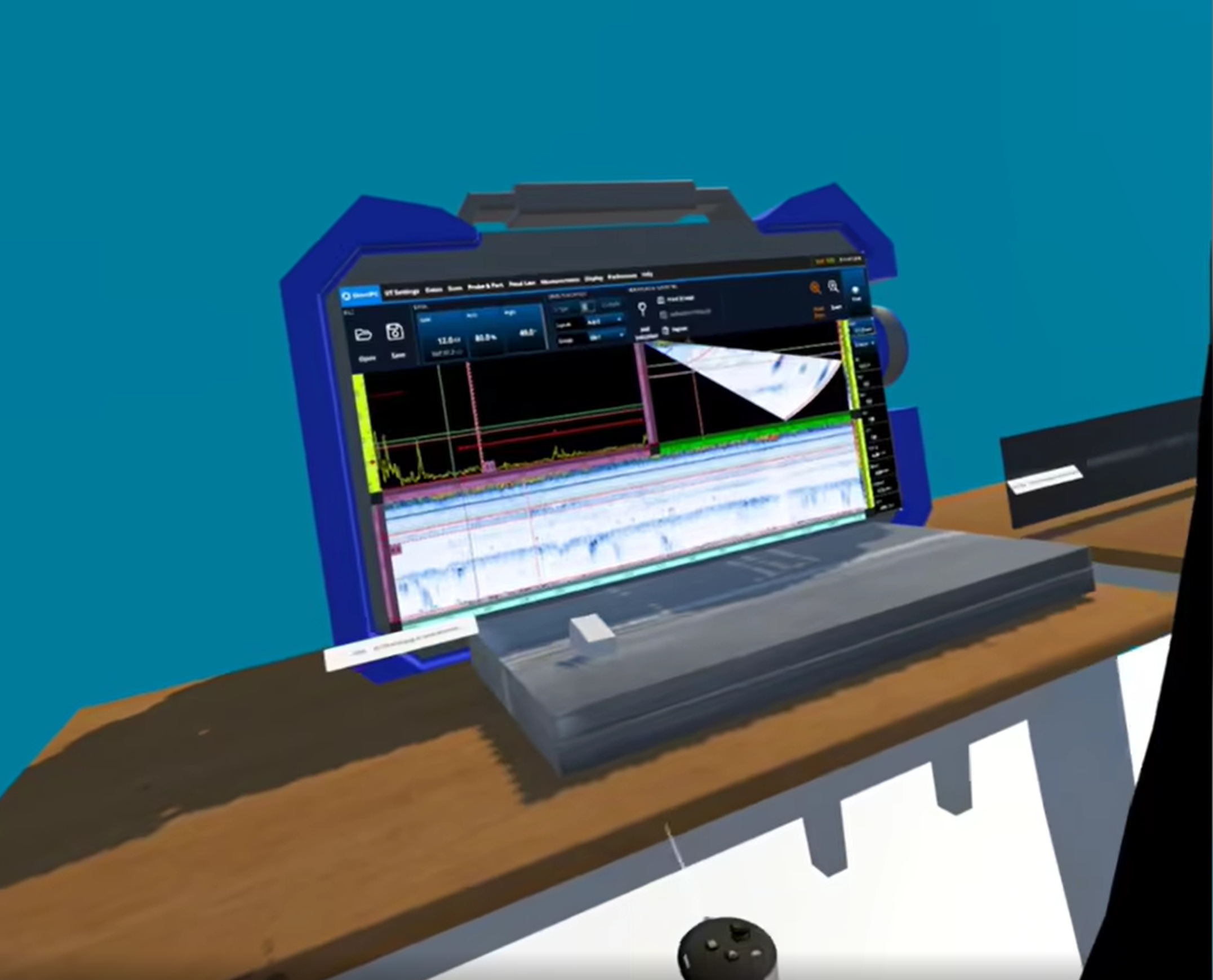
The simulations walk the user through the process step by step. A UT probe can be placed on a weld, and the waveform appears exactly like it would on a real instrument. Magnetic particle testing requires spraying particles and correctly positioning the yoke. Dye-penetrant inspections follow the same developer and dwell-time logic that inspectors learn in the field.
The idea is not that an 11-year-old should be certified tomorrow. The point is that if a child can understand the workflow inside a VR simulation, then a new technician entering the industry can learn it much faster as well.
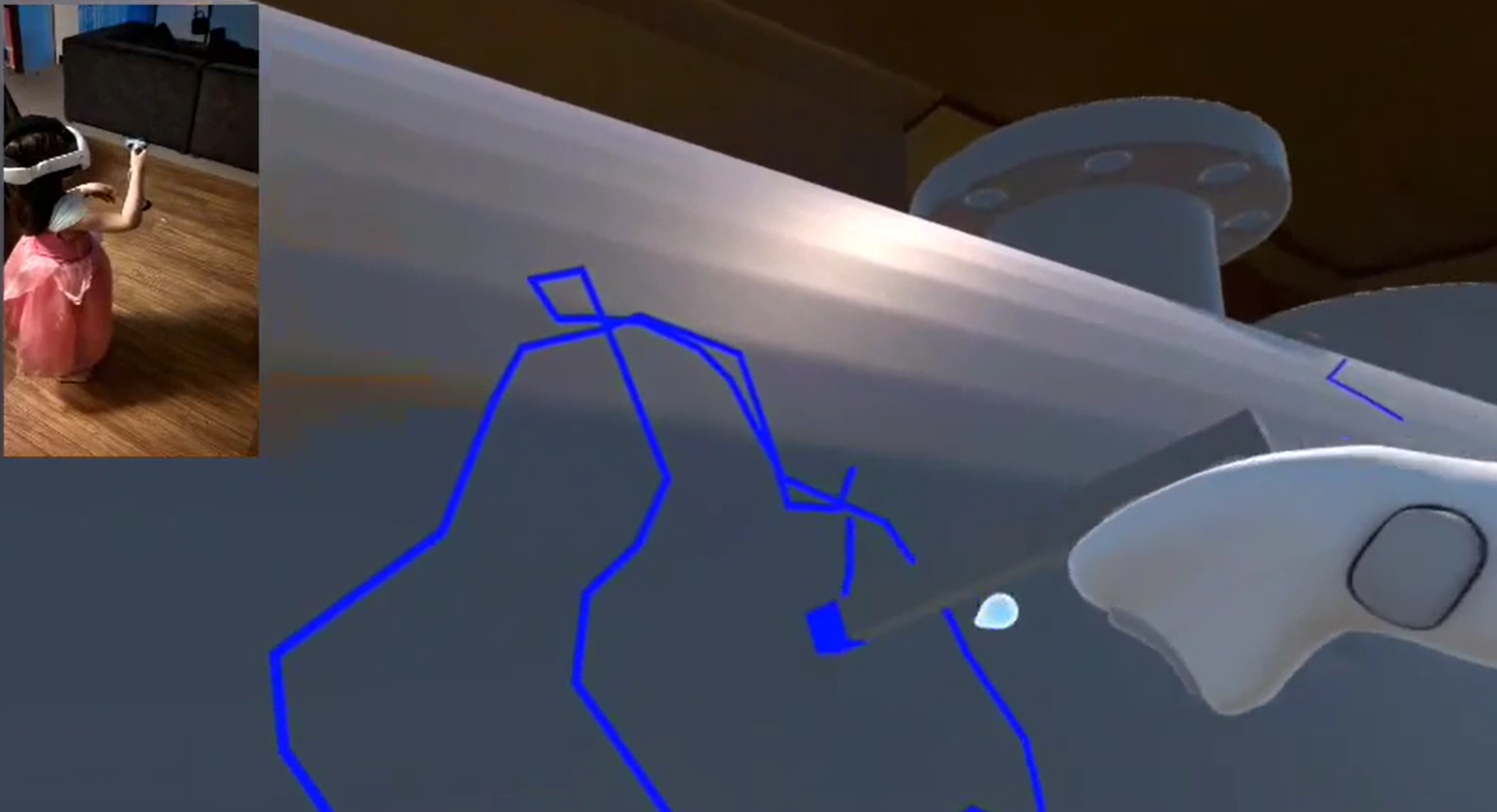
Even my 3-year-old daughter was able to interact with the API side of the system. She put on the VR headset and began marking corrosion locations on a pressure vessel model. Obviously, she isn’t calculating corrosion rates or referencing API 510 code requirements yet, but the interaction shows something important: the environment is intuitive.
That leads to the second major focus area - API inspection training.
Unlike many NDT certifications, API certifications do not include a hands-on practical exam. There are good reasons for that. It is simply not practical to bring an entire pressure vessel, tower, tank, or heat exchanger into an exam environment. Even if it were possible, the liability and logistics would make it unrealistic.
So most API testing focuses heavily on code knowledge and written examination.
But inspection is still a visual and analytical profession. Inspectors must recognize damage mechanisms, understand where to measure thickness, and identify non-conformances in the field. Those skills are normally developed only after years of experience.
This analytical training is a core component of Asset Integrity Management (AIM), ensuring that critical infrastructure remains safe throughout its lifecycle.
Benefits of Virtual Inspection for NDT Safety
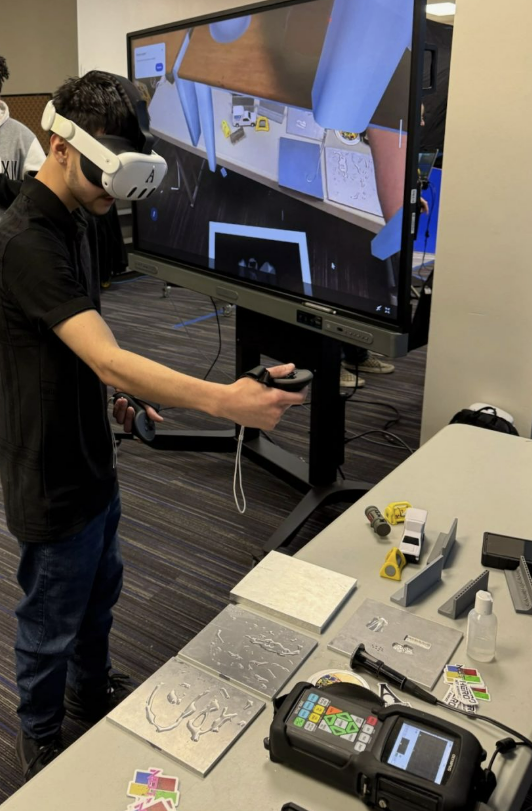
Inside a VR training environment, a student can walk around a virtual refinery unit. They can inspect pressure vessels, piping circuits, tanks, and structural components. Corrosion, erosion, cracking, and mechanical damage can occur throughout the environment.
Instead of looking at a picture in a book, the trainee can physically walk up to the equipment, crouch down, and measure the damage.
A UT thickness reading can be taken on a corroded shell section. A pit can be measured. A crack indication can be located. A corrosion area can be marked for further review.
The system records those actions and sends the data to a laptop, where the inspection report can be written and reviewed. That information can also be used to build a scoring system similar to an Industry Sector Qualification (ISQ) style exam.
Imagine a trainee entering a virtual plant and being asked to inspect a vessel.
- They must identify the correct damage areas.
- They must measure the thickness correctly.
- They must determine whether the equipment is acceptable for service.
Every decision can be tracked and graded.
Before that person ever sets foot inside a real facility gate, you already know whether they understand what they are doing. That is where VR training becomes extremely valuable. It allows instructors to create scenarios that would normally be impossible to replicate.
Severe corrosion under insulation, internal erosion in piping, poorly installed pressure relief valves, missing nameplates, and incorrect nozzle repairs - all of these situations can be recreated in a controlled environment.
While VR allows for safe practice, the real-world detection of these threats is evolving. Read about the latest NDT advancements for inspecting CUI.
Students can make mistakes without consequences. In the real world, a missed indication can lead to major failures or safety incidents. In VR, a missed indication becomes a teaching moment.
Another benefit is accessibility. Training equipment can be expensive and difficult to share between schools and companies. A VR environment can replicate many different inspection tools and scenarios in one place. With a headset and a laptop, a training program can expose students to a wide variety of inspections without needing an entire shop full of equipment.
For industries like oil and gas, petrochemical, and power generation, that kind of flexibility opens new possibilities for workforce development.
It also helps bring new people into the field. The inspection industry is facing a generational shift. Many experienced inspectors are nearing retirement, and younger workers are entering a world that looks very different from the one their mentors started in. Digital tools, data integration, and advanced analytics are becoming part of everyday inspection work.
VR is just one piece of the puzzle. Discover how AI, IoT, and Robotics are reshaping the NDT digital workforce.
Preparing the Next Inspector NDT for a Digital Workforce
It introduces modern technology while still teaching the fundamentals that inspectors rely on: observation, measurement, and critical thinking. And if an 11-year-old can learn the workflow of UT or MT inside a virtual environment, it proves something important about the future of training.
The next generation of inspectors may begin their careers in a virtual plant before they ever step into a real one. That may sound unusual today, but so did many technologies that are now standard in our industry.
Virtual Reality will not replace field experience, and it should not try to. But it can better prepare inspectors, reduce training barriers, and enable organizations to evaluate skills in ways never before possible.
And sometimes the best way to demonstrate that potential is simple.
Hand the headset to a kid.
If they can learn the basics of inspection in a few minutes, imagine what a dedicated trainee can accomplish with the same technology.
For more information or to watch the videos mentioned, Lets connect!
Conclusion
The integration of VR into NDT training marks a pivotal shift in workforce development, allowing the next generation of technicians to master complex workflows in a risk-free environment. By adopting virtual inspection simulations for methods like UT, MT, and API 510, an inspector NDT can build intuitive, hands-on skills and procedural accuracy without the logistical or safety constraints of a live refinery.
While this technology does not replace field experience, it bridges the generational skills gap by ensuring trainees are highly proficient before ever entering a real facility. As a leader in highlighting digital transformation within the industry, OnestopNDT recognizes that these immersive tools are essential for evolving NDT education and reducing traditional barriers to entry.
Frequently Asked Questions (FAQs)
1. How does a virtual inspector maintain accuracy compared to traditional NDT methods?
While a virtual inspector uses a simulated environment, the physics and workflows—such as probe placement for Ultrasonic Testing (UT) or dwell times for Penetrant Testing (PT)—are modeled after real-world NDT procedures. This ensures that the digital training remains technically accurate, allowing the inspector NDT to build muscle memory and procedural knowledge before handling physical equipment in a high-risk facility.
2. Can virtual inspection fully replace hands-on field experience for NDT certification?
No, virtual inspection is not intended to replace traditional field training, but rather to enhance it by filling gaps where classroom learning struggles, such as simulating dangerous scenarios or large-scale equipment. It serves as a bridge, ensuring a new inspector NDT is better prepared and more confident before they ever set foot inside a real plant.
3. What are the primary benefits of using VR for an inspector NDT in the oil and gas industry?
The primary benefits include safety and accessibility; a virtual inspector can crouch down and measure simulated corrosion or cracks on a virtual pressure vessel without the safety risks associated with a live refinery. Additionally, virtual inspection allows for "teaching moments" where mistakes can be made and corrected without the real-world consequences of missed indications or safety incidents
Author: Daniel Hoke

There are no comments yet!