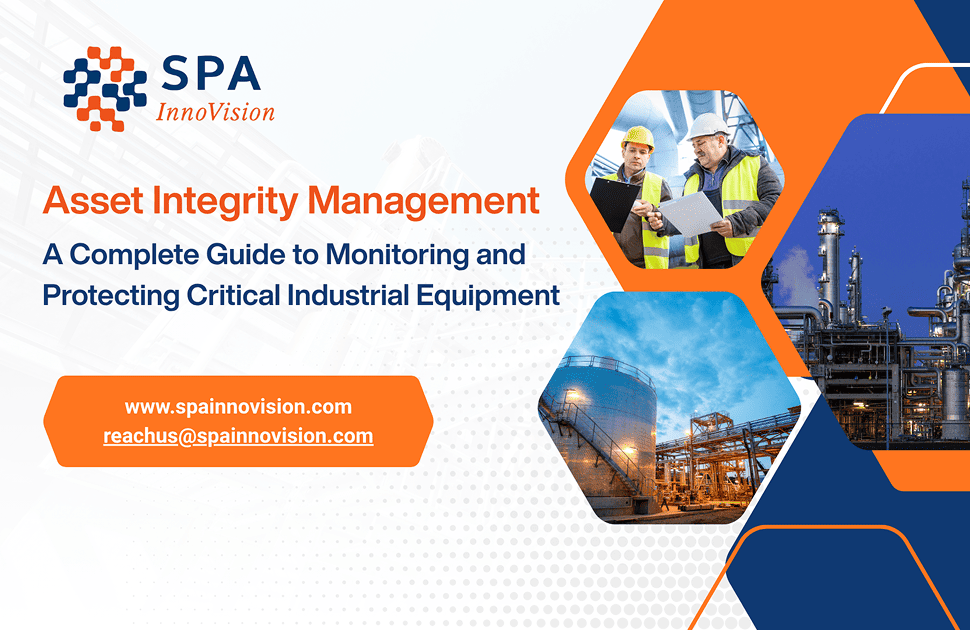
Industrial operations depend on critical equipment such as boilers, pipelines, storage tanks, and pressure vessels. These assets operate under extreme conditions, making their safety and reliability essential for uninterrupted operations.
Asset Integrity Management (AIM) is a structured approach that helps organizations monitor equipment condition, detect risks early, and ensure safe operation throughout the asset lifecycle.
What Is Asset Integrity Management?
Asset integrity management is a systematic process used to ensure that industrial equipment remains safe, reliable, and compliant during operation.
Industrial assets are constantly exposed to pressure, temperature variations, and corrosive environments. Over time, these factors can cause material degradation and structural weaknesses.
Integrity management programs use:
- Regular inspections
- Condition monitoring
- Engineering analysis
- Maintenance planning
This proactive approach helps identify issues early and prevents unexpected equipment failure.
Understanding specific threats is key; learn more about managing one of the industry's biggest challenges in our guide on detecting corrosion under insulation.
Why Asset Integrity Management Is Critical
Prevents Equipment Failure
Undetected damage can lead to sudden failures and costly downtime. Integrity programs detect corrosion, cracks, and structural issues before they escalate.
Improves Workplace Safety
High-pressure equipment such as boilers and vessels can pose serious safety risks. Continuous monitoring ensures assets operate within safe limits.
Ensures Regulatory Compliance
Industries must comply with strict safety regulations. Asset integrity systems maintain proper documentation for audits and inspections.
Extends Asset Life
By understanding equipment degradation patterns, organizations can plan maintenance effectively and extend asset lifespan.
Critical Equipment Covered
Asset integrity programs focus on high-risk industrial assets:
- Boilers – high temperature and pressure systems
- Storage Tanks – used for fuel and chemical storage
- Pipelines – transport liquids and gases across facilities
- Pressure Vessels – contain substances under pressure
Regular monitoring ensures these assets remain safe and operational.
Core Processes in Asset Integrity Management
Risk Assessment
Identifies high-risk assets based on failure probability and impact, helping prioritize inspections.
Inspection Planning
Defines inspection frequency and methods such as ultrasonic testing, radiography, and visual inspection.
Corrosion Monitoring
Tracks material degradation caused by environmental and chemical exposure.
Maintenance and Repair
Ensures timely corrective actions such as repairs, replacements, or reinforcements to maintain equipment integrity.
Role of Asset Management Software
Managing inspection and maintenance data manually can be complex.
Asset management software provides a centralized platform to:
- Track inspection schedules
- Store historical inspection records
- Monitor asset performance
- Generate maintenance workflows
This improves data visibility and helps organizations make informed decisions.
Benefits of Digital Asset Integrity Management
Organizations that adopt digital integrity systems gain:
- Improved safety and risk control
- Reduced downtime and failures
- Better compliance management
- Enhanced visibility into asset health
- Proactive maintenance planning
Digital platforms also simplify audit processes through structured documentation.
FAQs
What is asset integrity management?
It is a structured process that ensures industrial equipment operates safely and reliably throughout its lifecycle.
Why is asset integrity important?
It helps prevent failures, improve safety, and maintain compliance with industry regulations.
What industries use asset integrity management?
Industries such as oil & gas, power generation, manufacturing, and construction rely on integrity programs.
How does software support asset integrity?
Asset management software centralizes data, tracks inspections, and improves maintenance planning.
Conclusion
Asset integrity management plays a critical role in maintaining safe and reliable industrial operations. By combining inspections, risk assessment, and maintenance planning, organizations can detect issues early and prevent costly failures.
Digital tools further enhance these programs by improving data visibility and operational efficiency.
How We Can Help
This is where SPA InnoVision can support your organization.
With our digital platforms like InspectO, we help companies manage inspections, monitor asset health, and streamline maintenance workflows through centralized asset management systems.
If you want to strengthen your asset integrity strategy and improve operational safety, we’re here to help.
👉 Contact SPA InnoVision or book a demo to learn more.


There are no comments yet!