back to companies
 Service
 Canada
ScanTech
ScanTech provides services to refineries, petrochemical plants and gas processing plants. Their non-invasive services help troubleshoot operational and internal mechanical issues.
ServiceCanada Loading…ServiceCanada
ScanTech has provided process operations and engineering troubleshooting for more than 20 years to countries around the world. Tower Gamma Scans, NuScan level measurements for tank and separator deposits, piping deposit detection and computed tomography 2-dimensional density maps make up their core refinery and petrochemical services.
Their services are used on trayed towers, packed towers, KO drums, separators, piping, tanks, etc.

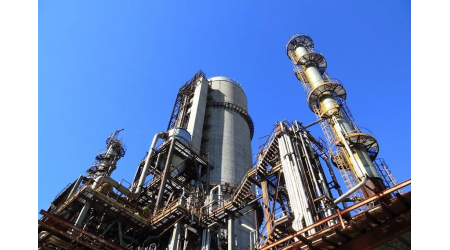
Gamma scanning is one of the most effective non-invasive methods for diagnosing and identifying production issues within the oil and petrochemical industries. ScanTech can identify problems in your process towers that other technologies can’t, avoiding unpleasant surprises by bringing issues to light that may become problems in the future, and allowing you to schedule maintenance shutdowns when it suits your production timeline best.
Leveraging the diagnostic abilities of gamma scans is the best preventative measure you can take to avoid unexpected production losses and identify maintenance requirements before they become issues.
Modern Gamma Ray Scanning Solutions
Unscheduled shutdowns are costly and disruptive to your business. To maintain safe operations and maximize production, it’s essential to address issues in process columns quickly. ScanTech’s Gamma Scanning offers fast and reliable techniques for evaluating trayed and packed towers. Our non-intrusive tower scans provide precise real-time measurements of process fluid characteristics while keeping units operational. With ScanTech, you can identify and solve process column issues without compromising your team’s performance or lost production time.
The Forefront of Trayed & Packed Tower Troubleshooting
Our gamma scanning services offer unmatched insights that cannot be achieved with alternative methods. The abundance and caliber of data we generate through our techniques make gamma scanning the go-to investigative tool for tower optimization and troubleshooting.
ScanTech’s gamma scan results are crucial in helping operators identify problems, devise solutions, and allocate resources effectively. By providing operators with insightful data, we enable clients to stay on track with their revenue projections, minimize downtime, detect, and address potential issues before they become major concerns.
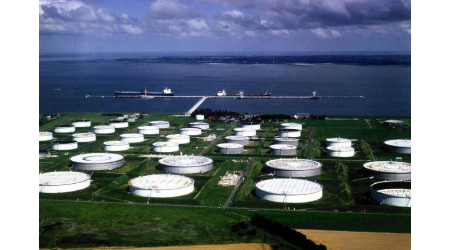
ScanTech’s non-invasive NuScan service is primarily used for level and interface measurements inside process vessels. The neutron backscatter technique is used to obtain accurate levels through the wall of the vessel.
NuScan neutron backscatter technology can be used to find deposits within storage tanks, vessels and pipelines, to determine external corrosion under insulation (CUI), and to identify voids under tank floors. This technique is not limited to process plants as it has found applications offshore, under the ocean surface, as well as in the food industry and security/law enforcement.
NuScan Neutron Backscatter – Theory
ScanTech’s NuScan is a portable device featuring a side-by-side configuration of a radioactive source emitting high-energy neutrons and an electronic detector. When the scanner traverses the vessel shell, the obtained readings are directly correlated with the quantity of hydrogen atoms in the scanning path. A higher hydrogen concentration leads to a stronger signal being detected.
Significant signal discrepancies arise at interfaces between hydrogen-rich liquids and vapors. Conversely, interfaces between two liquids typically exhibit a smaller signal variation, which is contingent upon the hydrogen concentration of each liquid involved. The utilization of low-energy neutrons facilitates accurate measurements and enhances the sensitivity of the NuScan device.
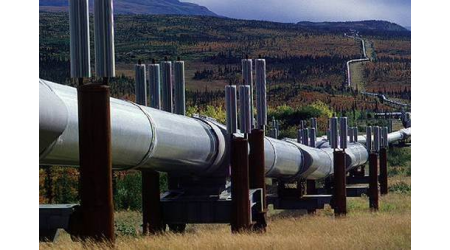
ScanTech’s Pipe Scanning service offers a quick and efficient solution for inspecting and evaluating blockages and deposits in above-ground piping. By employing the same principle as gamma scanning, our pipe scanning services accurately measure density variations within the pipes.
Pipe scans can determine the location of a deposit within a flowing pipeline while keeping the equipment external to the pipes. The data acquisition that results can determine the density, thickness and volume of the pipeline deposit if other parameters, such as pipe wall thickness, are known. Scans can be performed in different planes around the piping to fully analyze the distribution of any deposit through the piping.
Versatile, Adjustable & Portable Pipe Scanning Equipment
ScanTech’s pipe scanning equipment is designed to be adjustable, lightweight, and portable. It consists of a rigid frame with a source and detector mounted on opposite sides. This configuration allows the inspection equipment to be easily moved along the exterior of the piping while recording the density of the contents inside.
The frame of the pipe scan is highly versatile, adjustable from 4 inches to 48 inches or even more. It can be rotated to different orientations around the pipe, offering valuable insights into the distribution of any deposit within the piping. Typically, the scan orientations occur along both the vertical and horizontal axes.
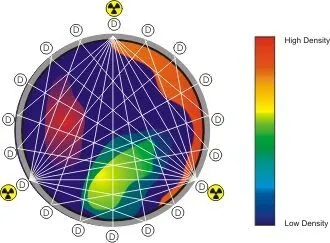
ScanTech’s industrial CT scan service offers enhanced visualization through industrial computed tomography. This procedure provides a comprehensive 2-Dimensional view, covering 360 degrees of the vessel at a specific height or location.
The result is a detailed, color-coded density map of the interior of the vessel or pipe, delivering precise insights into its internal structure and composition.
The CT Scan, a specialized service, complements the gamma scan on packed towers and is instrumental in detecting annular maldistribution. Selection of CT scan locations is informed by the outcomes of the preceding Gamma Scan tests.
When applied to piping, the CT scan unveils density variations, especially when different liquids and gasses experience laminar flow or during fluctuations in overall density within 2-phase flow. Furthermore, it offers insights into deposit patterns within the pipe’s interior at specific locations.
Industrial CT Scanning Procedure
CT scans involve placing an array of detectors at a specific elevation on the exterior of the vessel. Simultaneously, a gamma radiation source is positioned on the opposite side, enabling the capture of density readings at each detector’s location.
To ensure a comprehensive view, the source and detector network is systematically rotated through specific angles, with density readings taken at each position. This rotation is repeated at various angles until the CT scanner completes a full 360-degree scan around the vessel.
Following data collection, our specialized software processes the CT imaging data, producing a detailed 2D density image of the vessel’s interior. The resolution of this density map depends on the number of samples obtained during the CT scan procedure.
For additional scans at different elevations, the equipment can be repositioned, and the process is repeated to capture a comprehensive picture of the vessel’s internal structures and composition. Small positional increments may be used to create a 3D density image for enhanced analysis if the vessel structure allows for acquisition.
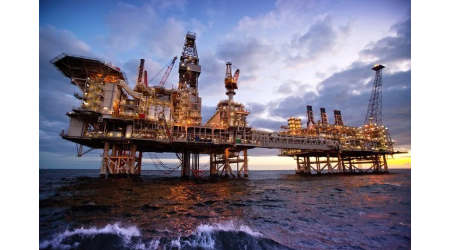
ScanTech’s Flooded Member Detection (FMD) system is the most reliable and cost-effective method available for both subsea pipeline inspections as well as oil and gas platform inspections for flooded members.
The Value of Regular Platform Inspections
Oil platform operators need to inspect these critical members on a regular basis because defects could allow the ingress of seawater, which can lead to structural failures over time.
Although essential, inspecting structural members located hundreds of feet underwater using conventional methods can present a challenging and intricate task, imposing considerable costs on the platform owner.
Our foremost objective in providing flooded member inspection services is to guarantee the safety of our personnel and the integrity of your subsea assets. Our success is underpinned by a combination of extensive inspection campaign experience, a commitment to well-trained personnel, and the use of cutting-edge inspection equipment.
Not only will Scanning Technologies meet these challenges head-on, we’ll overcome any underwater obstacles that are nearly impossible to overcome with traditional inspection techniques. For example, removing marine life that can grow on subsea structures, such as underwater pipelines and platform members is time-consuming and adds to operational costs.