
PROVEN TECHNOLOGY
Wire rope flaw detection is a proven and reliable technology, which provides rapid and accurate quantitative inspection results. If used properly, it can assist in making a determination of the operational condition and remaining service life of wire ropes that are subject to corrosion, abrasion, fatigue and general wear over time.
The technology can be used in inspections at high speeds of up to 4 m/s with reliable accuracy. Designed specifically for the examination of round wire rope, flat wire rope and steel-rubber flat wire rope in a wide range of industries and applications.
Wire rope inspection systems are generally used in mining, cranes, heavy lifting machines, offshore and onshore plants, cableways, cable bridges, elevators, guy ropes in flare stacks and communication masts and overhead transmission lines. In all of these applications, the integrity of the wire rope is important to the safety of the operation and reliability of the equipment.
The technology combines two important inspection capabilities: Loss of Metallic Area (LMA) measurement and Localized Flaw (LF) detection. These functions enable inspectors to assess the condition of the rope rapidly and make effective use of their decision-making process about continuing or retiring the rope. This can help operators detect internal degradation and spot issues at an early stage, minimizing the risk of unforeseen failures and better maintenance scheduling.
The inspection method is based on several internationally recognized standards such as ISO 4309:2017 - ASTM E1571-11(2016) and EN 12927. These standards ensure that the inspections are conducted uniformly and in compliance with internationally recognized standards for safety and quality.
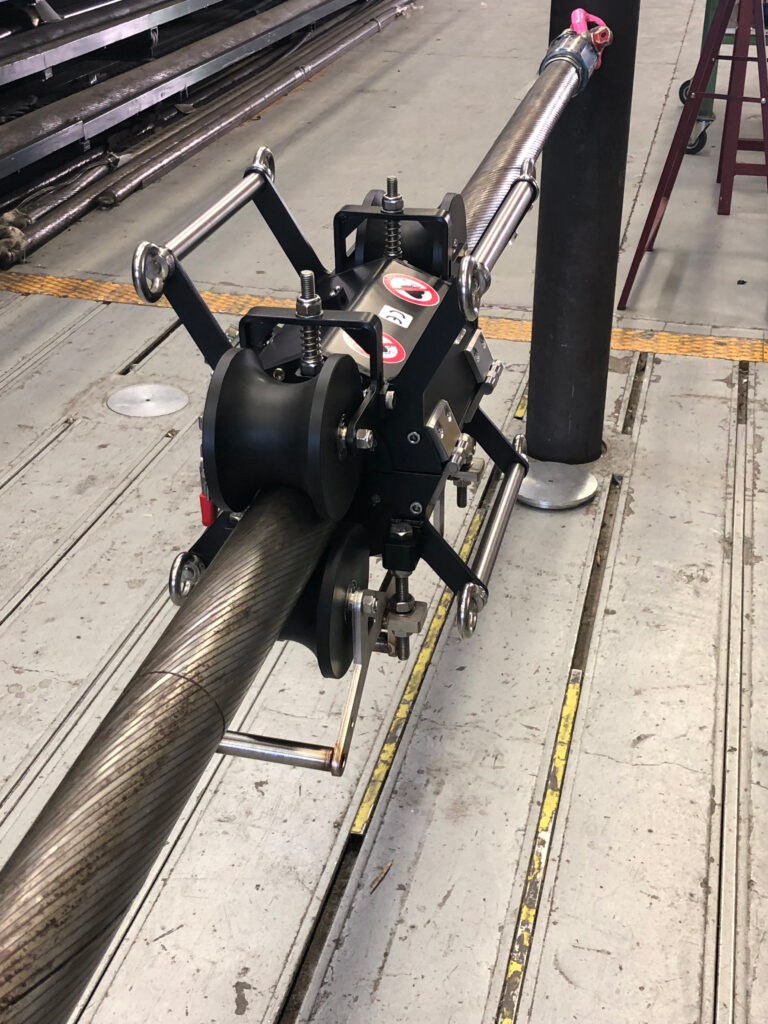
Today's wire rope scanner systems are fully digitalized and easy to use. An important benefit of these systems is that they can be prepared for the tests with very little rope preparation. Inspection readings will not be significantly affected by grease, paint, lubrication, dirt or icing and the inspection can be performed rapidly with a minimum of clean-up work. This can help save up on maintenance expenses and lessen production downtimes.
The regular checks facilitated by quick and effective scanning also help to ensure safe operation. Frequent monitoring will allow operators to detect deterioration trends before they reach critical levels, prolong the service life of the rope and minimize the potential for catastrophic failure.
Another key benefit of the latest wire rope testing systems is that they can save digital data of the tests carried out for later comparison. Looking back on the history will reveal how the defects are evolving and aid maintenance staff in determining corrective action plans and replacement time for rope.
When unexpected wire rope failures occur in demanding industrial settings, the consequences can be costly, equipment damage and significant safety issues. Regular inspection of wire rope can help the companies to improve the reliability of their assets and to optimise their maintenance budget by relying on condition-based maintenance instead of planned replacement programmes.
METHODOLOGY
Inspection technology is based on Magnetic Flux Leakage (MFL) principle. The magnetic field is magnetically saturated in the magnetic head during testing in the longitudinal direction with high magnetic strength rare earth magnets.
If the rope is free from irregularities, the magnetic field that is spread over the surface of the rope is stable and uniform. There are coils and Hall Effect sensors that are mounted around the rope that constantly measure this magnetic flux, and under normal conditions, the reading on this magnetic field is consistent.
But in the case of change in the cross-section of the ferrous component of the rope, like corrosion, broken wire, wear or internal damage, the magnetic field will distort. This disturbance increases the level of magnetic flux leakage which is being picked up by the sensors around the rope.
The irregularities produce measurable signals that can be used to locate and quantify the defect. These signals are sent to an external processor for storage and processing. Collected data is usually comprised of LMA traces, LF traces, individual sensor signals, rope speed and other operating conditions.
The digital inspection system can automatically produce preliminary reports on-site, so that inspectors can quickly and easily evaluate the condition of the rope. Based on the detailed evaluation of the collected traces and sensor data, a more detailed inspection report can be drafted according to the guidelines of ISO 4309:2017.
There are a number of significant benefits to using MFL technology. The method is non-destructive, which means that the rope can still be used after being inspected. Also, the technology can identify internal and external defects which might not be seen by visual inspection alone.
While visual inspection can only be used to detect damage at the surface, MFL inspection systems are able to detect wire breaks and corrosion occurring below the surface of the rope. This gives much better information on the condition of the rope.
Another advantage of the automated wire rope inspection systems is consistency in the inspection. The scanning process is digital and sensor-based, which reduces the operator's need for interpretation of the results as compared to purely visual inspection processes. This enhances the repeatability and reliability of multiple inspections.
Inspections can also be made at relatively high speeds, which makes it possible to inspect a lot of rope in a single go. In industries that use long ropes for continuous work, it is more important to minimize shutdown periods.
The importance of regular inspection of wire ropes
Wire ropes play a vital role in various lifting, moving, and structural applications. Eventually they are subjected to mechanical stresses, bending fatigue, environmental influences, corrosion and abrasive wear. Failure can occur over time, even when there are minor defects.
Periodic checks allow for the detection of deterioration in its early phases. This not only makes work and equipment safer, but helps companies to reduce such expensive unplanned outages and emergency repairs.
The use of condition monitoring using advanced non-destructive testing (NDT) techniques enables maintenance engineers to gain a greater understanding of how ropes are operating in the field. Operators are not required to replace ropes after a set period of time, but rather after they are in the condition they are in.
This predictive maintenance model enables ropes to be used to their maximum capacity and operating standards are maintained.
BENEFITS OF DIGITAL WIRE ROPE TESTING SYSTEMS
Digital wire rope testing systems offer several benefits, such as
- Digital wire rope testing systems offer multiple benefits in operation and maintenance:
- More rapid inspection with little downtime.
- Accurate detection of internal and external defects is possible.
- Less need to prepare long rope.
- The consistency and repeatability of inspections is improved.
- Long-term data storage in digital format for monitoring purposes.
- Improved work site safety by detecting defects early on
- International inspection requirements met.
The benefits of digital wire rope inspection systems are significant and a crucial component of asset integrity and maintenance programs in various industries.
CONCLUSION
Wire rope flaw detection technology is a quick, accurate and extremely effective way to assess the state of wire ropes in critical industrial applications. The combination of Loss of Metallic Area measurement with Localized Flaw detection provides a detailed understanding of the deterioration, corrosion, abrasion and fatigue damage of the rope.
They are based on Magnetic Flux Leakage technology and provide accurate and repeatable inspection with minimum disruption to the process. Being able to inspect ropes in a timely manner, even when conditions are harsh with grease or paint on the rope, offers significant operational and cost benefits.
As industries strive for safer, more efficient, and reliable operations, the need for wire rope inspection systems that can keep up with the evolving demands is growing.
If you are looking to optimize the safety and performance of your wire rope system and want to do the right thing, it is beneficial to speak with a wire rope solution engineer and/or experienced NDT specialist to determine which wire rope inspection system and testing scheme is best for your system..
Source: https://nexxis.com/how-to-get-the-most-out-of-your-wire-ropes/




There are no comments yet!