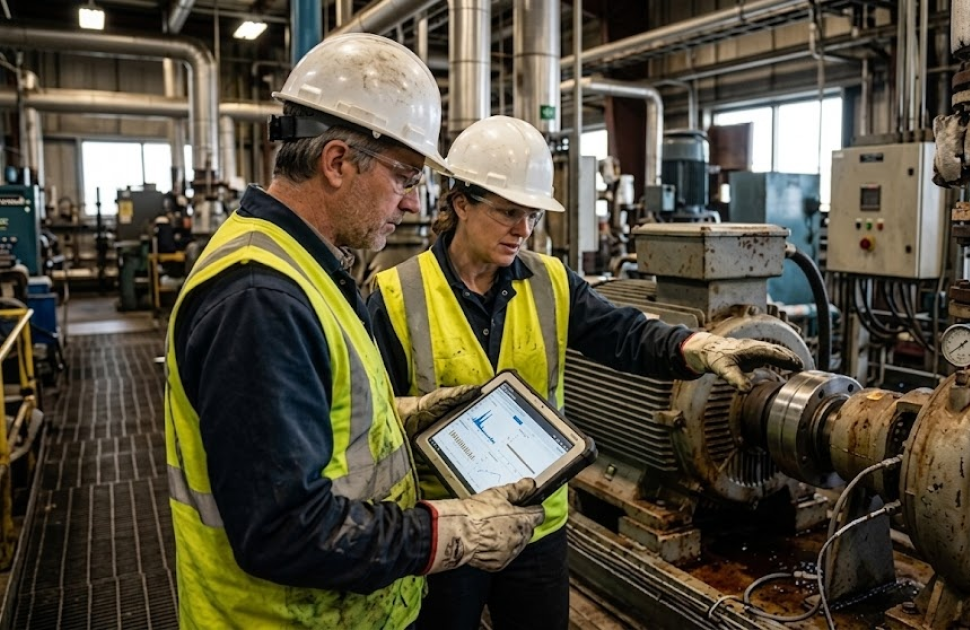
Installing sensors is easy. Building a Condition Monitoring programme that consistently improves reliability is far more challenging.
Many organisations begin their journey by investing in advanced monitoring technologies, expecting that better sensors or sophisticated software will automatically reduce failures. Yet, despite these investments, some programmes struggle to deliver meaningful results. They generate vast amounts of machine health data but fail to improve maintenance planning, reduce downtime, or increase asset reliability.
The reason is simple: successful Condition Monitoring programmes are built on strategy before technology. They begin with understanding which assets matter most, how those assets fail, and what information maintenance teams need to make better decisions. Sensors, analytics, and digital platforms certainly play an important role, but they only create value when they are integrated into a structured reliability programme.
Across industries, the organisations achieving the greatest success share a common approach. They prioritise critical assets instead of monitoring everything, establish reliable baseline data before analysing trends, and ensure that condition information directly influences maintenance actions. Most importantly, they recognise that Condition Monitoring is not an isolated activity; it is an essential part of a broader asset reliability strategy.
Whether a facility operates a refinery, manufacturing plant, power station, or renewable energy asset, the principles behind an effective programme remain remarkably consistent. The challenge is not collecting more data; it is building a system that transforms data into better maintenance decisions.
Start with the Right Problem
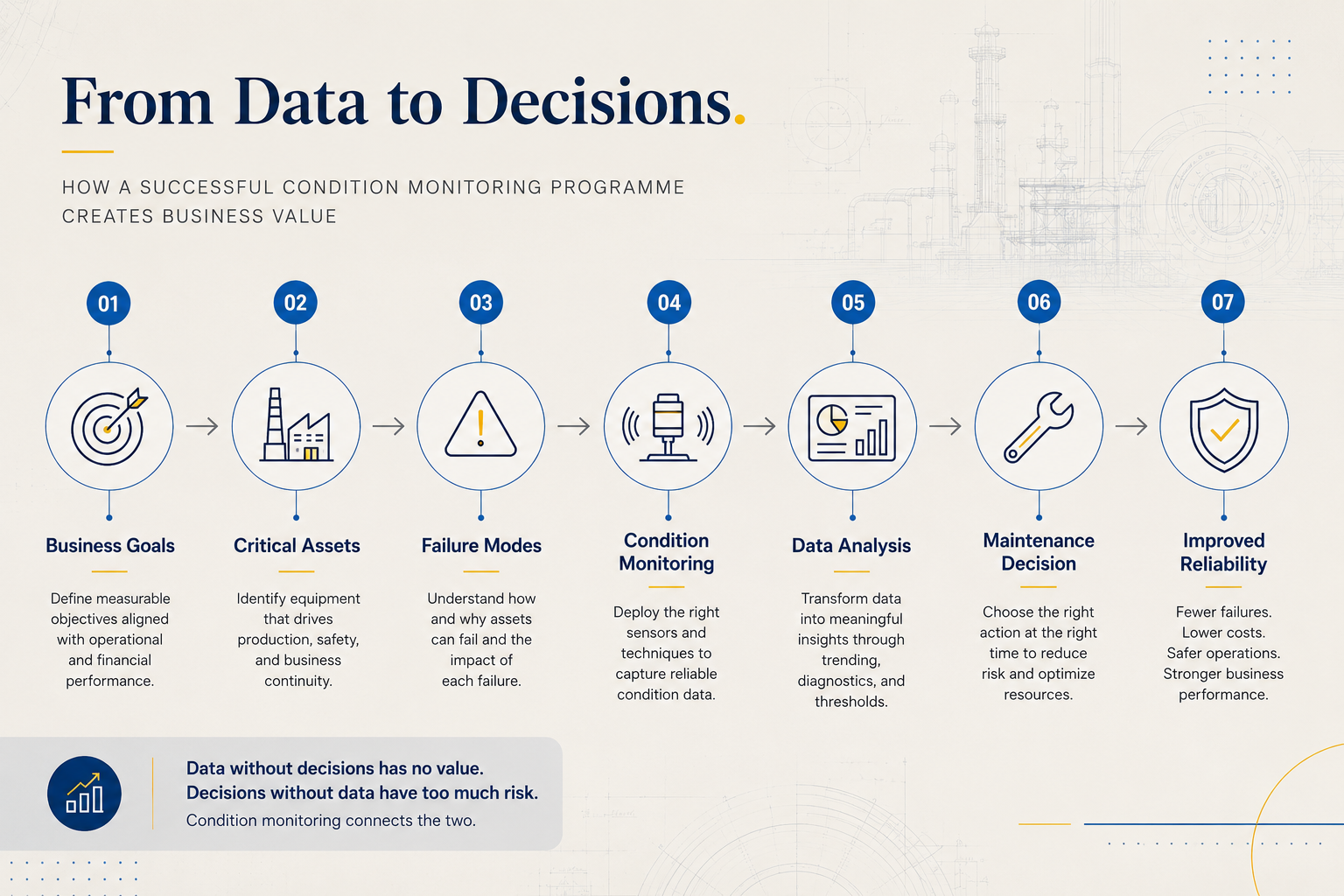
One of the most common mistakes organisations make is believing that every asset requires the same level of monitoring. While this approach may appear comprehensive, it often overwhelms maintenance teams with unnecessary information while diverting attention from equipment that genuinely affects operational performance.
Successful programmes begin by identifying critical assets, equipment whose failure would have the greatest impact on safety, production, environmental compliance, or operational continuity. International guidance such as ISO 17359 recommends assessing asset criticality, operating conditions, and failure consequences before deciding how equipment should be monitored. This risk-based approach allows organisations to focus resources where they create the greatest value.
For example, an unexpected failure of a turbine, compressor, or transformer can interrupt production for days, whereas the failure of less critical auxiliary equipment may have only a limited operational impact. Monitoring strategies should therefore reflect business priorities rather than applying identical inspection methods across every machine.
This philosophy also influences the level of monitoring required. Highly critical assets may justify continuous online monitoring, while periodic inspections are often sufficient for lower-risk equipment. By aligning monitoring effort with equipment importance, organisations improve reliability without creating unnecessary complexity.
Best Practice
Start by asking which assets matter most, not which technologies should be installed. A well-prioritised programme delivers better outcomes than one that attempts to monitor everything.
Build the Foundation Before Choosing Technology
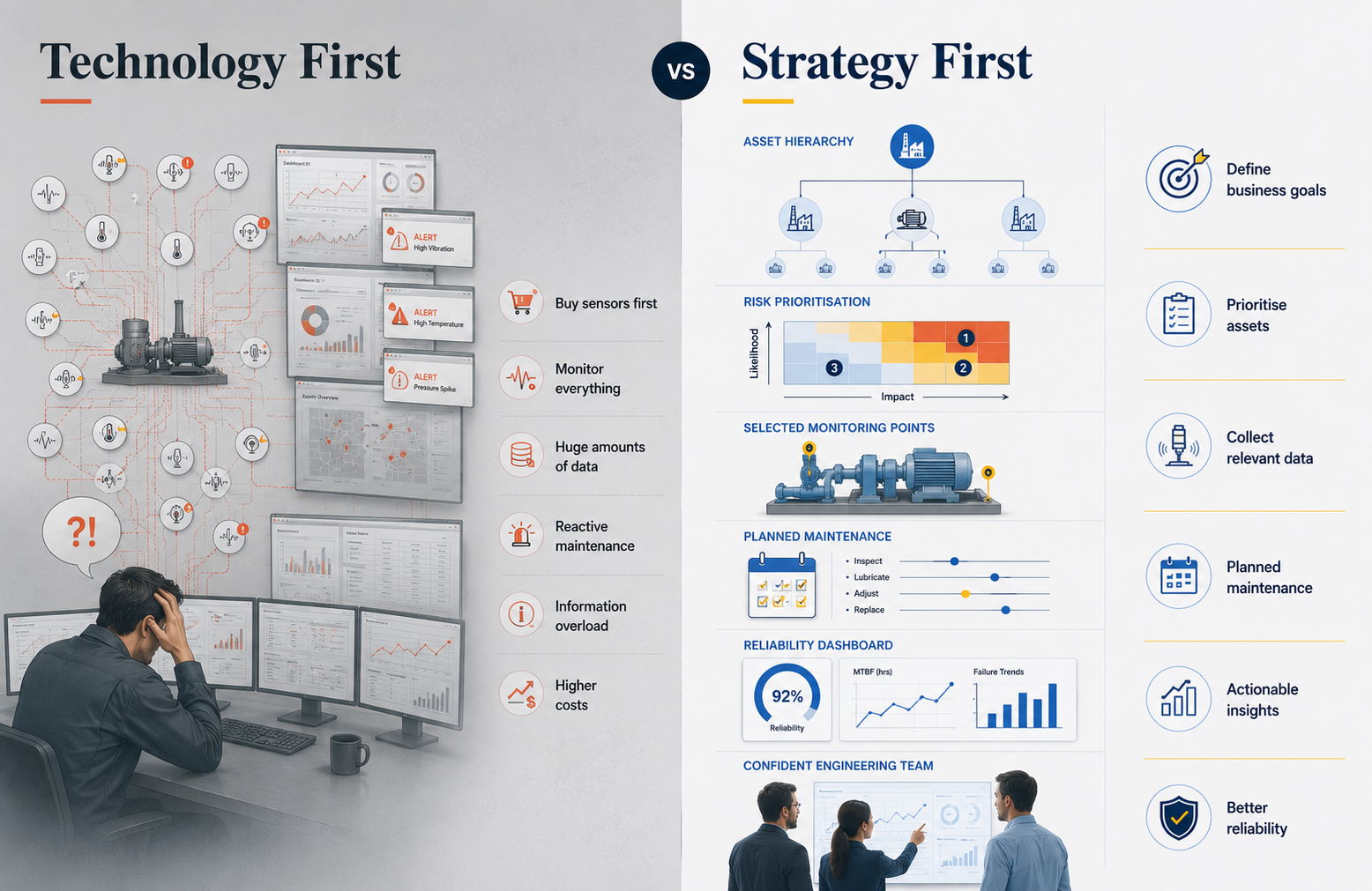
Once critical assets have been identified, the next step is understanding how they are most likely to fail. This is where many Condition Monitoring programmes either succeed or lose direction.
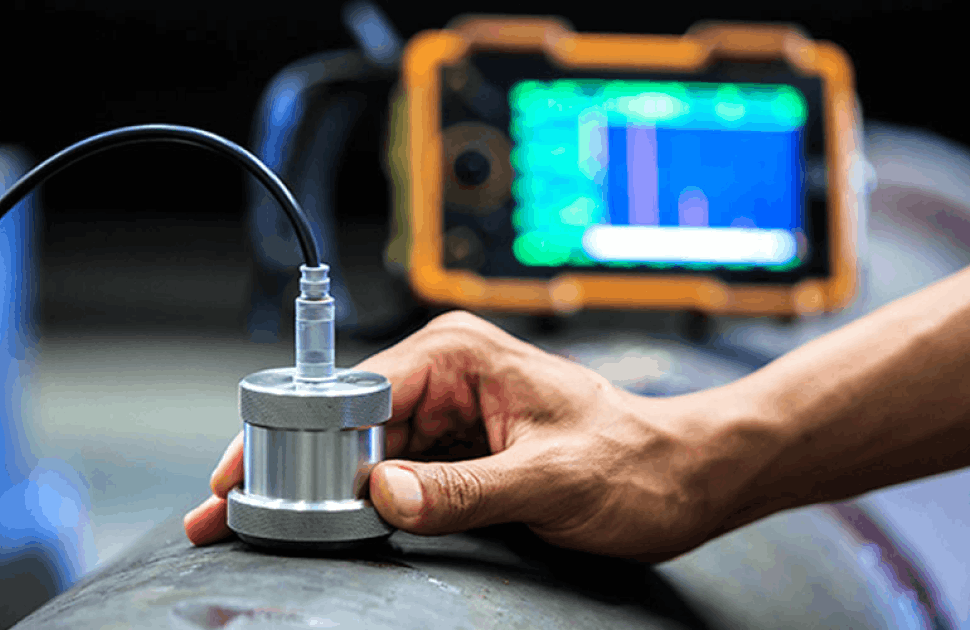
Different assets deteriorate in different ways. Bearings gradually develop vibration signatures, electrical insulation may deteriorate through partial discharge activity, lubricants degrade over time, while corrosion slowly reduces wall thickness in process equipment. Selecting monitoring technologies without first understanding these failure mechanisms often results in unnecessary investment and limited diagnostic value.
Instead, organisations should begin with failure analysis and then select monitoring techniques capable of detecting those specific degradation patterns. This ensures that every monitoring method serves a defined reliability objective rather than simply collecting additional data.
Equally important is establishing baseline measurements. Every asset behaves differently, even when operating under similar conditions. Recording vibration levels, operating temperatures, lubricant condition, or other health indicators while equipment is known to be operating normally provides the reference point against which future changes can be evaluated.
Without reliable baseline data, maintenance teams may struggle to distinguish between normal operating variation and genuine equipment deterioration. Trend analysis becomes less meaningful, alarm thresholds become difficult to define, and confidence in the monitoring programme gradually declines.
The most effective Condition Monitoring programmes therefore invest as much effort in understanding equipment behaviour as they do in selecting monitoring technologies.
Best Practice
Choose monitoring technologies to match failure mechanisms, not because they are the newest or most advanced. The quality of the monitoring strategy will always have a greater impact than the quantity of sensors installed.
Choosing the Right Sensors
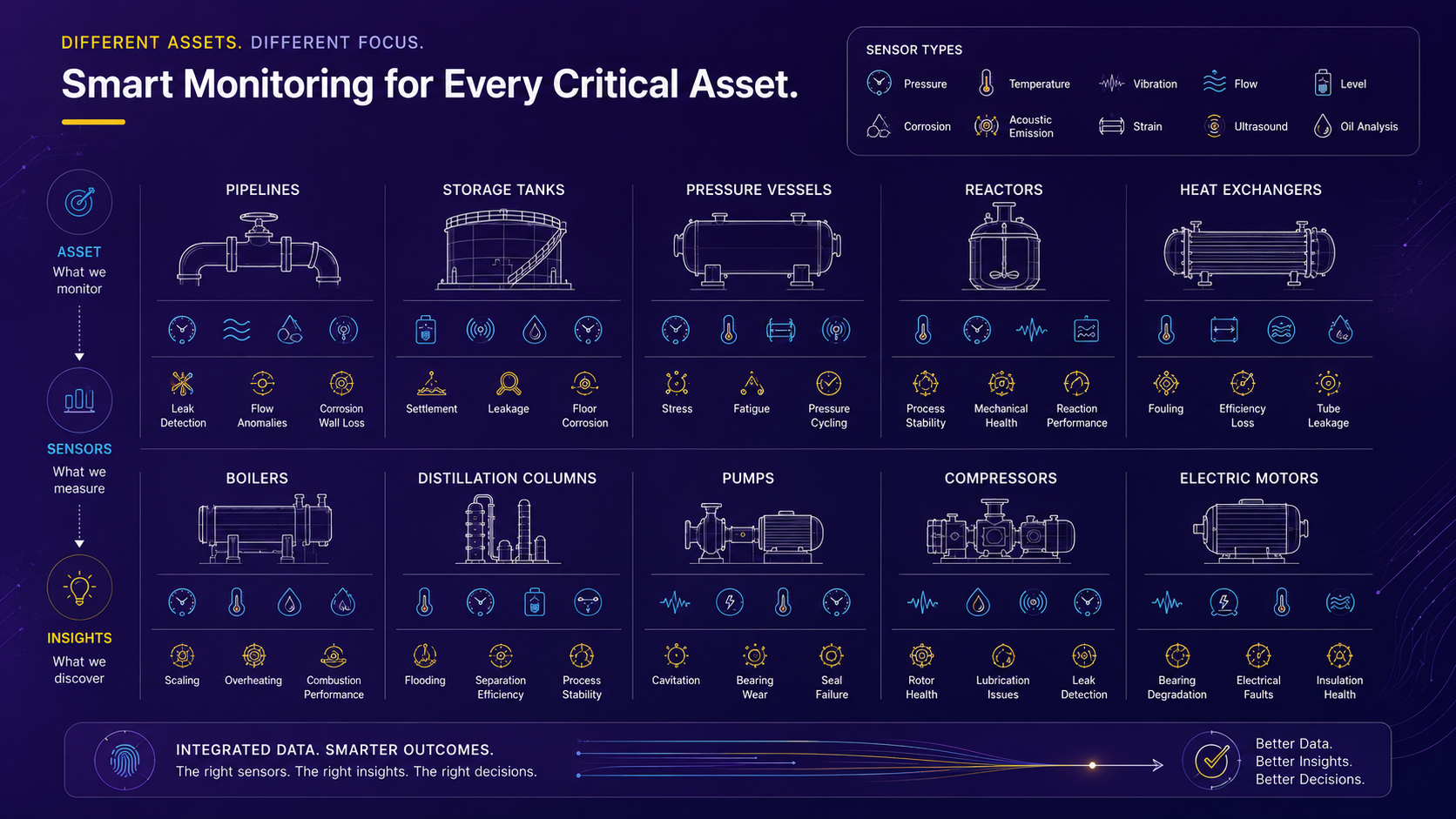
Every industrial asset operates under different conditions, experiences different failure mechanisms, and requires a tailored Condition Monitoring strategy. Selecting sensors should therefore be driven by the equipment's most likely degradation modes rather than adopting a one-size-fits-all approach. The goal is not to install more sensors, but to collect the right data that supports timely and informed maintenance decisions.
For pipelines, pressure, flow, corrosion, acoustic, and fibre optic sensors help detect leaks, corrosion, wall loss, and flow anomalies. Above-ground and underground storage tanks commonly use corrosion monitoring, acoustic emission, level, pressure, and leak detection systems to identify floor corrosion, settlement, structural degradation, and product leakage.
Critical process equipment such as pressure vessels, reactors, heat exchangers, boilers, and distillation columns rely on combinations of pressure, temperature, differential pressure, vibration, strain, and corrosion monitoring sensors. These provide valuable insights into process stability, thermal performance, fouling, fatigue, pressure cycling, tube integrity, and internal corrosion before they develop into costly failures.
For rotating equipment such as pumps, compressors, motors, turbines, and gearboxes, vibration sensors remain the cornerstone of Condition Monitoring. They are often complemented by bearing temperature sensors, oil analysis, motor current signature analysis (MCSA), ultrasound, and thermography. Together, these technologies can identify imbalance, misalignment, bearing wear, lubrication issues, electrical faults, cavitation, seal degradation, and other developing mechanical problems.
While each sensor measures a specific parameter, their greatest value comes from combining multiple data sources to build a complete picture of asset health. This integrated approach enables maintenance teams to move beyond fault detection, allowing them to diagnose root causes, predict failures with greater confidence, and schedule maintenance activities before unplanned downtime occurs.
Turn Data into Maintenance Decisions
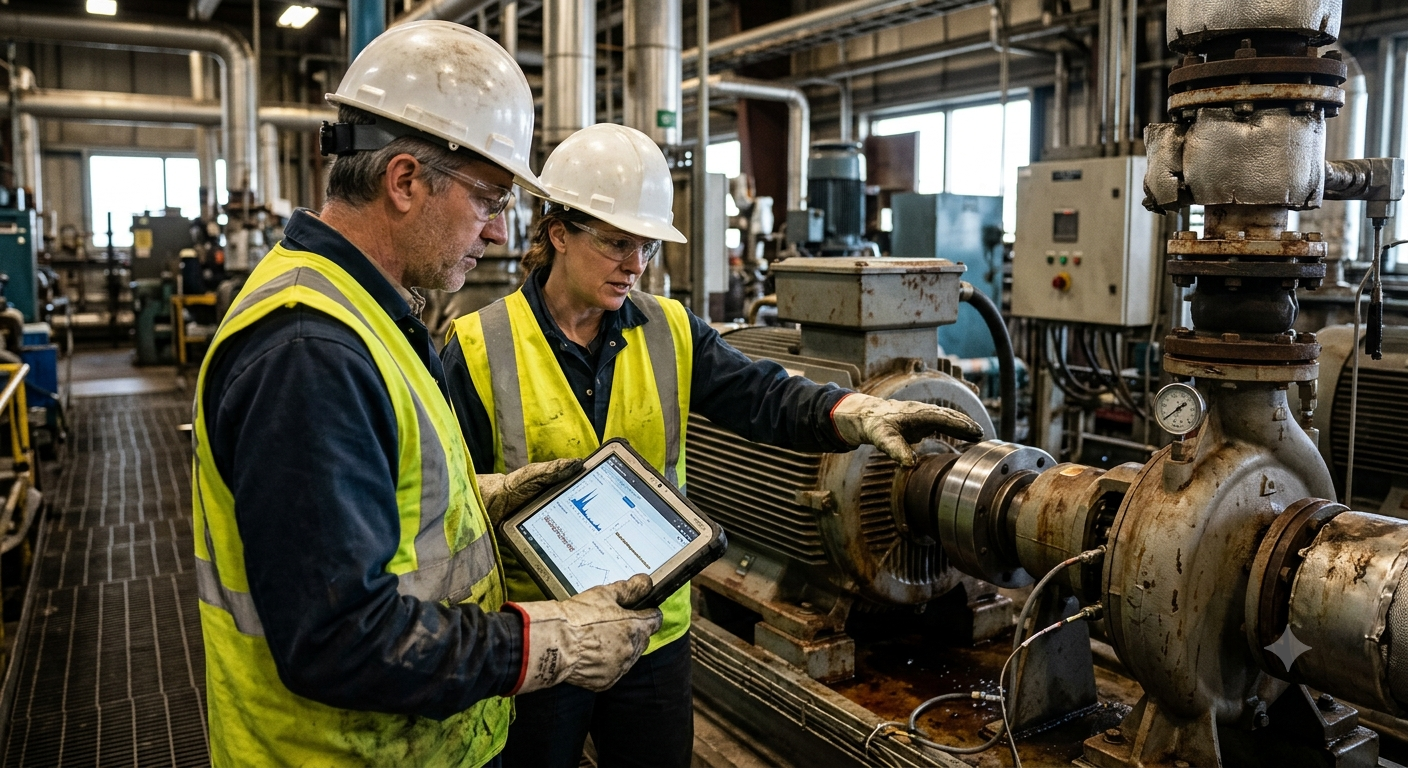
Collecting condition data is only the beginning of the reliability journey. The real value of Condition Monitoring lies in helping maintenance teams decide what action should be taken, when it should be taken, and how urgently it needs to be addressed.
Modern facilities continuously generate information from vibration sensors, thermal cameras, oil analysis programmes, ultrasonic inspections, and connected monitoring systems. However, more data does not automatically translate into better reliability. Without a structured process for analysing trends, diagnosing faults, and prioritising maintenance activities, valuable information can remain unused until equipment eventually fails.
Leading organisations treat Condition Monitoring as a decision-support tool rather than a reporting exercise. Instead of reacting to isolated alarms, they analyse changes in equipment behaviour over time, combine information from multiple monitoring techniques, and use engineering judgement to determine the most appropriate maintenance response.
Consider a manufacturing plant where vibration analysis identifies the early stages of bearing wear on a production-critical motor. Rather than waiting for the defect to cause an unexpected shutdown, maintenance teams can plan the replacement during a scheduled production stop, avoiding emergency repairs, minimising production losses, and reducing maintenance costs. The technology identifies the problem, but the value is created through the maintenance decision that follows.
This shift—from collecting information to enabling action, is what separates mature Condition Monitoring programmes from those that simply produce more reports.
Best Practice
Condition Monitoring should answer one question above all others: What maintenance decision can we make today that will prevent a failure tomorrow?
Build the Programme Around People
Even the most advanced Condition Monitoring system is only as effective as the people interpreting its results. Sensors can detect abnormal vibration, rising temperatures, lubrication issues, or electrical faults, but they cannot fully understand the operational context behind those changes. That responsibility still rests with skilled engineers, analysts, inspectors, and maintenance teams.
Successful programmes invest in developing technical competency alongside technological capability. Personnel must understand equipment behaviour, recognise failure patterns, and determine whether a developing fault requires immediate intervention or can be managed during a planned maintenance window. Standardised inspection procedures, regular training, and collaboration between reliability, operations, and maintenance teams all contribute to more consistent and confident decision-making.
Equally important is creating a culture where Condition Monitoring information is trusted and acted upon. If operators ignore early warnings or maintenance teams lack confidence in the data, even the most sophisticated monitoring system loses its value. Reliability improves when technical expertise and machine health information work together, not when they operate independently.
Best Practice
Technology identifies potential problems, but experienced people turn those insights into effective maintenance decisions.
Measure Success, Then Keep Improving
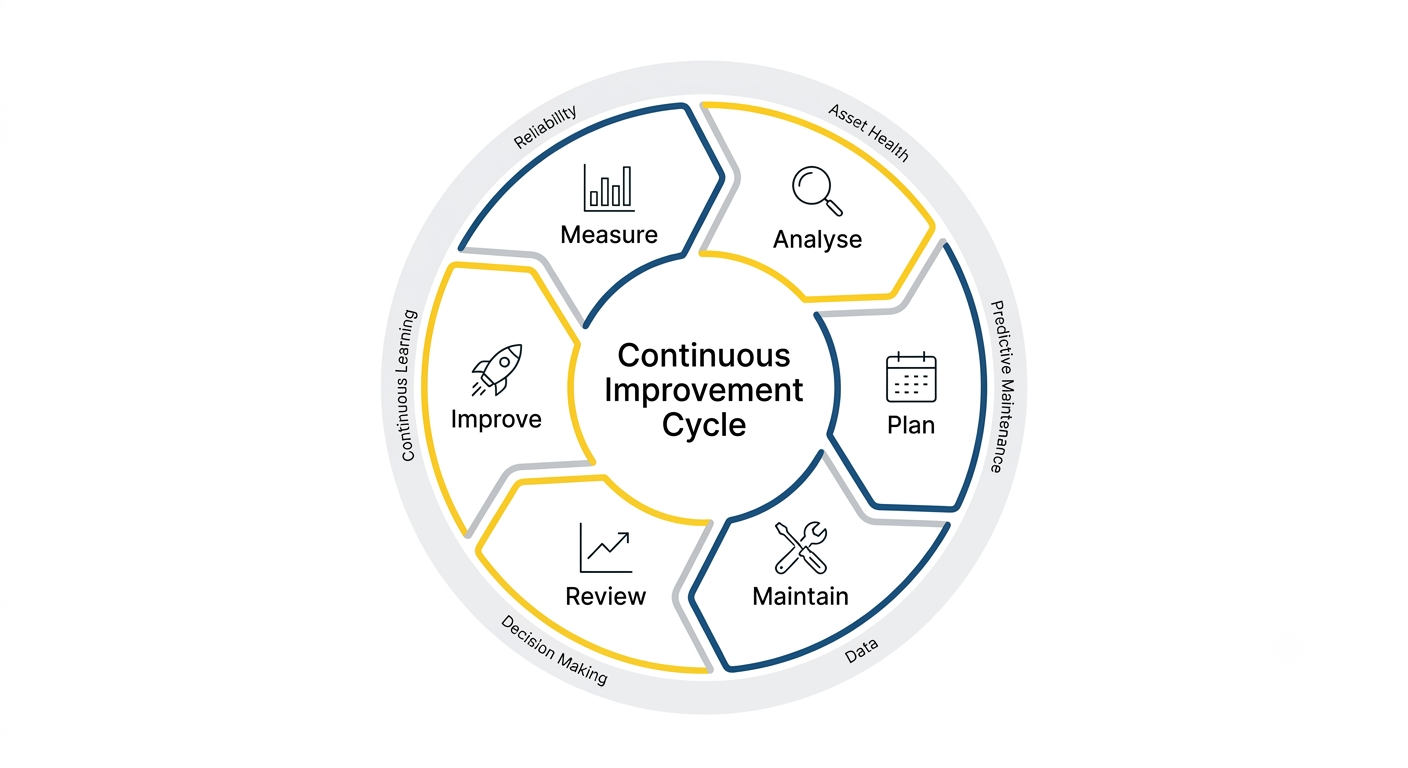
Building a Condition Monitoring programme is not a one-time project; it is a continuous process of refinement. As equipment ages, production demands change, and new technologies emerge, monitoring strategies must evolve alongside them.
The most successful organisations regularly review programme performance using meaningful business indicators rather than technical statistics alone. Metrics such as reduced unplanned downtime, increased Mean Time Between Failures (MTBF), improved asset availability, lower maintenance costs, and higher schedule compliance provide a clearer picture of whether the programme is delivering value.
Regular reviews also create opportunities to improve alarm thresholds, adjust inspection intervals, refine diagnostic methods, and incorporate lessons learned from previous equipment failures. This continuous feedback loop strengthens both maintenance planning and long-term reliability.
A mature Condition Monitoring programme is therefore characterised not by the number of sensors installed, but by its ability to adapt, learn, and consistently support better maintenance decisions.
Best Practice
Measure outcomes that matter to the business, review the programme regularly, and treat every inspection as an opportunity to improve the next one.
Conclusion
Building a successful Condition Monitoring programme is not about adopting the latest technology; it is about creating a structured approach to reliability. Organisations that achieve the best results begin with clear objectives, focus on critical assets, understand failure mechanisms, establish reliable baseline data, and ensure that monitoring information drives maintenance decisions.
Equally important, they recognise that technology alone cannot improve reliability. Skilled people, consistent processes, and a commitment to continuous improvement are what transform machine health data into measurable business value.
As industries continue to embrace digitalisation, artificial intelligence, and connected assets, these fundamentals remain unchanged. The organisations that will benefit most are not those collecting the greatest amount of data, but those using the right information to make timely, informed decisions that improve reliability, extend asset life, and reduce the cost of failure.

There are no comments yet!