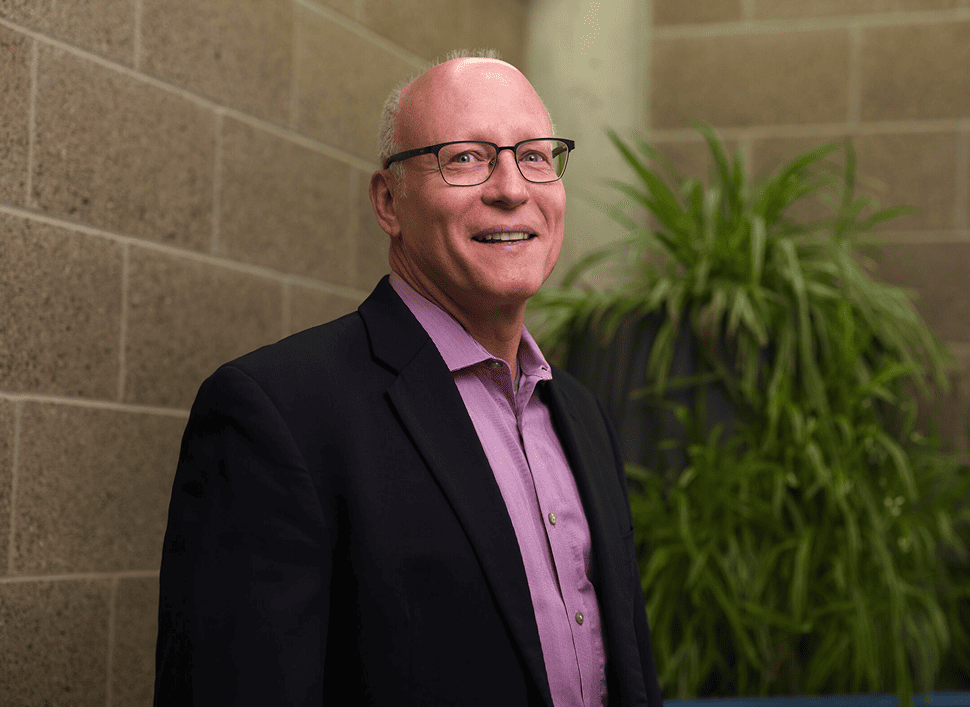
The Center for Nondestructive Evaluation (CNDE) at Iowa State University is entering a new phase of growth and focus with the appointment of Joseph Turner as its new director, alongside continued expansion of its education and research initiatives in nondestructive evaluation (NDE).
“I think of nondestructive evaluation professionals like the offensive line of a football team,” says Joseph Turner, the new director of the Center for Nondestructive Evaluation. “When NDE engineers do their job, you don’t even notice them. But when there is a breakdown, and the quarterback gets sacked, then you notice. The job of NDE is to make sure things do not fail and that components are manufactured correctly, all in the name of safety.”
Turner has joined Iowa State as a professor of aerospace engineering and the Kirby Gray (Battelle) Chair in Engineering, taking over leadership of CNDE, a research centre that brings together multiple engineering disciplines including aerospace, electrical and computer engineering, materials science, mechanical engineering, industrial engineering, and civil engineering.
“I’m very excited to join this unique gem at Iowa State University,” says Turner.
CNDE is positioned as the only university-operated NDE facility in the United States offering a comprehensive educational structure in the field, including the country’s only undergraduate minor dedicated to nondestructive evaluation. The programme integrates academic coursework with hands-on laboratory experience, enabling students to work directly with inspection technologies.
“David Eisenmann, an associate teaching professor in MSE, has been leading the undergrad minor program and it has just been growing phenomenally,” says Turner.
The centre’s emphasis on practical exposure has been reflected in student outcomes. Trent Moritz, who recently completed a Ph.D. in electrical engineering, highlighted the relevance of CNDE experience in industry settings.
“The tools you get to work with are amazing,” he says. Moritz participated in an undergraduate internship at Los Alamos National Laboratory, where his CNDE experience caught attention. “It was a case of ‘Oh, you’ve actually used some of this equipment?’ It turns out the stuff I was using almost every day at CNDE were things few students have much actual experience with, so they were very impressed.”
Moritz, now employed at the Johns Hopkins Applied Physics Laboratory, added: “go into the NDE minor and get involved with research as an undergrad. The experience you get is a massive help for internships and future employment.”
From a research and industry perspective, CNDE continues to work with its Industrial Advisory Board and external companies on a range of projects, maintaining its role in advancing inspection technologies and applications.
Turner also indicated that the centre is evaluating future directions in inspection technologies, including the integration of artificial intelligence.
“One of the strengths we have is modeling (the process of creating physical, conceptual, or mathematical representations to understand, explain, and predict complex, real-world phenomena) and with AI you want to ensure that it is doing the job it is supposed to with our work. We must ask, ‘where do we fit into this picture of using AI for inspections?’”
Established in 1985 as an Industry-University Cooperative Research Center with support from the National Science Foundation, CNDE continues to operate with a focus on collaborative research and education in nondestructive evaluation, positioning itself at the intersection of workforce development, inspection technology, and applied engineering research.