The Guam Additive Materials and Manufacturing Accelerator (GAMMA) is targeting full operating capacity by February 2027, with the facility being developed to strengthen additive manufacturing and inspection capabilities for defence sustainment in the Indo-Pacific.
The applications centre is being managed by the Applied Science and Technology Research Organization of America (ASTRO America) under a $40 million mandate from the US Navy’s Maritime Industrial Base Program office. The initiative is intended to relocate defence sustainment capabilities closer to the operations they support, reducing the need to source components from off-island locations.
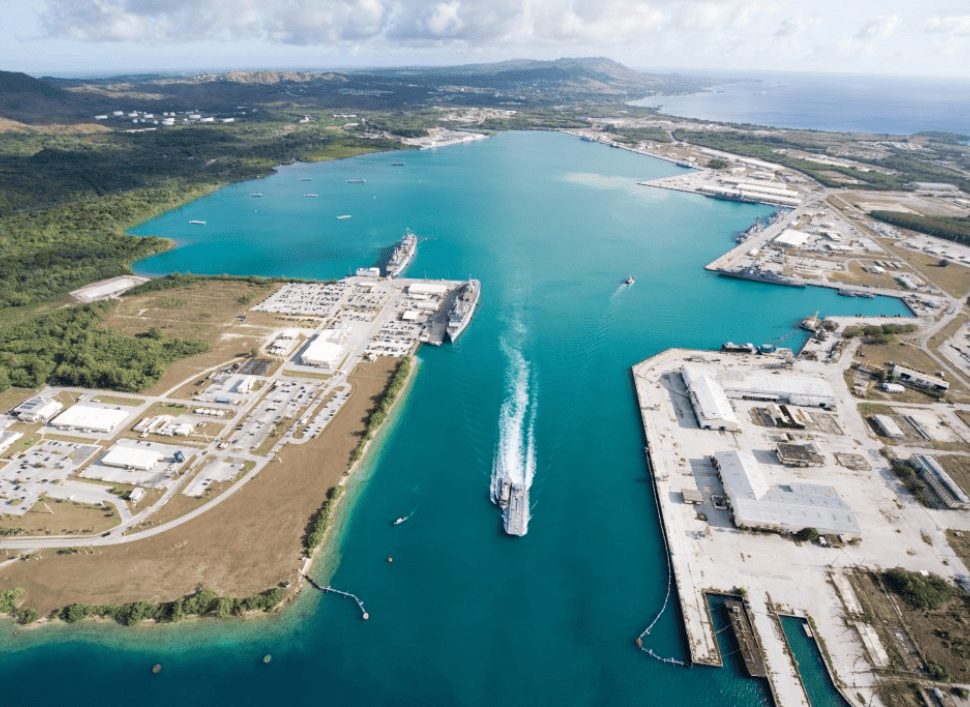
GAMMA is being developed at the Pacific Industrial Park in Dededo, Guam. The facility is intended to manufacture components for applications including submarines, ambulances and fire engines, with the objective of reducing supply lead times for parts that can otherwise take months or years to source.
“We are going as fast as we can here to get everything together,” said Neal Orringer, co-founder, president and board chairperson of ASTRO America.
Inspection and evaluation central to GAMMA operations
For GAMMA, manufacturing capability is being developed alongside inspection and evaluation infrastructure. According to Orringer and GAMMA director and general manager Alex Benham, evaluation was incorporated into the applications centre's scope from the outset.
“Evaluation is important − it takes hundreds of pages of data to confirm that parts are made right. Because if a part doesn’t have adequate density, if it can’t withstand impact, then it can be life and death,” Orringer said.
Microscopy, digital inspection tools, robotic welders and CNC milling machines have already been installed at the facility. An X-ray computed tomography (CT) scanner is among the higher-grade inspection equipment still expected to be added.
The inspection capability is particularly significant for components requiring certification against naval standards. Non-destructive volumetric inspection can be used to verify characteristics such as density and porosity without damaging the manufactured components.
Workforce development accompanies facility expansion
ASTRO America is also developing a workforce pipeline alongside the physical infrastructure. The organisation has partnered with the Colorado School of Mines and the University of Guam as part of its workforce development efforts.
The plan includes establishing a complementary mechanical engineering programme on Guam, although Orringer said its start is being targeted for fall 2027 rather than being rushed.
“You cannot have a manufacturing industry without well-trained, highly competent people. Our goal is not just to create a program that will only last for a couple of years,” he said.
Orringer also said there is local interest in developing skills for the manufacturing sector.
“I think there’s a hunger here to get into this industry.”
Facility positioned within wider US Navy additive manufacturing strategy
GAMMA forms part of a wider effort by the US Navy to expand the use of additive manufacturing for readiness, qualification and supply-chain applications.
The facility is intended initially to support Navy requirements before potentially expanding its services to other military branches, Guam government agencies and local organisations.
The broader objective is to establish a manufacturing and inspection capability within the region that can support parts requirements closer to where they are needed.
“This factory in February 2027 is going to be a world-class factory that rivals any major advanced manufacturing factory anywhere in the world. And it just happens to be in Guam,” said Orringer.