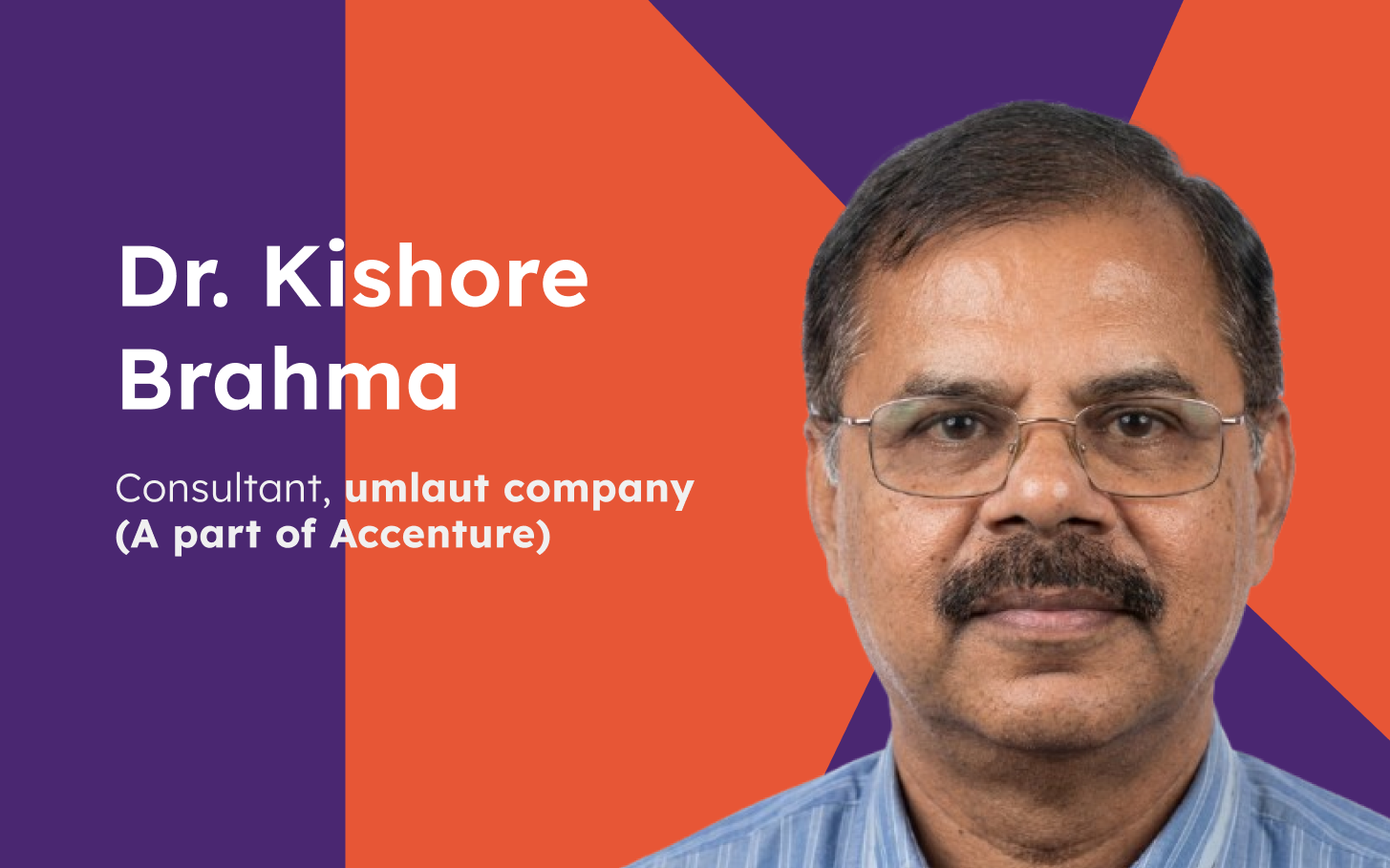
With over three decades of experience across aerospace research, industry leadership, consulting, and academia, Dr. Kishore Brahma has made significant contributions to structural integrity and Fatigue & Damage Tolerance (F&DT). In this interview with OnestopNDT, he shares insights from his journey, highlighting the evolution of fatigue analysis, the role of inspection techniques, and the growing importance of digital tools and collaboration in ensuring aircraft safety and airworthiness.
Dr. Kishore Brahma, welcome to OnestopNDT—it is a pleasure to have you with us. With more than three decades of experience spanning aerospace research, industry leadership, consulting, and academia, could you share how your journey in structural integrity and Fatigue & Damage Tolerance (F&DT) evolved over the years?
I extend my greetings to everyone and express my gratitude to OnestopNDT for the privilege of sharing my journey with you.
My journey in structural integrity and Fatigue & Damage Tolerance has really been a story of evolution across different phases of my career. I began in aerospace research, where my focus was on understanding the fundamentals of fatigue and crack growth. My early years taught me experimental methods and the importance of being accurate and careful.
As I moved into industry leadership roles, the emphasis shifted from theory to application. Working on major aerospace programs, I had to balance safety, performance, and cost. It was here that I learned how F&DT principles translate into real-world design decisions, certification processes, and fleet sustainment.
Later, in consulting, I had the privilege of advising organizations across commercial aviation. It allowed me to contribute to best practices and standards that had an impact beyond a single company.
My academic phase has been equally rewarding. Teaching and mentoring young engineers gave me the chance to pass on lessons learned from both research and industry.
Over the decades, I have witnessed the discipline itself evolve. When I started, fatigue analysis was largely empirical and deterministic. Today, we are integrating AI, big data, and predictive analytics into damage tolerance frameworks.
If I had to summarize, my journey has been about connecting the dots—linking fundamental science, practical engineering, policy, and education. Structural integrity and F&DT are ultimately about safeguarding lives while enabling innovation, and that has been the guiding principle throughout my career.
You began your career in research at the National Aerospace Laboratories after completing your Ph.D. from the Indian Institute of Science. How did your early research experience shape your approach to aircraft structural integrity and life prediction?
My early research at the Indian Institute of Science and later at the National Aerospace Laboratories was pivotal in shaping my approach to aircraft structural integrity and life prediction. At IISc, my doctoral work on fatigue crack propagation gave me a strong grounding in the fundamentals of crack growth behaviour. At NAL, I had the opportunity to apply these principles to real-world aerospace challenges—conducting full-scale fatigue tests on fighter aircraft, evaluating helicopter components, and characterizing advanced materials such as aluminium-lithium alloys under corrosive environments.
These experiences taught me that structural integrity is not just about theoretical models, but about integrating experimental data, operational loads, and environmental effects into a holistic understanding of aircraft life. Working on life evaluation and extension programs for both fixed-wing aircraft and helicopters reinforced the importance of linking laboratory research with fleet sustainment. This foundation has guided me throughout my career—whether in industry, consulting, or academia—ensuring that my approach to F&DT always balances scientific rigor with practical application.
Early in your career, you were involved in non-destructive evaluation through acoustic emission monitoring and related studies. How important were such inspection techniques in supporting structural integrity assessments in aerospace programs?
Early in my career, I was involved in non-destructive evaluation using acoustic emission monitoring at the Indian Institute of Science and later at the National Aerospace Laboratories. These studies were crucial because they provided real-time insights into crack initiation and growth, enabling us to detect damage before it became critical. Acoustic emission techniques, along with other inspection methods, allowed us to validate fatigue life predictions and strengthen confidence in structural integrity assessments.
Working on aircraft components and full-scale fatigue tests, I realized that inspection techniques are not just supplementary—they are integral to linking analytical models with operational reality. They help bridge the gap between theoretical crack growth predictions and the actual behaviour of materials under service loads and environments. This early exposure instilled in me the conviction that robust inspection and monitoring are essential pillars of damage tolerance philosophy, and that conviction has guided my approach throughout my career in research, industry, consulting, and academia.
Fatigue and Damage Tolerance analysis is central to aircraft certification. For readers who may be less familiar with this domain, could you explain why F&DT methodologies are critical for ensuring long-term aircraft safety and airworthiness?
Fatigue and Damage Tolerance (F&DT) analysis is fundamental to aircraft certification because it directly addresses how structures behave under repeated loading over their entire service life. Aircraft are subjected to millions of cycles of stress—from take-offs, landings, pressurization, and environmental effects—and even small cracks can grow over time if not properly understood and managed. F&DT methodologies provide the framework to predict crack initiation and growth, establish inspection intervals, and define allowable damage limits.
In practice, this ensures that aircraft can continue operating safely even with minor defects, as long as they are within certified limits and monitored appropriately. It also underpins life extension programs, repair strategies, and compliance with international regulations such as FAR and CS standards. Without robust F&DT analysis, long-term airworthiness would be compromised, as there would be no scientific basis to balance safety with operational efficiency. In essence, F&DT is the discipline that allows us to anticipate, detect, and control structural degradation—safeguarding lives while enabling aircraft to remain in service reliably for decades.
You have contributed to several aircraft programs and certification activities aligned with global standards such as FAR and CS regulations. What are some of the most complex challenges engineers face when performing fatigue life prediction and damage tolerance analysis?
Fatigue life prediction and damage tolerance analysis are among the most complex tasks in aircraft certification because they require engineers to account for multiple uncertainties simultaneously. One major challenge is the variability in operational load spectra—aircraft experience millions of cycles under diverse conditions, and accurately representing these loads is critical. Material behaviour adds another layer of complexity, as crack initiation and growth can be influenced by microstructural variations, manufacturing processes, and environmental factors such as corrosion.
Another challenge lies in balancing analytical predictions with experimental validation. While advanced tools like NASGRO, AFGROW, and DARWIN provide powerful modelling capabilities, engineers must still reconcile these results with full-scale fatigue tests and inspection data. Developing repair methodologies and life extension strategies for in-service fleets also demands careful consideration, since even minor deviations can affect safety margins.
Finally, compliance with global standards such as FAR and CS regulations requires rigorous documentation, justification, and alignment with certification authorities. The complexity is not only technical but also procedural—ensuring that every analysis, repair, and inspection plan meets regulatory expectations while remaining practical for operators. These challenges make F&DT a discipline where scientific rigor, engineering judgment, and regulatory knowledge must come together seamlessly to ensure long-term airworthiness.
Over the years, computational tools like NASGRO, AFGROW, DAMTOL, and DARWIN have become integral to fracture mechanics and structural life assessment. How have such tools transformed engineering analysis compared to earlier methodologies?
When I began my career, fatigue and damage tolerance assessments relied heavily on empirical methods, manual calculations, and extensive chart-based evaluations. While these approaches provided valuable insights, they were often time-consuming and limited in their ability to capture the complexity of crack growth under variable loading conditions.
The advent of computational tools such as NASGRO, AFGROW, DAMTOL, and DARWIN has transformed this landscape. These tools allow engineers to model crack initiation and growth with far greater accuracy, incorporate probabilistic methods, and simulate diverse load spectra efficiently. They also enable sensitivity studies, life prediction under spectrum loading, and integration of inspection intervals—all of which are critical for certification and fleet sustainment.
In practice, this means engineers can now move from conservative, generalized estimates to data-driven, scenario-specific predictions. The result is not only improved safety margins but also optimized maintenance schedules and extended service life for aircraft. For me, having worked across research, industry, and consulting, these tools have been instrumental in bridging theoretical fracture mechanics with practical, regulatory-compliant solutions.
Your career includes leadership roles in organizations such as AXISCADES Engineering Technologies Ltd., Tech Mahindra, and Cyient, where you built and led F&DT teams. How important is competency development when working in highly specialized engineering domains?
Competency development is vital in specialized domains like Fatigue & Damage Tolerance. When I led F&DT teams at Cyient, Tech Mahindra, and AXISCADES, one of my priorities was not just delivering technical solutions but building organizational capability. The complexity of fatigue life prediction and damage tolerance analysis requires engineers to master tools, understand regulatory frameworks such as FAR and CS standards, and apply lessons from past accidents to ensure continued airworthiness.
As highlighted in industry practice, F&DT is not a core subject at the graduate level, which means many engineers enter the workforce without deep domain knowledge. Bridging this gap through structured training, mentoring, and industry-centric courses becomes essential. In my leadership roles, I invested in preparing guidelines, developing methodologies, and mentoring engineers so that teams could consistently deliver high-quality analyses and certification support.
Ultimately, competency development transforms individual skill into collective strength. It ensures that organizations can meet the growing demand for F&DT expertise—whether in design, repair justification, or life extension—and sustain long-term safety and airworthiness. For me, nurturing this competency has been one of the most impactful aspects of my career.
In your current consulting role with Umlaut, you are supporting fatigue and damage tolerance certification activities for commuter aircraft. How does consulting for certification programs differ from working within large engineering organizations?
Consulting for certification programs differs significantly from working within large engineering organizations. In a corporate setting, F&DT activities are often distributed across specialized teams, with established processes, infrastructure, and long-term program support. As a consultant, however, the role is more focused, independent, and outcome-driven. I am directly responsible for preparing methodologies, guidelines, and justifications that meet regulatory requirements, while also providing technical guidance to client teams. This means interpreting standards such as FAR and CS regulations and ensuring that every analysis aligns with airworthiness expectations.
The difference lies in accountability and scope: in consulting, one’s contribution is highly visible and directly tied to certification milestones. It demands not only technical depth but also clarity in communication, adaptability to diverse client needs, and the ability to bridge gaps between design, analysis, and regulatory compliance.
Beyond technical leadership, you have played a key role in developing aerospace training programs and Centres of Excellence. What gaps do you see today between academic curricula and the practical skills required in the aerospace industry?
In my experience, there remains a significant gap between academic curricula and the practical skills required in the aerospace industry. At the graduate level, subjects like fatigue and fracture mechanics are often taught as electives, which means many students graduate without deep exposure to Fatigue & Damage Tolerance (F&DT). Yet, F&DT is central to certification, repair justification, and life extension of aircraft, and its importance has only grown since regulatory mandates such as FAR-25.571 and FAR-121.370a.
When I led training programs and Centres of Excellence, I saw that bridging this gap requires more than classroom theory. Students and young engineers need industry-centric content and an understanding of regulatory frameworks and repair methodologies. Without this, they struggle to connect analytical models with operational realities.
Competency development through structured training, mentoring, and collaboration with subject matter experts is therefore essential. It not only equips engineers to meet certification demands but also ensures organizations have the skilled workforce needed to sustain long-term airworthiness. Closing this gap between academia and industry practice has been one of my key priorities throughout my career.
You have been involved with national expert committees and initiatives related to aircraft life extension and structural integrity. How important is collaboration between research institutions, industry, and government bodies in strengthening the aerospace ecosystem?
Collaboration between research institutions, industry, and government bodies is essential for strengthening the aerospace ecosystem. Each brings a unique perspective—research institutions provide scientific rigor and innovation, industry ensures practical application and scalability, while government bodies establish regulatory frameworks and long-term national priorities. My involvement in national expert committees for aircraft and engine life extension, as well as initiatives like the Main Airframe Fatigue Test of a fighter aircraft, has shown how powerful this synergy can be.
For example, life extension programs for military aircraft and helicopters require integrating laboratory data, fleet usage patterns, and regulatory oversight. No single stakeholder could have achieved this alone. By working together, we are able to evolve guidelines, validate methodologies, and ensure continued airworthiness while optimizing resources.
Such collaboration not only addresses immediate certification and sustainment needs but also builds a resilient ecosystem—one that nurtures competency development, advances structural integrity practices, and safeguards lives while enabling innovation. It is this collective effort that ensures aerospace programs remain robust and future-ready.
On a personal note, after decades of working on highly technical aerospace challenges, how do you like to spend your time outside of work? Are there hobbies or interests that help you relax and stay inspired?
Outside of my professional work, I engage in activities that help me unwind and stay inspired. I enjoy listening to classic songs from the 1970s to 1990s, regularly sharing technical insights on LinkedIn, and continuously enriching my training materials with relevant updates and videos. Exploring technical literature as well as broader subjects keeps my mind active and often provides fresh perspectives. I also find great satisfaction in mentoring young engineers and students informally—it is both relaxing and rewarding to share experiences in a less structured setting.
I contribute actively to professional bodies such as the Indian Structural Integrity Society (InSIS) and the Aeronautical Society of India, Bangalore Branch (AeSIBB). This includes delivering webinars and invited talks to aeronautical students across various colleges, with the aim of disseminating the importance of fatigue and damage tolerance (F&DT) and structural integrity in aircraft design. To stay abreast of advancing technologies, I attend sessions and courses whenever possible. In addition, I regularly explore and practice with different AI tools, integrating them into my professional activities to enhance productivity and innovation.
With the increasing use of advanced materials, digital engineering, and predictive maintenance, how do you see fatigue analysis and structural life management evolving in the aerospace sector over the next decade?
Over the next decade, fatigue analysis and structural life management will evolve significantly with the increasing use of advanced materials, digital engineering, and predictive maintenance. Traditionally, F&DT relied on empirical methods and deterministic models, but the introduction of composites, hybrid materials, and additive manufacturing demands new approaches to crack initiation and growth prediction. These materials behave differently under cyclic loading, requiring more sophisticated characterization and modelling.
Digital engineering is transforming how we approach structural integrity. With digital twins, engineers can simulate aircraft behaviour under real operating conditions, continuously updating models with in-service data. This enables predictive maintenance—moving from scheduled inspections to condition-based monitoring—where potential issues are identified before they become critical. Tools like NASGRO, AFGROW, and DARWIN are already integrating probabilistic methods, and in the future, they will be coupled with big data analytics and AI to provide real-time life assessments.
The result will be a more proactive and precise approach to airworthiness. Instead of relying solely on conservative margins, we will have dynamic, data-driven insights that extend service life, optimize maintenance, and enhance safety. For me, this evolution reflects the same principle that has guided my career: combining scientific rigor with practical application to safeguard lives while enabling innovation.
Having mentored engineers, guided academic projects, and delivered training programs globally, what advice would you give to young engineers aspiring to specialize in structural integrity and advanced engineering analysis?
My advice to young engineers aspiring to specialize in structural integrity and advanced engineering analysis is to build a strong foundation in fundamentals while staying open to continuous learning. Fatigue and Damage Tolerance is not always taught as a core subject, so it is important to actively seek knowledge through electives, specialized courses, and guidance from subject matter experts. Tools like NASGRO, AFGROW, and DARWIN are powerful, but they are only effective when combined with a deep understanding of fracture mechanics, materials behaviour, and regulatory frameworks.
Mentorship and collaboration also play a vital role; learning from experienced professionals accelerates growth and helps bridge the gap between academic knowledge and industry requirements.
Finally, cultivate curiosity and resilience. Structural integrity is a discipline that evolves with new materials, digital engineering, and predictive maintenance. Staying inspired by innovation while grounded in fundamentals will prepare you to contribute meaningfully to the aerospace sector and safeguard lives through your work.
Finally, platforms like OnestopNDT aim to connect researchers, engineers, inspection professionals, and technology providers. From your perspective, how valuable are such platforms in fostering knowledge exchange and advancing engineering disciplines related to inspection, testing, and structural integrity?
Platforms like OnestopNDT are invaluable in advancing disciplines such as inspection, testing, and structural integrity. By connecting researchers, engineers, inspection professionals, and technology providers, they create a collaborative ecosystem where knowledge flows seamlessly between academia, industry, and regulatory practice.
This exchange not only accelerates competency development but also ensures that lessons learned across programs are shared globally. In a field where safety and innovation must coexist, such platforms play a vital role in strengthening the aerospace community and inspiring the next generation of engineers.
This conversation with Dr. Kishore Brahma highlights the critical role of Fatigue & Damage Tolerance in ensuring aircraft safety and reliability. From foundational research to advanced digital tools and predictive analytics, his insights underscore the importance of integrating theory, experimentation, and real-world application. As aerospace engineering continues to evolve, the emphasis on competency development, collaboration, and innovation will remain key to sustaining structural integrity and advancing the future of aviation.