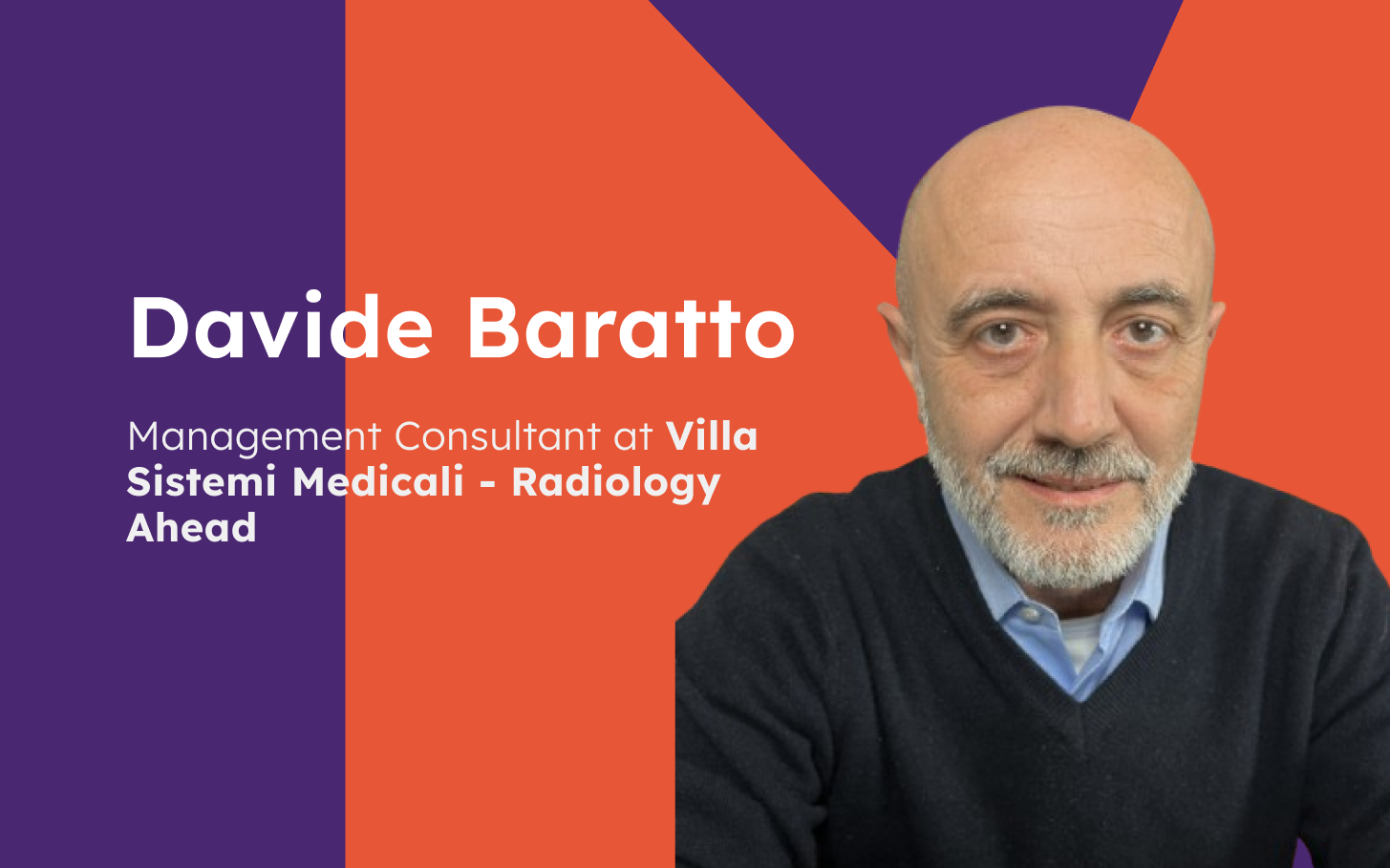
With over three decades of international leadership experience across automotive innovation, industrial radiology, medical imaging, and advanced manufacturing, Mr. Davide Baratto has built a career defined by technological vision, entrepreneurial courage, and global expansion. From patented inventions in automotive safety to leading multinational organizations and pioneering NDT imaging advancements, his journey reflects a rare combination of engineering depth and strategic leadership. In this conversation with OnestopNDT, he shares insights into innovation, leadership, global expansion, ethics, AI integration, and the future of industrial and medical imaging.
Mr. Baratto, welcome to OnestopNDT—it’s a pleasure to have you with us. To begin, you bring over three decades of global leadership experience across Europe, North America, and South America. Could you walk us through your journey and how your career evolved from technical and R&D roles into CEO and board-level leadership?
Thank you for having me here!
I started in automotive through a Total Quality Management internship, where I led the ISO 9001 documentation. That experience gave me a systems view of how an organization really works. Then I was hired in the engineering department, and after a few weeks, I invented a way to build an inertial sensor able to prevent cars from catching fire after accidents. This design was later patented, and the project was successfully adopted by most car manufacturers. I am very proud of that first patent since it probably saved several lives all over the world.
After this, I was hired as a technical manager in a company designing X-ray and UT NDT equipment. There, I started learning about NDT. We designed a new high-frequency gas-insulated monoblock for in-field radiography that, at that time, was quite innovative.
We also designed and realized one of the first tomography systems for NDT applications in the world. I remember it would take hours to reconstruct just one section of the inspected part. It was very primitive equipment, but we did it with a computer that had a memory RAM of 1MB and a 20MB HD! I remember we wrote the algorithms and used a digital camera with an image intensifier to acquire the images. It was a daunting task, a real technological nightmare, but we persevered until it worked.
We were essentially “connecting dots” that the industry hadn’t even defined yet. Managing a tomography reconstruction with only 1MB of RAM required us to be incredibly efficient with our resources, a lesson in strategic efficiency that I still apply today as a CEO.
After this, I wanted to have experience abroad, so I moved back to automotive and went to work in the US on innovative projects to reduce fuel consumption and pollution. It was a great challenge, and we had very good results using an electrical water pump to cool the engine instead of the normal mechanical pumps. This way, it was possible to better control the temperature of the engine and reduce the energy consumption required for cooling.
I then participated in opening a new production plant in the US for automotive cooling fans and worked between Mexico and China to transfer the production of electric motors from plants in the two countries.
After that, I moved to Brazil to manage an automotive company producing air conditioning pipes. After three years, I resigned and founded a company for quality inspection and reworking in the automotive industry. We created a very innovative system to share real-time reporting information with customers, and the company grew to 250 employees in less than two years. After six years, I sold that company and founded a company distributing NDT X-ray equipment in Brazil, and we gained a very high market share over the years.
Due to this success, I was then called to manage Gilardoni X-Ray equipment in Italy, which I did from 2017 to 2024, bringing the company from 27 to 44 million euros in turnover, renewing the product portfolio, and promoting innovation.
Now I have moved to lead a company in the medical radiology business. A new challenge in X-ray technology!
You’ve successfully led both multinational organizations and agile startups, often through growth, turnaround, and transformation phases. From a leadership standpoint, what are the most critical elements required to scale innovation into sustainable business value?
Innovation requires the courage to fail. It is difficult to find companies and people who are willing to take risks. This is typical of entrepreneurs who have an idea and follow a vision to create value for the market by being different and innovative, or of large multinationals that can afford to invest part of their capital in new ideas.
Innovation requires the ability to look at common things from a different perspective. This is possible by mixing different experiences and competencies in an environment that is open to change and new ideas. The focal point must always be to create value for the market. Value for the market will revert into value for the business and for the shareholders.
Innovation has been a consistent theme in your career, including patented inventions in automotive and industrial radiology. How do you foster a culture where innovation thrives while still meeting commercial, regulatory, and operational realities?
Regulations, commercial needs, and operational limitations are ingredients for innovation. Innovation is a way to solve problems in a new way, so problems are the fuel for innovation if you keep an open and positive mindset.
In Brazil, for instance, the local regulations are very restrictive for X-ray equipment due to the bad experience they had with the Goiânia accident involving radioactive materials. This regulation made it very difficult for companies to adopt X-ray equipment for NDT applications. But this was exactly the starting point for a new patent of mine—a system able to drastically improve safety in X-ray fluoroscopic and tomographic cabinets. I invented and patented a new way to guarantee operator safety, and the equipment was granted a unique exemption from strict safety requirements by the local nuclear energy commission. This gave us a great advantage in marketing our products to small and medium companies that could not fulfill the standard Brazilian heavy requirements for radiological safety.
Having served as CEO and COO at Gilardoni X-ray and Ultrasounds, how did your leadership priorities shift when managing full P&L responsibility compared to earlier operational or technical roles?
Clearly, acting as CEO or COO requires a broader view of the business and of the company you lead. I think the real secret is to always maintain an entrepreneurial mindset. The limits of your responsibility should never limit your vision of the overall effects of your actions and decisions. The company is a complex community that must always keep its focus on creating value for the market. This is key at any level or role: cooperation toward the creation of value for the market.
Your experience spans medical imaging, industrial radiology, computer vision, and AI-driven automation. From a strategic perspective, how do you evaluate which technologies are truly transformative versus those driven mainly by market hype?
Technology is transformative when it allows problems to be solved that otherwise could not be solved. I also think that real transformation often requires different technologies to be ready simultaneously. For instance, tomography in NDT is now being adopted more and more because both the algorithms and the hardware are evolving to achieve the required resolution and inspection speed. This involves new computers, new algorithms, new detectors, and new X-ray tubes with smaller focal spots being available. All of this together makes the difference and transforms a possibility into reality in the NDT industry.
You’ve played key roles in international expansion, M&A, and market development across different continents. What leadership lessons have you learned about building high-performance teams across diverse cultures and business environments?
Coordinating people from different countries and cultures can be a challenge. Communication can be a problem—not because of language, but because of cultures, habits, laws, and regulations.
It is a challenge, but it can also be a great opportunity and a unique resource: people from different countries can add different perspectives and experiences to the team and help create value and find solutions.
With your background in industrial radiology and NDT equipment distribution—particularly through ventures like NDB Vision—how do you see the role of industrial imaging and NDT evolving alongside advances in digitalization and AI?
AI can be a game changer since it can help solve problems that would otherwise be very challenging.
AI (neural networks) has been used for many years to improve image quality (noise and artifact reduction, automatic defect recognition and classification, etc.), but now a further step can be imagined by integrating the entire production and inspection process with much better results.
I think AI still has a lot of potential in digital imaging and in the automation of inspection in a reliable and faster way.
Recently, you represented Villa Sistemi Medicali at WHX Dubai, showcasing Italian innovation in medical imaging on a global stage. What does participation in such international forums mean for technology visibility, partnerships, and future market growth?
WHX in Dubai is a very important occasion to meet professionals from all over the world. The change of the name of the event from Arab Health to World Health Expo is not just a detail. Dubai is the perfect place to gather people from all over the world, and the 2026 expo was a very good success and gave us good visibility.
Italy is one of the most advanced countries in X-ray technologies. Several Italian companies are dedicated to developing X-ray technology, and like in no other country in Europe, in Italy you can find manufacturers of X-ray tubes, generators, and complete equipment for several applications of X-ray technology: medical, industrial (NDT), security (baggage inspection), food inspection, veterinary, etc. Italy has been a pivotal player in X-ray technology for a century, blending solid heritage with cutting-edge innovation.
We are still able to propose innovation and solid and reliable design, and this is appreciated all over the world.
As a management consultant supporting corporate revitalization and strategic realignment, what common leadership challenges do you most frequently encounter in technology-driven manufacturing and imaging companies?
The challenge is always to support innovation and to keep the focus on value for the market.
Value for the shareholders is the result of the value created for the market—not the other way around.
To innovate, you must accept the risk of failing. You need to have a vision of the future and be able to motivate people to go beyond their limits.
Companies can have dark moments throughout their history, but it is important to rediscover the idea and the values they were created for by the initial entrepreneur. As Simon Sinek wrote in his book, we always need to “start with why” we do what we do.
Ethics and integrity are themes you often highlight in leadership. In highly competitive, innovation-driven industries, how do leaders balance rapid growth ambitions with long-term responsibility and trust?
The modern market is very competitive and demanding. It is important to be fast but also sustainable. A short-term vision is very dangerous nowadays. One of the main challenges is attracting, motivating, and retaining the best people. People are the soul of any company.
Talent is very rare, and the only way to engage it is to have a long-term vision and ethical leadership. Employees—and not only markets—are becoming more demanding and challenging every day.
Shifting briefly to a personal note—outside boardrooms, innovation discussions, and global travel, how do you like to spend your time? Are there hobbies or interests that help you recharge and maintain perspective as a leader?
I love reading. I read books of any kind. I like history, philosophy, psychology, science, but also poetry and literature.
I also love to travel and discover new places. Italy is a beautiful country with small villages and diverse landscapes. I am lucky—I live on the shores of Lake Como and spend my summers in Costa Smeralda in Sardinia, where I grew up and where my mother still lives. Beautiful places. When I travel for business, I always try to use the opportunity to spend a few days in the place I travel to. I love discovering new cities and new places.
You’re also actively involved in organizing TEDx Lecco, which focuses on ideas worth spreading. How important is storytelling and thought leadership for CEOs in shaping industry dialogue and inspiring teams?
I spend some of my free time organizing TEDxLecco. It is a way to contribute to my community but also a way to meet very interesting people from whom I learn a lot. I think the target of TEDx is to help you find new questions more than to find answers. I believe questions are far more important than answers.
The ability to communicate is one of the most important skills for a leader. A leader should inspire people. Storytelling is key to getting your people passionate and motivated about the challenges they need to face. This is essential to energize the team and keep it focused even in difficult situations.
Looking ahead, what leadership capabilities do you believe will be most essential for CEOs navigating the future of industrial imaging, medical radiology, and advanced manufacturing?
Leadership is not dependent on the industry. Leadership depends on your ability to connect with people. Communication, empathy, listening, credibility, energy, and passion are essential.
A leader is a person who needs to lead other people. Humanity remains central.
Beyond humanity, I believe a CEO must have the courage to decide. In high-tech industries, we often wait for perfect data, but waiting is the most expensive choice you can make.
Leadership is about making the best possible decision with the available information to keep the “innovation engine” running.
Finally, platforms like OnestopNDT aim to connect industry leaders, technologists, and practitioners across inspection, imaging, and quality ecosystems. From your perspective, how valuable are such platforms in accelerating innovation, collaboration, and informed decision-making globally?
I consider platforms like OnestopNDT to be absolutely vital—almost a necessary infrastructure for our industry. If we accept that innovation is no longer about a “lone genius” in a lab, but rather the intelligent combination of existing technologies and diverse expertise, then these platforms are the laboratories where the “chemical reaction” happens.
They accelerate decision-making by cutting through the noise. They allow an entrepreneur to quickly find the right partners to complete their “technological puzzle.” These platforms effectively shrink the global market into a local ecosystem, making collaboration not just possible, but immediate and effective.
Mr. Baratto’s career illustrates how technological innovation, entrepreneurial courage, and ethical leadership can converge to create lasting impact across industries and continents. From pioneering early tomography systems to leading global imaging companies, his journey underscores the importance of vision, resilience, and humanity in leadership. As industrial and medical imaging continue evolving through digitalization and AI, his insights provide valuable direction for leaders shaping the future of high-technology industries.