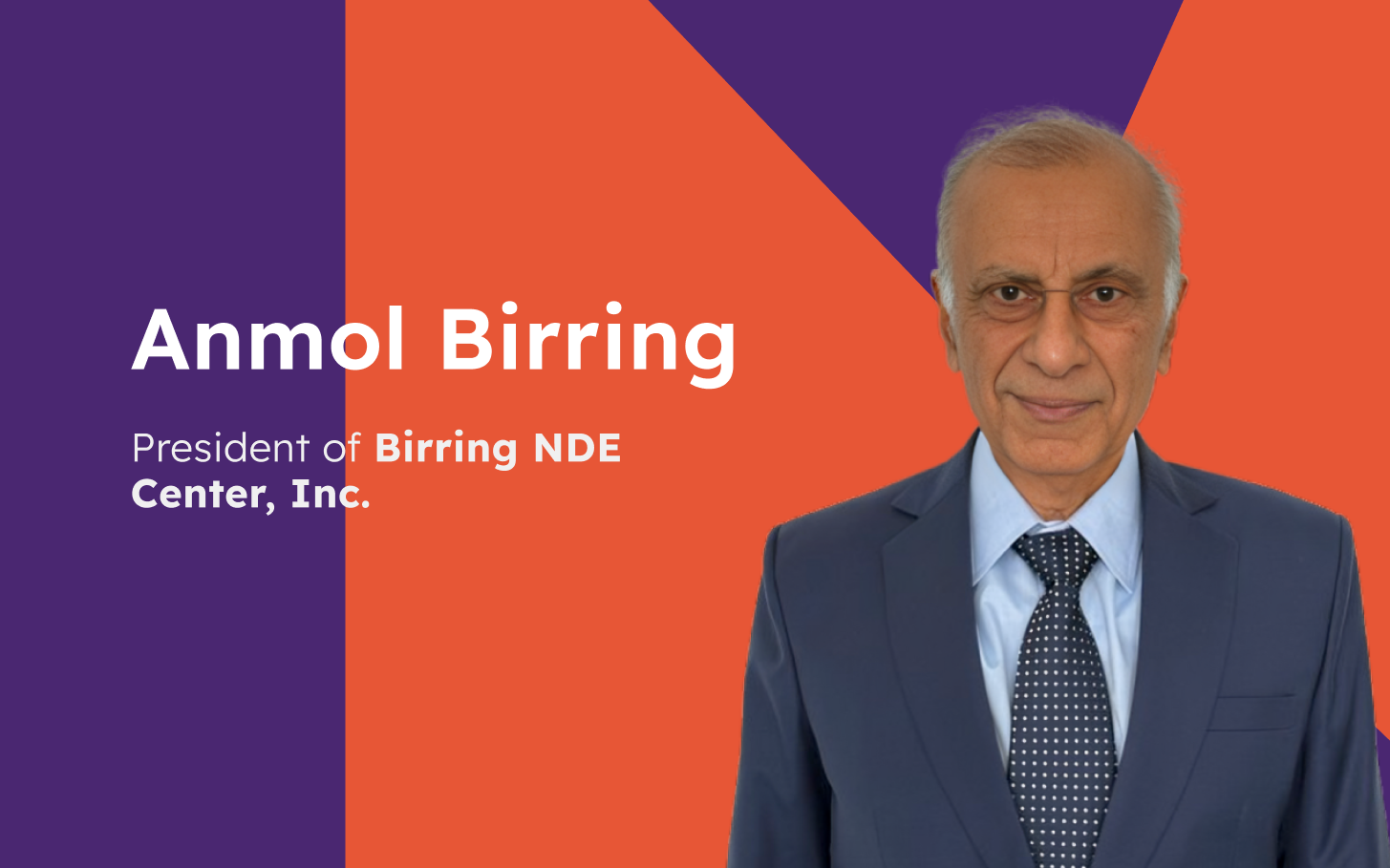
In this exclusive conversation with OnestopNDT, Mr. Anmol Birring shares insights from more than four decades at the forefront of advanced NDT—spanning research at Southwest Research Institute, hands-on industrial application across critical assets, large-scale global consulting, and training thousands of professionals worldwide. His journey reflects the evolution of modern NDT and highlights how curiosity, practical understanding, and continuous learning shape true technical expertise.
Mr. Birring, welcome to OnestopNDT. It’s a privilege to have you with us. Could you begin by sharing your professional journey—from your early research work at Southwest Research Institute to your leadership roles as President of Birring NDE Center, Inc. and President at NDE ASSOCIATES, INC., and your current work as a global consultant in advanced NDT?
After graduation from IIT Delhi in 1978, I went for higher studies to Iowa State University. During the course of my work, I stumbled on ultrasonics and did my Master’s Thesis on surface/Rayleigh waves. Thereafter, I went to Southwest Research Institute (SwRI) in San Antonio, Texas. At SwRI, I worked for a variety of clients including the US Navy, Electric Power Research Institute (EPRI), Association of American Railroads, Chevron, Bofors, Renusagar Power and many more. The focus of my work was on developing ultrasonic techniques for a variety of problems including corrosion assessment, boiler inspections for hydrogen damage and creep, wear measurement, high-temperature hydrogen attack, turbine inspections, etc. After ten years at SwRI, I worked at an electric power company, Houston Lighting and Power. This is where I got hands-on practical experience in all NDT methods as applied to boilers, steam lines, turbines, feedwater heaters, condensers, etc.
You began your career developing NDT techniques at a time when many of today’s advanced methods were still evolving. What initially drew you to non-destructive testing, and what kept you deeply engaged in this field for over four decades?
What drew me to this field and kept me engaged is that NDT is a problem-solving field where you can develop techniques to solve problems faced in the industry to assess damage and avoid failures. This is one field where the rewards are immediate. You develop a technique, test it, refine it, apply it, and see the results of your work. This makes it very satisfying.
Your career spans research, field application, training, and consulting. How has your perspective on NDT evolved as you moved from hands-on research to qualifying advanced inspection systems for critical assets worldwide?
The research and practical experience gave me a good foundation on the application of NDT, whereby I not only know the basics of the techniques but also their limitations. This is when you not only think of applying a NDT method but also understand its reliability. Reliability starts to play a bigger role as you not only want a working method but also the right method. Reliability is not only dependent on the method but involves the whole process of application including technique, calibration, scanning, and finally the technician. The NDT technician plays a pivotal role in the application of NDT methods.
You have been closely involved in high-risk damage mechanisms such as high-temperature hydrogen attack (HTHA) since the late 1980s. From your experience, what are the key challenges in reliably detecting such degradation mechanisms, and how has NDT progressed in addressing them?
I have been involved with high-temperature hydrogen attack (HTHA) since the early eighties when a Japanese engineer put HTHA pipe samples on my desk at SwRI and said we need to find an NDT method. In the beginning, we used velocity ratio for HTHA inspections. It was not until the late eighties that we discovered that HTHA results in backscatter. During the course of my work, I went to sites that had HTHA failures and conducted follow-up inspections. That is where I realized the implications of HTHA failure can be very serious. HTHA failure is not the same as a boiler tube failure which is contained in the boiler. HTHA failure can result in severe injuries and even fatalities so it has to be taken seriously. In conclusion, I can say the technique has to be very reliable, otherwise you are giving a false sense of safety. I have done several HTHA inspections in the US and other countries and did find one reactor with HTHA. HTHA was verified and the reactor taken out of service immediately after the inspection. This was in France.
Over the years, you have developed and qualified inspection techniques for complex applications—ranging from heavy-wall welds and alloy weld inspections to microstructural assessments. What role does probability of detection and sizing accuracy play when qualifying advanced NDT methods for real-world applications?
There are many steps involved in qualification and a lot depends on the specific application. For example in case of stainless weld inspections, the calibration block should include a weld that is representative of production weld. Scan plans correctly designed to detect expected discontinuities. Proper selection of phased array probes and focusing to improve sizing. Similarly for HTHA you need sample with real microstructural damage and finding such samples can be a challenge POD, probability of detection is directly dependent on the outcome of the failure. High POD inspections are a must where failure can have serious consequences. These include subsea piping, high pressure steam lines, HTHA, aerospace, etc. Let us not limit discussion to advanced NDT and/or complex applications. I will go back to manual UT of carbon steel welds using conventional angle beam probes. Even for this simple application, I normally am able to qualify 30 to 40 percent of Level II techs. Most fail because of poor training.
You have worked extensively with advanced ultrasonic techniques such as phased array, TOFD, automated UT, and backscatter methods. In your view, what differentiates a well-qualified advanced NDT application from one that merely uses advanced equipment?
Advanced equipment does help in developing techniques. But more important than equipment is having a good understanding of the physics of the method.
With experience supporting major operators such as ExxonMobil, Shell, BP, and Qatar Energy, how do you approach balancing inspection reliability, practical constraints, and operational realities when advising clients?
In addition to the above list, I have also worked with many other clients including Total (France), Boeing, South Texas Nuclear Plant, Chevron, EPRI, Southern Peru, Mitsubishi (Japan), and many more. What is most important when working with clients is transparency. We have to understand client needs and limitations. We have to offer reliable and practical solutions that are applicable.
Having published over eighty technical papers, how important is technical documentation and knowledge sharing in improving inspection practices and preventing repeat failures across industries?
Technical publications and making presentations keep you at par with the scientific community. As you know, the first step in writing a publication is to search for other relevant work. That exercise keeps you informed on what is going on elsewhere. Technical publications distribute information and, in turn, you also gain information.
Training has been a major part of your legacy, with more than 5,000 professionals trained globally. From your perspective, what are the most critical gaps in NDT training today, especially when it comes to application-specific inspections?
Good question. Technicians play a key role in NDT. Training includes lectures and practicals. What is most important in training is to communicate at a simple level and give real-life examples so that it is easy for the students to grasp the concepts. The goal is to understand a method and not just pass the test. What is usually lacking in training are the practical skills. Students should be trained on samples with representative flaws.
You have conducted NDT training and consulting assignments across multiple countries and cultures. How does regional variation—in standards, asset conditions, or skill levels—impact the way NDT is applied and qualified globally?
I have done training in several countries but never had language issues as everyone understands Math and Physics. It is the duty of the instructor to make training interesting by using diagrams and giving practical examples. It is global training that motivated me to add NDT videos since I used to be limited in performing practicals during some off-site locations. I have almost sixty videos on my YouTube channel that cover all methods of NDT. Videos include both lectures and practicals. Viewers of my videos are from all over the world and send me regular feedback. Some training schools also use my videos.
As a senior leader and mentor in the NDT community, what advice would you offer to young engineers and inspectors who want to move beyond basic certification and develop true technical authority in NDT?
I can recommend two things. One is to be diverse and be familiar with all NDT methods and not just specialize in a few. Secondly, learn about materials and processes such as welding, heat treatment, etc. Also be familiar with relevant engineering codes. And finally, you must gain hands-on experience to gain confidence.
Outside of your professional work, how do you like to spend your time when you step away from NDT? Are there any hobbies or personal interests that help you recharge or provide a different perspective from your technical work?
I do a lot of garden work. I have mastered the skill of growing tomatoes and cauliflower. I start from the seed and all the way to final production. Again, there is a lot of science involved and I learnt it at Rice University, Houston.
Looking ahead, what developments or shifts do you believe will most significantly influence the future of advanced NDT applications and inspection reliability over the next decade?
Like everyone says, AI will start to play a role in all fields including NDT. However, so far AI has not been successful in interpretation with either UT of welds or radiography. So a lot needs to be seen. I believe human interpretation will still remain primary.
Finally, Mr. Birring, as someone deeply involved in NDT education, application, and industry advancement, how do you view platforms like OnestopNDT? Do you see value in such platforms for knowledge sharing, professional connection, and supporting the next generation of NDT practitioners?
These are good platforms that spread information and bring the community together. I suggest you have live video interviews. You have a good forum for open discussion. You should visit colleges and universities to bring more awareness of NDT and bring more women into NDT.
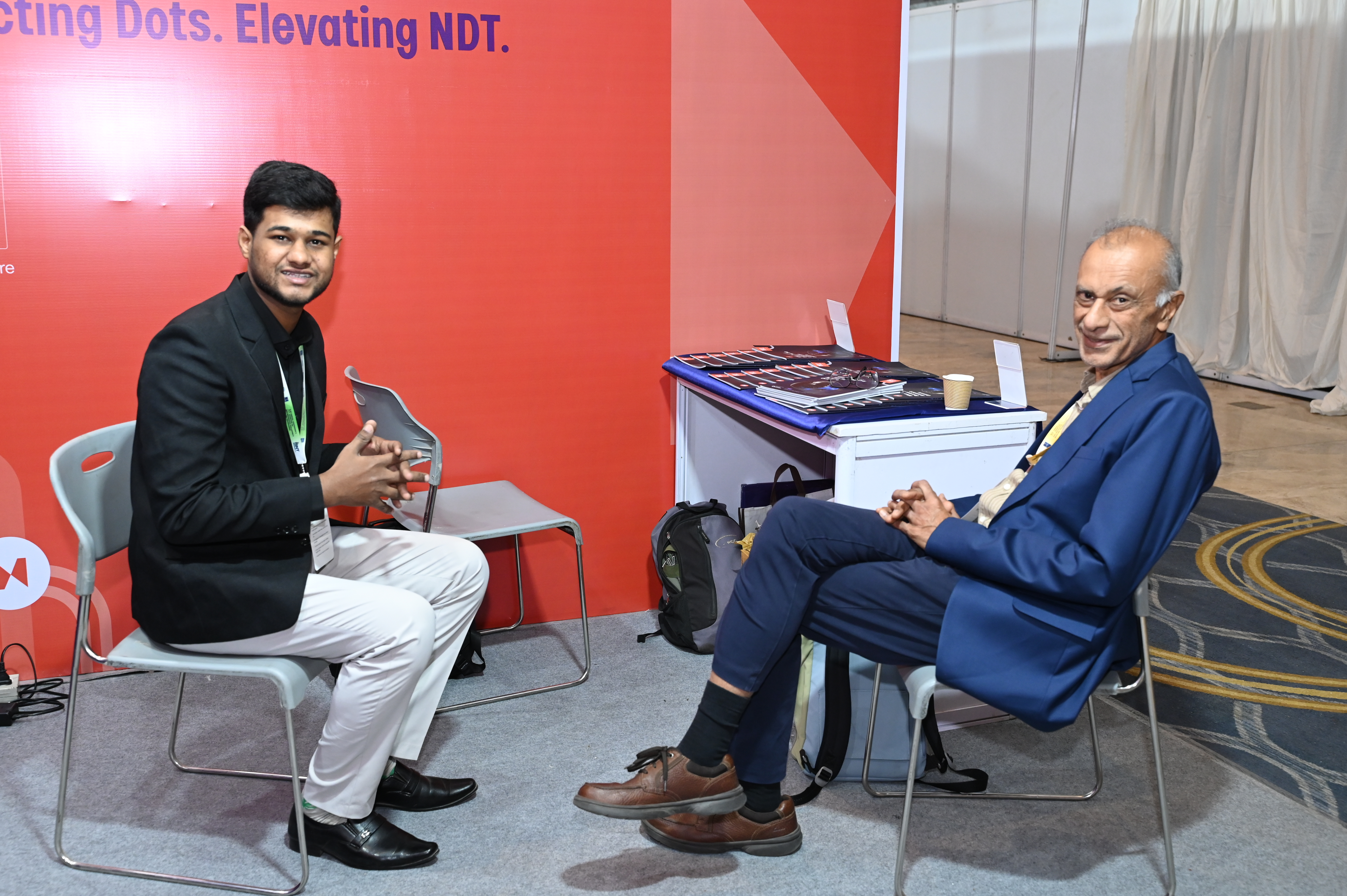
Through this discussion, Mr. Birring highlights how technical rigor, diverse experience, and practical understanding define true excellence in NDT. His commitment to knowledge-sharing and training continues to strengthen the next generation of professionals, ensuring the industry remains innovative, reliable, and globally connected for years to come.