back to companies
 Service
 New Zealand
Fortis Weld Inspection
Fortis Weld Inspection Ltd is focused on quick, accurate turnarounds and raising the standard in the weld inspection and testing industry.
ServiceNew Zealand Loading…ServiceNew Zealand
Fortis Weld Inspection Ltd is focused on quick, accurate turnarounds and raising the standard in the weld inspection and testing industry. We are a 100% locally owned Industrial inspection company.

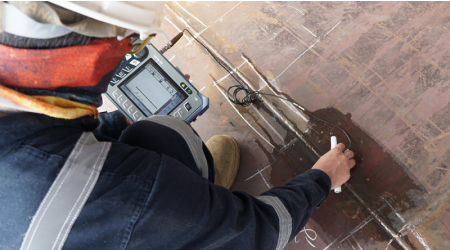
Ultrasonic testing utilises high-frequency sound waves that propagate through the desired object, at a known constant angle. When the sound wave hits a reflecting point from either a flaw or the back-wall, the technician is able to interpret the response off the screen of the ultrasonic unit and can compare the signals with the appropriate standards; to give a result.
Testing to AS, ASME, & ISO standards available.
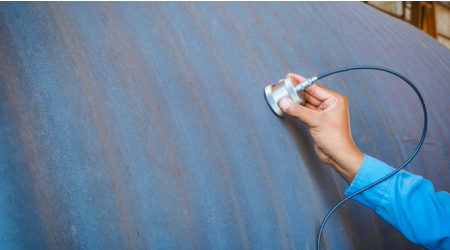
Ultrasonic thickness survey utilizes high-frequency sound waves that travel through the desired object. When an echo is received from the back wall or a flaw (i.e. laminations), the ultrasonic unit gives the technician a signal response which is then interpreted and a thickness can be calculated. This process can pick up pitting and erosion from any abrasive flow medium.
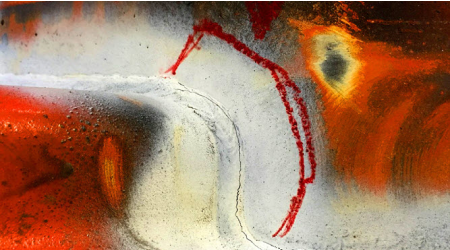
Magnetic particle inspection utilises magnetism to find surface and subsurface (approximately 3mm) imperfections in ferrous materials. Imperfections such as cracking and lack of fusion (welds) can be detected using MT.
Testing can be done to AS/NZS, ASME, & ISO standards or to a customer’s specification.
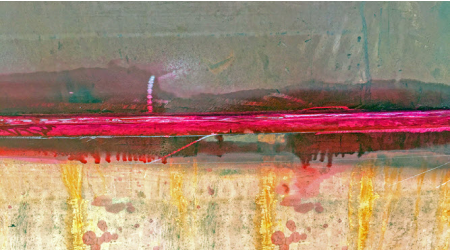
Dye penetrant inspection uses the capillary action of liquids to detect surface imperfections in non-ferrous materials such as stainless steel & aluminum. The surface of the component under test is cleaned meticulously, and either a fluorescent or red dye is applied. The dye is then allowed to sit and enter the surface imperfections if any are present. The dye is then removed from the component and a developer sprayed. The developer draws any dye that may be trapped within surface imperfections.
Testing can be done to AS/NZS, ASME, & ISO standards or a customer’s specification.
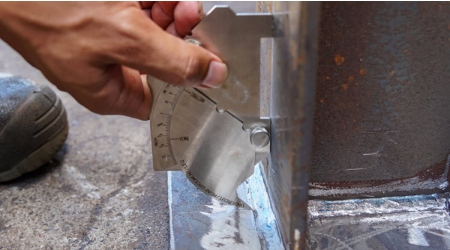
Visual inspection is the bare minimum requirement for testing of welds in the construction industry. Our team can perform visual inspections to various AS/NZS, ASME & ISO standards, in conjunction with other forms of NDT if it is required.
All our inspectors are either CBIP certified in MT, PT or UT or/and hold IIW-IWI weld inspector’s certificates.