A-Star Group is one of the Leading Integrated Technical Service providers, providing services for Oil and gas, Process Plant (Refinery & Petro Chemical), Power Plants, Marine, Onshore / Offshore, Construction, Renewable Energy, and Pharma industries. A-Star Group featured services are Manpower Outsourcing, Testing, Pre-Com and commissioning, Class Approved Hull Survey, Rope access, UTM gauging services, NDT and advanced NDT, Pre & Post Weld Heat Treatment services, Third third-party inspection, Diving and Underwater services. A-Star Group has a head office in Singapore and regional offices in Malaysia, Indonesia, Myanmar, India, Bangladesh, UAE (Abu Dhabi, Dubai) & Ghana. A-Star Group has track records of working with major clients like Shell, Exxon Mobil, Total, Petronas, Reliance, Yemen LNG, Saipem, Keppel Offshore and Marine, SembCorp group, ST Marine & Engineering, SPOG, Bumi Armada, Modec Offshore, Saipem, SBM Offshore, EMAS Offshore, BW Offshore, TIMAS Offshore, Dynamac, DryDocks World, PaxOcean, RIG Owners (ENSCO, Rowen, Transocean, KS Drilling), TOYO Engineering, PetroFac, Sinopec, SIEMENS, Hyundai, Yongnam, Eversendai, Samsung, Gamesa and Orsted.
Vision: To attain and sustain operational excellence with their four core imperatives, which are to provide astute consumer value, excellent customer service, foster employee talent, and achieve consistent sustainable growth.
Mission: A-Star Group strives to become the “Partner of Choice” to their customers in providing NDT & ANDT services by maintaining a relentless focus on their four core imperatives. A-Star Group builds value for its customers by providing leading-edge techniques and tailor-made services to meet their specific and ever-changing needs. A-Star Group will build a unique portfolio of services, striving to surpass the competition in quality and innovation. A-Star Group will be known for our cutting-edge leadership through our passion for high standards so that our employees who are their associates can realize their fullest potential. By providing excellent customer service they want to build long-lasting relationships which will build sustainable growth.


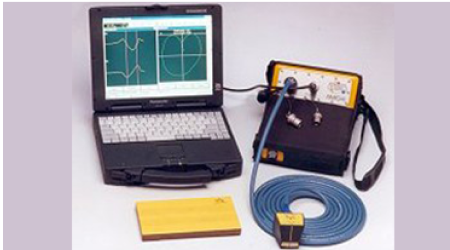
ACFM® is an electromagnetic inspection technique that introduces an alternating current into the surface of the component to detect surface-breaking cracks. The presence of a crack disturbs the electromagnetic field and the return signal is instantaneously converted by advanced mathematical techniques so that the operator is alerted to the presence of a defect. Immediate defect sizing and recording is a major benefit compared to alternative NDT methods.
APPLICATIONS

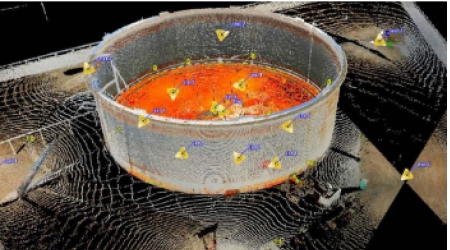
Laser scanning using LIDAR (Light Detection and Ranging), is a new inspection technology that provides faster, safer, and better coverage of any structure. The 3D laser scanner is used to capture millions of individual points on buildings, storage tank shells, bottoms, and roofs, and the data can be used for fitness-for-service assessments (FFS).
API 653 standards require measured data on the verticality of tank shells, the roundness of tank shells, the flatness of the tank bottom, and any subsidence.
Laser scanning also captures information on appurtenances such as nozzles, access points, stairs, and ladders as well as nearby structures and terrain. Built-in cameras capture digital images that provide additional documentation of tank conditions.
Software is used to take data from an inspection and automatically merge multiple point clouds into a single cohesive dataset. With the software enabling basic clean-up and organization, the resulting point cloud provides a comprehensive and precise picture of the inspection, enables users to create high-density 3D digital representations of storage tanks, analyse the data following API 653 Standard guidelines, and automatically detect out-of-tolerance areas
APPLICATIONS

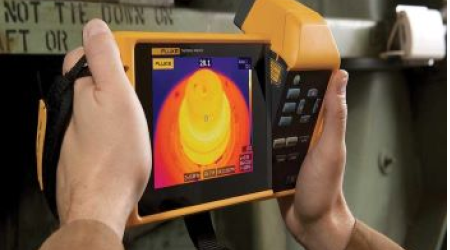
IR thermography is used to measure temperature variances of a component as heat flows through, from, or to that component. Images of the detected temperature distribution are called thermograms and are used to confirm machinery is running normally and to detect abnormal heat patterns within a machine, indicating inefficiency and defects and they make it possible to see heat-producing objects invisible to the naked eye.
The primary goal of infrared thermography IR thermography is utilized in many industries and applications. In the oil and gas and chemical processing industries, for example, thermography can be used to detect piping insulation issues, and fluid levels, or identify trouble spots where rotating equipment is experiencing too much friction. Furthermore, IR testing is commonly used to locate hot spots and anomalies such as voids and inclusions. The benefits of IR testing include extended equipment life, decreased unscheduled shutdowns, reduced risk of equipment failure, and increased performance.
APPLICATIONS