In Non-Destructive Testing (NDT), "seeing" a defect is no longer synonymous with understanding it. For decades, the industry relied on qualitative thermal imaging—looking for anomalous thermal contrast to identify a potential defect. A hot spot on a breaker, a cold void in a composite. If the operator saw the contrast, the job was done.
But as safety margins in aerospace and energy tighten, "seeing" is often not enough. We are hitting a ceiling where standard uncalibrated sensors fail to provide the necessary confidence. To push past this, the NDT industry is shifting from thermal imaging to quantitative infrared thermography.
This is a metrological distinction. It is the difference between a photograph and a measurement. At Telops, this philosophy drives the Radia family. We designed these instruments to bridge the gap between basic imagers and our ultra-premium scientific systems, serving as the accessible, metrology-grade anchor for modern testing.

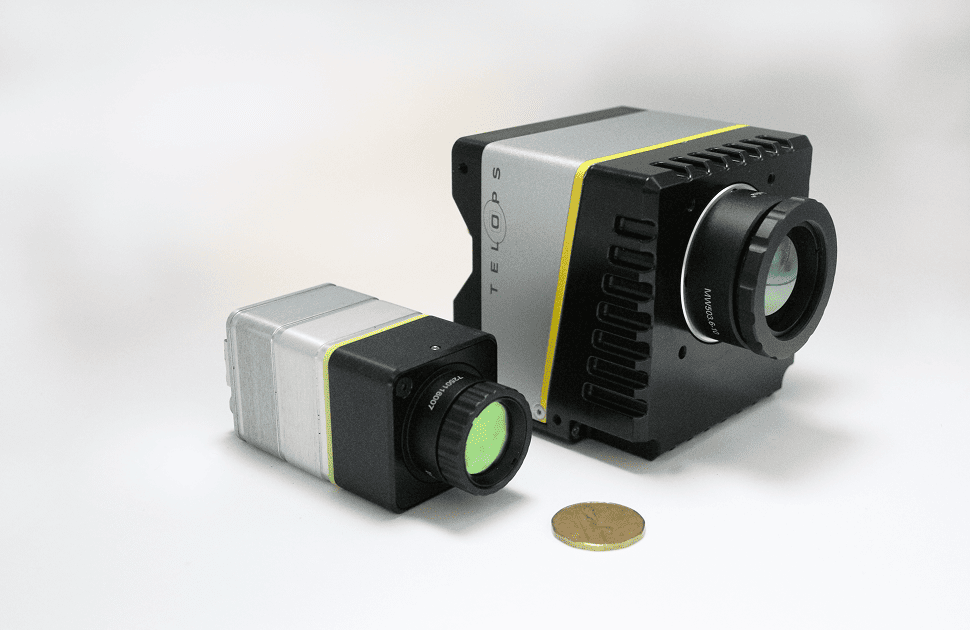
Figure 1. Telops Radia M100 (cooled MWIR, left) and V60 (uncooled LWIR, right) scientific thermal imaging systems
The Science of Accuracy
As a scientist by training, I view infrared cameras as analytical instruments, akin to a spectrometer or chromatography system. In analytical chemistry, we would never accept results from an uncalibrated instrument that drifts with ambient temperature yet in thermal NDT, such drift is often accepted as a limitation of the measurement equipment.
True radiometry—deriving absolute temperature from a detector’s signal—is difficult. It requires highly stable internal electronics that isolate the target’s heat from the camera’s own thermal noise as well as an in-depth understanding of the emissivity properties of the target. While many commercial cameras rely on "scene-based" corrections that essentially guess the baseline to create a pretty image, true radiometry demands precise, real-time compensation to ensure the reading never drifts. For home inspections, this type of approximation works. For characterizing the thermal diffusivity of aerospace composites, it is a liability.
The Radia family is built on permanent radiometric calibration. Utilizing high-performance detectors (cooled MWIR and uncooled LWIR) and proprietary algorithms, these cameras maintain accuracy across shifting environmental conditions. This allows professionals to trust the scientific data behind the pixel: a 5°C delta measured today means exactly the same thing as a 5°C delta measured six months from now.

Figure 2. Telops RevealIR software displaying radiometrically-calibrated, quantitative thermal imaging data
Radia Architecture: The Smart Alternative
NDT requirements are rarely one-size-fits-all. In the Telops ecosystem, we distinguish between our flagship HDR M700, designed for extreme performance in high-contrast environments, and the Radia Family, designed for streamlined versatility.
Understanding this distinction is key to ROI. The Flagship HDR line uses a specialized architecture to capture extreme gradients simultaneously (e.g., a molten weld next to cold metal) in a single snapshot. While revolutionary, it is a specialized tool.
The Radia family is the "daily driver" for the majority of NDT applications that require precision without the cost of flagship architecture.
The Radia M100: The High-Temp Workhorse
The M100 is designed for speed and dynamic range. It boasts a calibrated dynamic range of 0°C to 850°C using a single open optical path. Furthermore, by equipping the M100 with a single Neutral Density Filter (NDF), the calibrated temperature range expands massively to 15°C to 2500°C.
Crucially, the M100 achieves this through intelligent adaptability. Unlike many sensors valid only at fixed integration times, Telops calibration allows for at-will and continuous adjustment of exposure time without losing radiometric accuracy. This powers the M100’s Automatic Exposure Control (AEC).
AEC reads scene radiance and automatically adjusts integration time in real-time. If a process spikes in temperature, the camera adapts instantly to prevent saturation. This delivers the core radiometric integrity of a Telops camera—stability, calibration, and speed—without the complexity of the Flagship HDR design.
The Radia V60: Compact Versatility
While the M100 handles high speed and heat, the Radia V60 brings metrology-grade accuracy to a compact, uncooled LWIR package. The Radia V60 is a fully radiometrically calibrated system with a complete suite of user-swappable, adjustable focus lenses. This gives NDT professionals the flexibility to move from inspecting large infrastructure materials to analyzing medical imaging on organic tissues without the hassle of recalibration when changing lenses.
Because it is uncooled, the V60 offers a smaller footprint and easier integration into tight spaces, making it an ideal solution for long-term monitoring where the high frame rates of a cooled detector aren't required, but the data stability is.
The Radia Family: The Engine of Modern Thermography
The applications for quantitative thermography are expanding rapidly. While Active Thermography—exciting a material with flash lamps, induction, or ultrasound—remains a critical driver, we are seeing a surge in Passive and In-Process thermography.
Active Thermography
Historically, Telops provided full turnkey systems for active thermography. However, recognizing that specialized integrators are increasingly building custom rigs for specific airframes or pipelines, we have repositioned the Radia M100 as the engine for these advanced systems.
In active thermography, timing is everything. When a flash lamp fires, the thermal response happens in milliseconds. If the camera cannot synchronize perfectly with the excitation pulse, the data is useless. The Radia M100 features advanced triggering capabilities (microsecond precision) and supports high frame rates through subwindow operation, essential for "freezing" thermal diffusion in high-conductivity materials.
Passive & In-Process Monitoring
Not all NDT requires an external flash. Passive thermography—using natural thermal cycles—is gaining traction for infrastructure monitoring. For example, the daily heating and cooling cycle of a bridge caused by the sun can reveal delamination or voids.
Similarly, in-process thermography is becoming vital in construction and manufacturing. Consider the pouring of concrete for critical infrastructure; the solidification process is an exothermic reaction. By monitoring this heat generation, engineers can identify internal defects and voids.
For these applications, the Radia V60 shines. Its high sensitivity to ambient temperature fluctuations and stability over long acquisition periods make it perfect for tracking the slow thermal evolution of curing concrete or the diurnal cycle of a composite aircraft wing sitting on the tarmac.

Figure 3. Schematic demonstrating the principles of pulsed phased active thermography (left) and continuous excitation, lock-in active thermography (right)
Data Integrity in a Digital World
In today’s industrial environment, an inspection is a digital record. If a turbine blade fails years later, manufacturers must prove the part was defect-free at production.
This is where the difference between a JPEG and a radiometric dataset is critical. The Radia family outputs 16-bit radiometric data—saving a temperature/radiance matrix, not just an image. This allows for post-processing and re-analysis indefinitely.
Furthermore, both the RAW and calibrated data are fully accessible via our SDK or our license-free RevealIR software. This allows users to visualize and process data on any computer, facilitating easy sharing of results with colleagues or clients without requiring expensive software seats. Whether you are developing custom pulse phase thermography algorithms or running custom Principal Component Analysis (PCA), the Radia family provides the data transparency needed for robust processing workflows.
Conclusion: The ROI of Accuracy
Investing in high-end instrumentation is a balance between performance and budget. The Radia family resolves this tension.
For extreme, high-contrast applications, our Flagship HDR line remains the pinnacle. But for core NDT tasks—delamination checks, stress analysis, process monitoring—the Radia Family offers the perfect balance. It brings the rigor of the analytical chemistry lab directly into the hands of an NDT inspector in the field, ensuring that when you say a part is "clear," you have the data to back it up.