

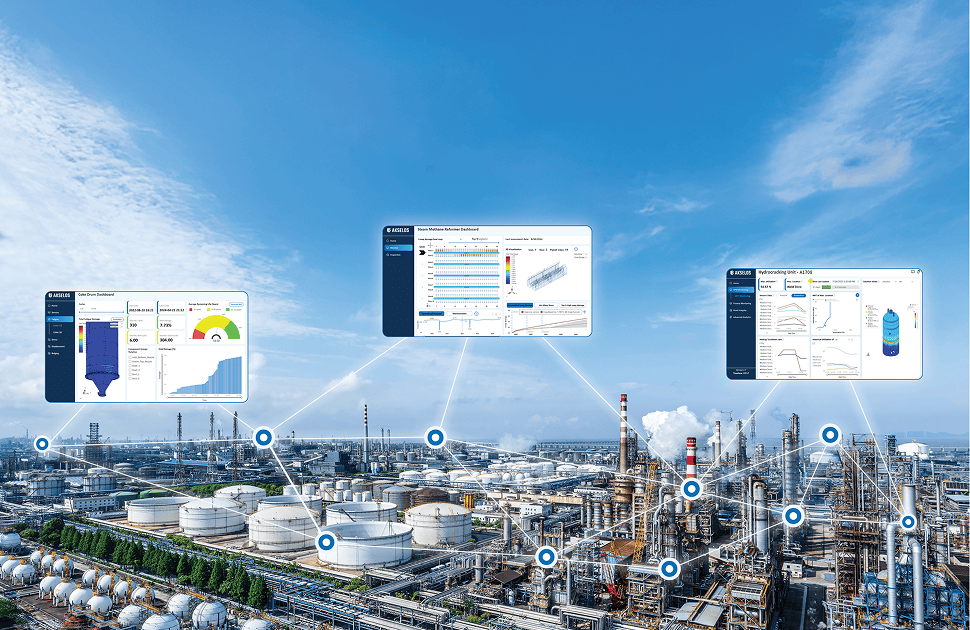
Across refining, LNG, offshore production, and fertilizers, one constraint quietly shapes performance: operators can see the process, but not how the steel underneath is responding to it. Structural Performance Management (SPM) closes that gap. It continuously calculates the real structural limits of critical equipment from operating data, so operators can safely increase throughput, reduce downtime, and extend asset life, working site-wide rather than asset by asset.
AI for Structural Integrity recognized at the highest level
SPM belongs to a technology category the World Economic Forum recognizes as part of the Fourth Industrial Revolution: AI for Structural Integrity (AI4SI). AI4SI is an application of physics-based AI, which is grounded in engineering physics and standards like API and ASME, not statistics alone. In heavy industry, where failures are catastrophic and data is sparse, that grounding matters: a model that reasons & simulates based on physics can account for conditions an asset has never met before, and its results hold up to engineering and regulatory scrutiny.
The value of that capability shows up at the level of the whole site. A refinery is a network of interacting steel, where a gain in one place can simply move the bottleneck to the next: optimize coke drums, and the constraint can reappear at a reactor or reformer. Applied site-wide, structural visibility lets teams find the real constraint and make run-length, turnaround, and capital decisions against observed structural state rather than elapsed time. By our estimate, a typical 200,000-barrel-per-day refinery can carry value in the order of $90 million a year, drawn not from new construction but from steel already in the ground.
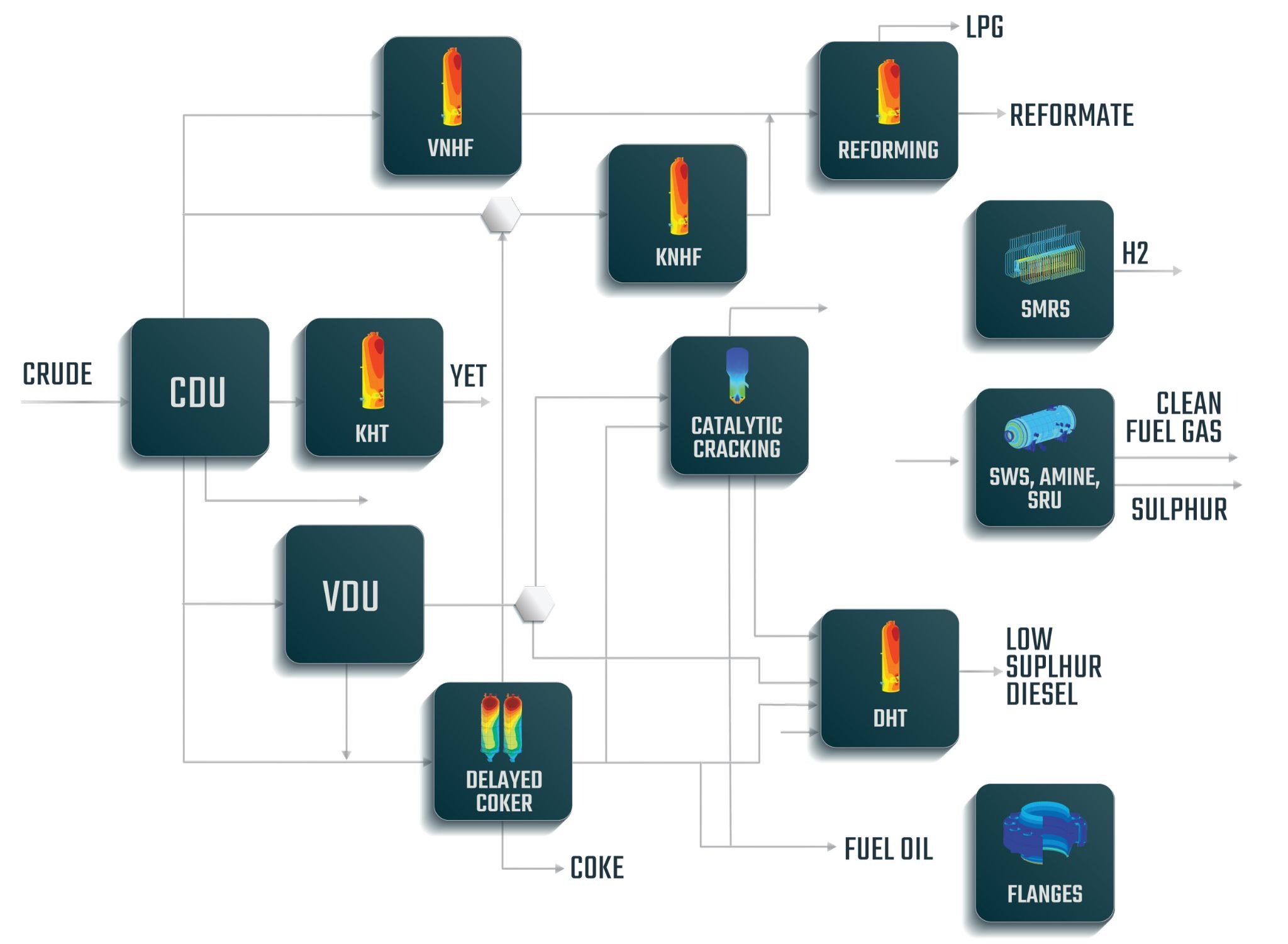
Fig 2. A flowsheet diagram of assets in a refinery, with each asset represented by their structural digital twin.
The AI4SI category has been proven at the largest sites in the world. Qatar Shell's Pearl GTL, the world's largest gas-to-liquids plant at around 260,000 barrels per day, deployed more than 45 Fourth Industrial Revolution solutions and earned the World Economic Forum's Global Lighthouse designation, a benchmark reserved for digital technology running at full production scale rather than in pilot. In its January 2026 whitepaper, Global Lighthouse Network: Rewiring Operations for Resilience and Impact at Scale, the WEF singled out AI for Structural Integrity for delivering +6 years of critical equipment lifetime and a 64% reduction in annualized CAPEX.
"Pearl GTL won the Lighthouse award from the World Economic Forum, for a large part, because of what Akselos did there." - Tjerk Joustra, Manager Business Development, Shell Ventures
Behind those results is the system that Akselos provides that seeks to lead that category: Structural Performance Management.
What Structural Performance Management (SPM) does
SPM is the system that turns continuous structural understanding into decisions, and its logic follows a single chain: operational decisions become structural response, and structural response becomes business outcomes. Every choice about how an asset is run, the ramp rate, the cycle time, the firing intensity, produces a structural response in the steel. SPM makes that response visible and translates it into business terms in real time.
In doing so, it answers a question that maintenance and inspection programs were never built to answer: how is the asset responding, structurally, to how it is being run right now? SPM shows where operations can safely adapt and where more output is available, identifies where asset life can be protected or extended, and connects the control room to the boardroom, so structural behavior becomes a management input rather than an engineering assumption. Throughout, the answers stay within recognized engineering standards such as API 579 and ASME.
How SPM applies across refining, LNG, offshore, and fertilizers
SPM governs the decisions that sit at the intersection of how an asset is operated and how it responds structurally. Those decisions exist in every sector where pressurized or cyclically loaded equipment is central to operations.
Refining. Reactors, coke drums, and fired heaters run hard and run long. Ramp rates, cycle times, throughput levels, and firing intensity all affect how fatigue and creep accumulate inside these assets, cycle by cycle, not inspection by inspection. SPM connects those operating decisions to structural response in real time, giving operations and integrity teams the context to make run-length, turnaround, and capital decisions against observed structural state rather than elapsed time. At one North American refinery, SPM contributed to approximately 25% faster shutdown and startup.
LNG. Open rack vaporizers operate under sustained send-out pressure with limited ability to take assets offline, so throughput decisions and structural life are directly linked, yet that link is invisible without continuous structural visibility. At Adriatic LNG, SPM applied to the ORVs contributed to roughly 10% higher throughput and around €32 million in deferred CAPEX. The mechanism was not relaxing safety standards; it was replacing assumed structural limits with observed ones.
Offshore. On FPSOs, fatigue accumulates in the hull through cyclic wave loading combined with the variable weight distribution of tanks filling and emptying. On fixed platforms, fatigue at joints and risers builds over decades in ways periodic inspection cannot fully characterize between cycles. SPM connects production rates, storage levels, and offloading schedules to structural response continuously. At Shell Bonga FPSO, that visibility contributed to approximately 33% lower OPEX, changing which interventions were necessary, and when.
Fertilizers. Steam methane reformer tubes operate near their creep limits continuously, and firing intensity, hydrogen demand, and startup and shutdown profiles all drive creep damage directly. SPM tracks how those decisions affect tube remaining life in real time, changing the economics of tube replacement and the scheduling of shutdowns. One major North American fertilizer producer runs SPM across eight reformers at seven sites, forecasting tube replacement up to eight years out and saving tens of millions on capital allocation. For producers managing thin margins and high energy costs, the shift from calendar-based to evidence-based replacement is a capital decision that repeats on a multi-year cycle.
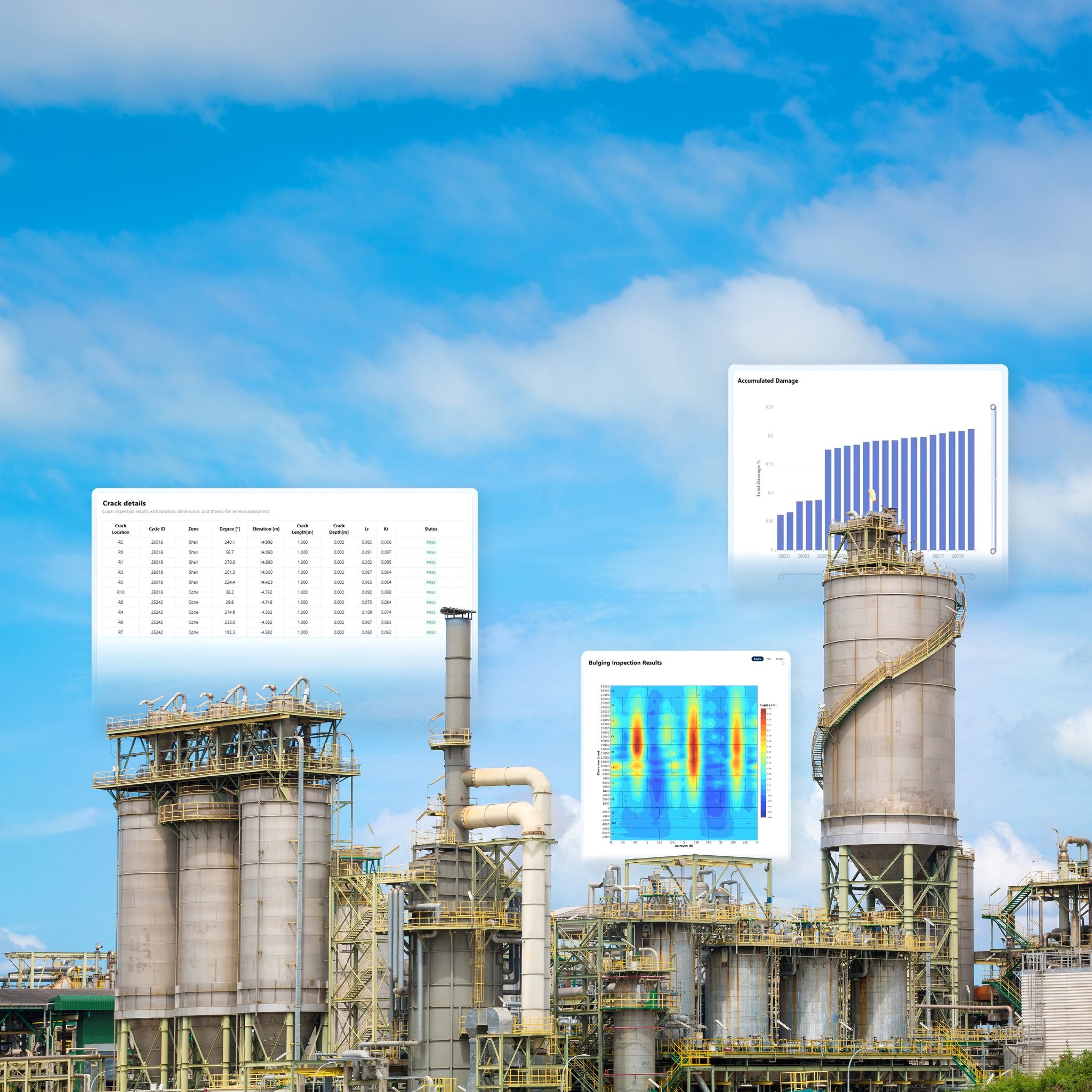
Fig 3. A chemical plant on a bright sky background, with Akselos’ dashboards on top of each asset, showcasing the damage areas and most damaging cycles, letting operators know their assets inner workings.
Proven at scale: Adriatic LNG
Adriatic LNG operates one of Europe's most critical import terminals, and its four open rack vaporizers govern how much gas it can send to market. The operating envelope of those ORVs had been set years earlier on conservative assumptions. To send out more gas, the operator needed to know whether ORV #3, after 16 years in service, could safely carry higher pressure over time, with evidence that Class and regulators would accept. Conventional coarse models offered limited visibility into the true margins of an ageing, complex structure.
Working with COSMI, the terminal's maintenance contractor, Akselos applied SPM to ORV #3 and built a structural twin of the vaporizer, the first class-verified ORV re-rating of its kind in the LNG sector. The twin revealed the asset's real condition, evaluated its structural response at higher pressure before any change was made, and then monitored it in service, accounting for aging effects such as permanent bending and thermal history. An Italian class society validated the methodology, load cases, and results against a Fitness-for-Service assessment aligned with ASME VIII Div.2 Part 5, and the authorities approved the increase. Operating pressure was raised from 78 to 90.1 bar, and that envelope is now fully approved and operational.
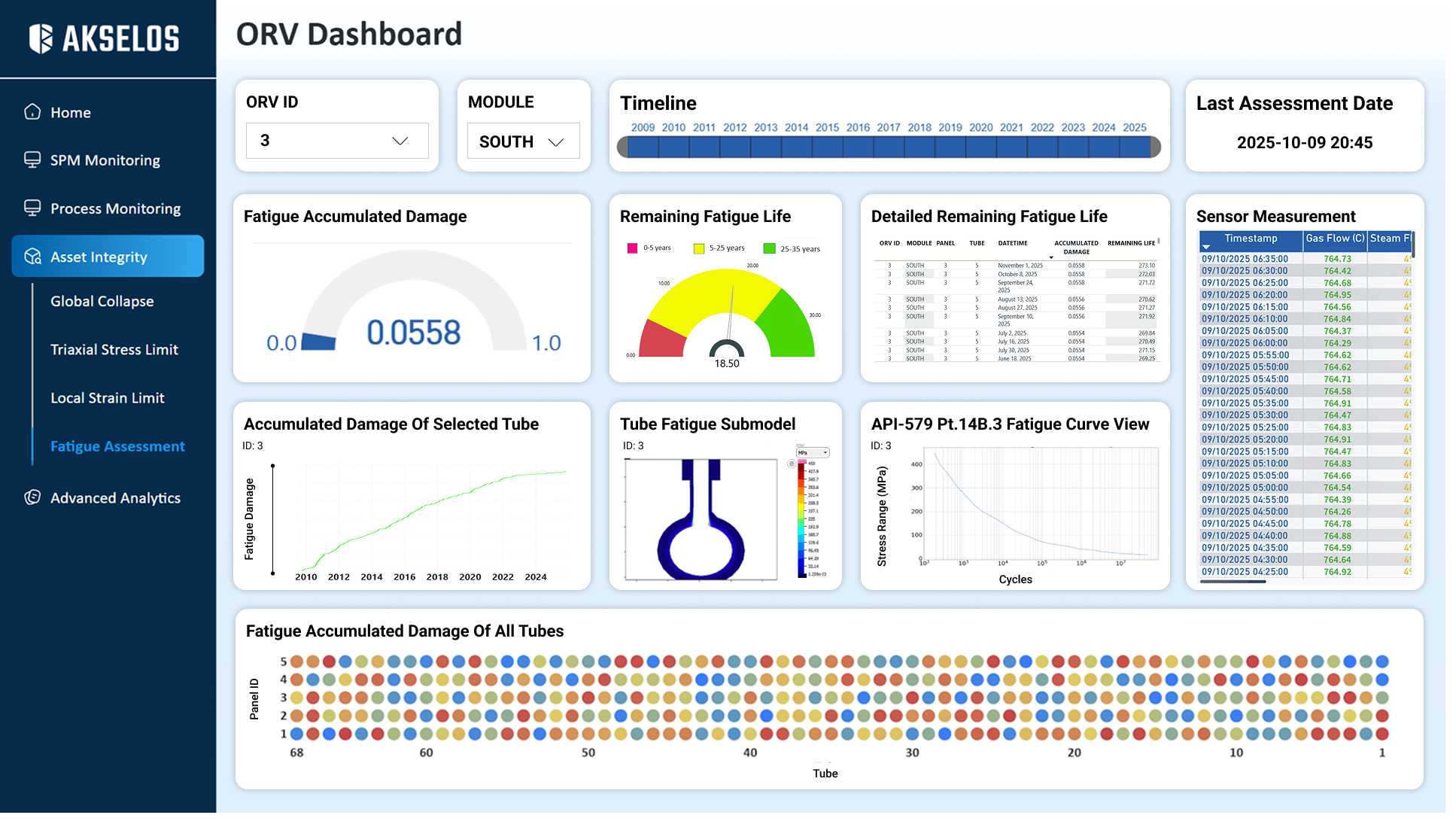
Fig 4. Akselos SPM system for the Open Rack Vaporizer Dashboard, revealing the asset integrity of all tubes in the Open Rack Vaporizer.
The structural insight showed that ORV #3 had more usable life than conservative estimates suggested, deferring major replacement. Extended across all four ORVs, the operator projects roughly €32 million from deferred and avoided CAPEX, and a 10% throughput increase worth an estimated €16 million a year.
Looking at the wider industry, across comparable LNG terminals and vaporization systems, we believe that more than €200 million in structural value are still in the steel, all from operating ageing infrastructure to its real limits rather than its assumed ones.
Looking ahead
The pattern repeats across every sector Akselos works in. Refineries, LNG terminals, offshore platforms, and fertilizer plants are all run harder, cycled more often through the energy transition, and held to tighter capital discipline than the assumptions their assets were designed against. The question is no longer only whether the process can run, but whether the steel can safely support how it is being run between turnarounds.
That is the shift SPM makes possible: away from conservative assumptions and reactive integrity, and toward real-time structural understanding and confident, evidence-based decisions. Grounded in physics and recognized engineering standards, and proven at sites from Qatar to the Adriatic, Structural Performance Management turns structural response from an assumption into a daily input to how operators run, maintain, and invest in critical infrastructure.
Learn more about Akselos S.A.: https://www.onestopndt.com/ndt-companies/akselos-sa


There are no comments yet!