
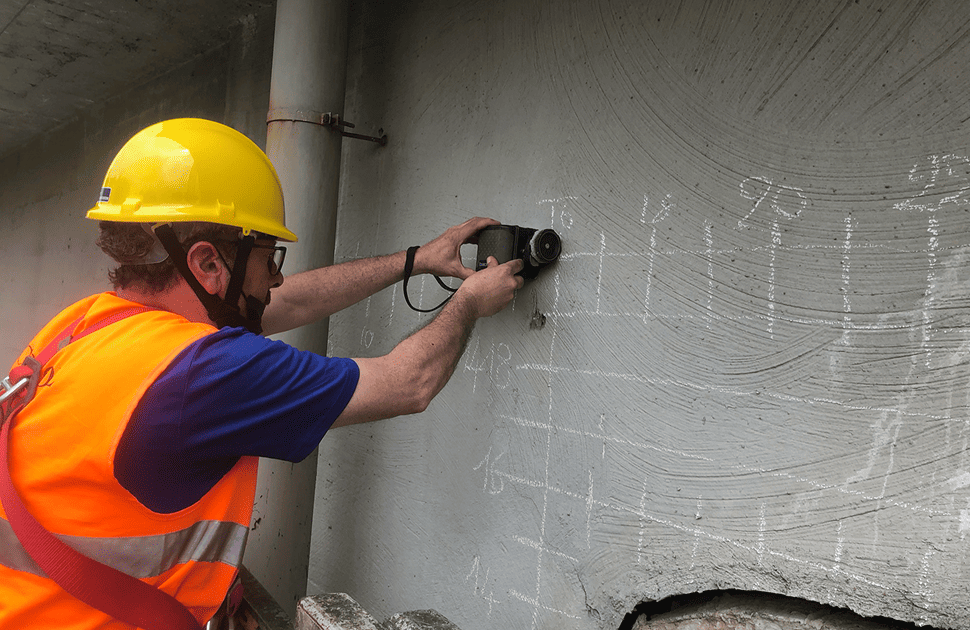
In the construction and infrastructure industries, ground penetrating radar (GPR) is a key tool for NDT and condition assessments. When inspecting concrete structures - from bridge decks and tunnels to slabs and walls - GPR provides essential insights into internal composition, helping to locate and map critical components like rebar, post-tension ducts and conduits.
Objects such as rebar appear as characteristic, arch-shaped signals called hyperbolas in the GPR scans. To find out important data such as the number of rebar in the scanned area, the spacing, depth and other information, you would need to go through the scan data and manually identify and tag each hyperbola. Imagine how much time that would take on massive datasets! It would be simply unrealistic.
The time for manual hyperbola tagging is over.
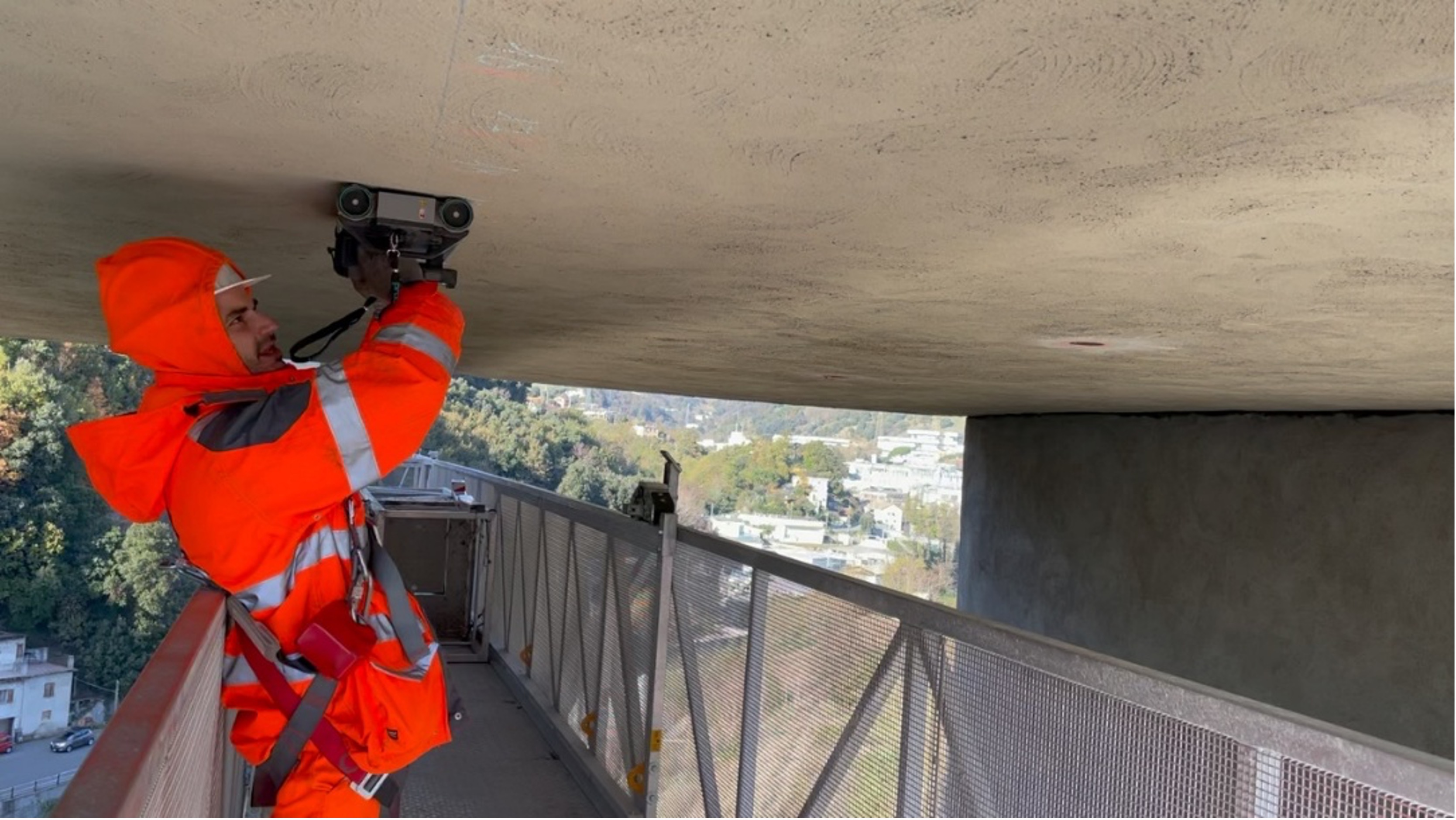
We introduce the industry’s first AI-Powered In-Field Auto Tagging for all handheld Proceq GPRs, available with the release of version 6.0 of the GP app. This marks the beginning of the AI era for GPR technology, transforming how NDT professionals process and share concrete scan data.
The future of concrete scanning with in-field AI auto tagging
The advanced AI algorithms are now able to accurately detect and tag most of the hyperbolas from your GPR data in a matter of seconds. It works by automatically scanning through datasets, identifying hyperbola shapes, locating the corresponding peak in the A-scan, and marking with a numbered tag.
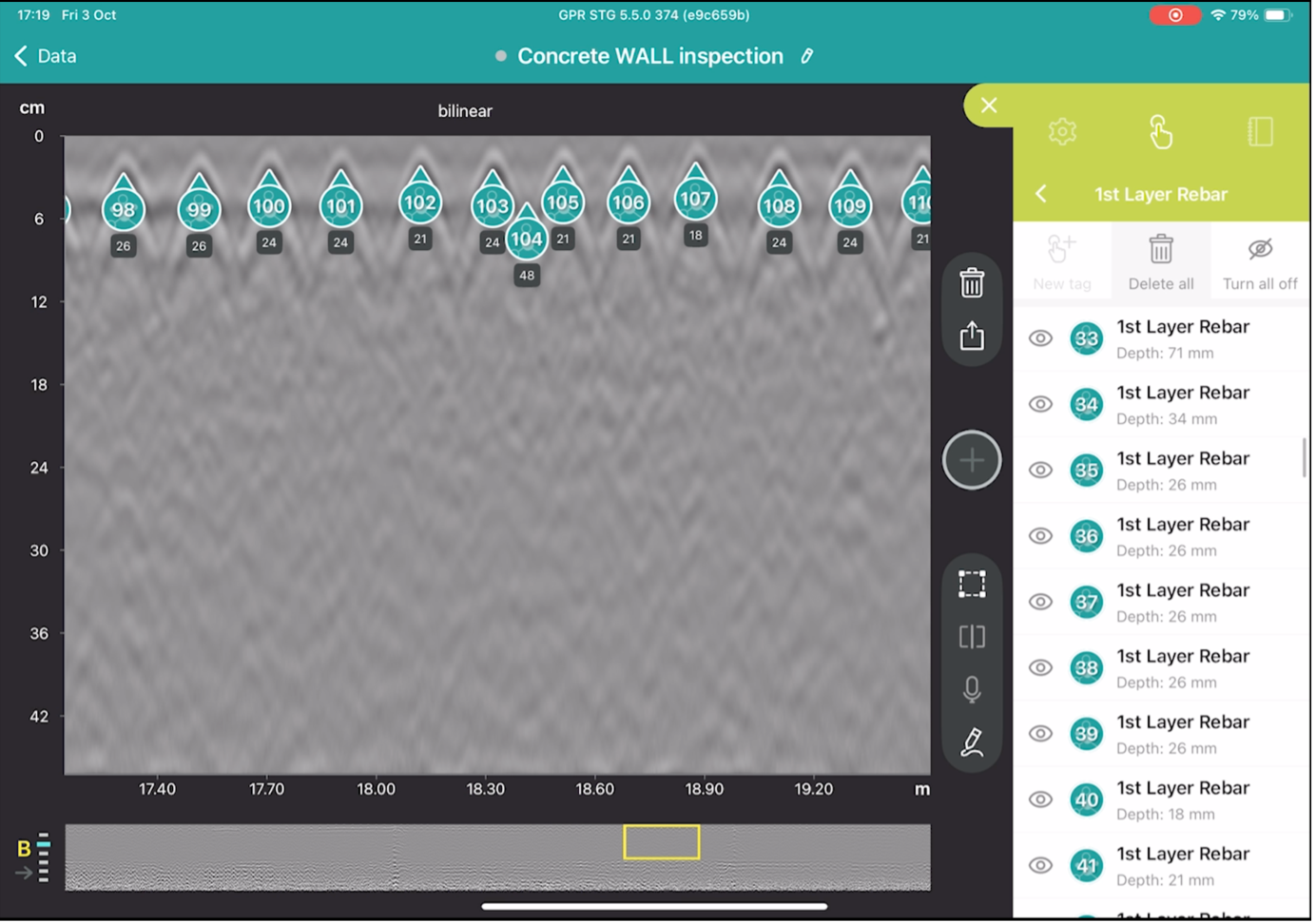
This is the exact procedure you would do yourself, except it can accurately identify and tag hundreds of hyperbolas in just a few seconds rather than hours.
Unlocking deeper insights, faster
The rapid, precise identification, tagging and counting capability of the AI tool directly enables on-the-spot decisions to be made with confidence, dramatically reducing overall analysis and reporting time with:
- Enhanced Accuracy and Objectivity: The AI auto-tagging serves as a powerful assistant, performing the bulk of the identification work. This allows you to transition from time-consuming primary identification to an efficient review process - only needing to perform a quick review of the tags.
- Deeper Data Analysis: The AI recognizes most hyperbolas based on their shape. This objective tagging enables NDT professional to then apply their own expertise in pattern recognition and environmental context to definitively determine the reflecting object. This streamlined process makes it exceptionally easy to immediately visualize and share the reinforcement information for thorough structural analysis.
- Faster Reporting and Export: The solution dramatically cuts your overall reporting time. Data can be exported in a few clicks with several fast options including Excel, DocX, SEGY, HTML, and a shareable URL, among others. With the Excel export option, the system automatically separates the AI tags into individual cells, displaying the most useful information for each one, including distance, depth, spacing, and more.
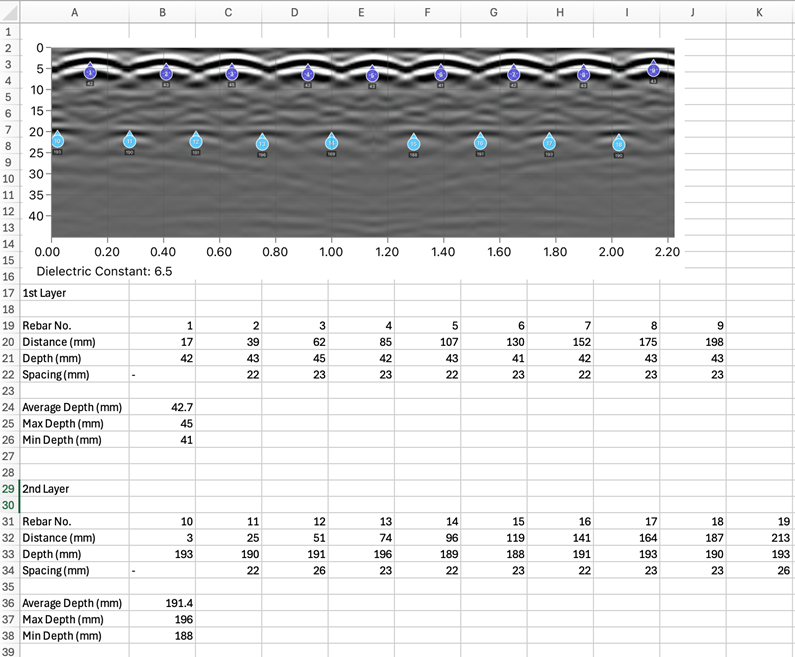
Example of AI-tagged data exported to Excel spreadsheet showing tagged rebar layer information.
By automating the most time-consuming part of in-field data analysis, concrete scanning professionals can now complete projects faster and gain even more actionable insights from their Proceq GPR scans.
A science professional at Element Construction Testing facility in Singapore served as a Beta tester for the new AI Auto Tagging feature, commenting:
“This tool help us to save a lot of time, reduce human error with precise AI analysis. I think it is quite beneficial in the future of the testing industry.”
The AI journey has only just begun
This is truly just the beginning of AI integration. With a commitment to a constantly evolving software model, the release of AI Auto Tagging opens a new chapter of advanced analysis that Proceq looks forward to exploring and expanding upon with our users in the future.
Proceq redefined the NDT industry by shifting the focus from complex, bulky "hardware" to "intelligent software." They became the industry standard by pioneering three specific innovations:
SFCW Technology: Stepped Frequency Continuous Wave (SFCW) technology to deliver high resolution imaging for both shallow and depths up to 150cm with only one antenna, replacing the need for multiple traditional antennas.
The iPad Ecosystem: Replacing grainy screens with high-definition, touch-screen tablets, ever-evolving software delivering features like this AI Auto Tagging, and seamless cloud sharing.
Augmented Reality (AR): Overlaying 3D scan data onto the real-world project surfaces to help stakeholders see what’s hidden.
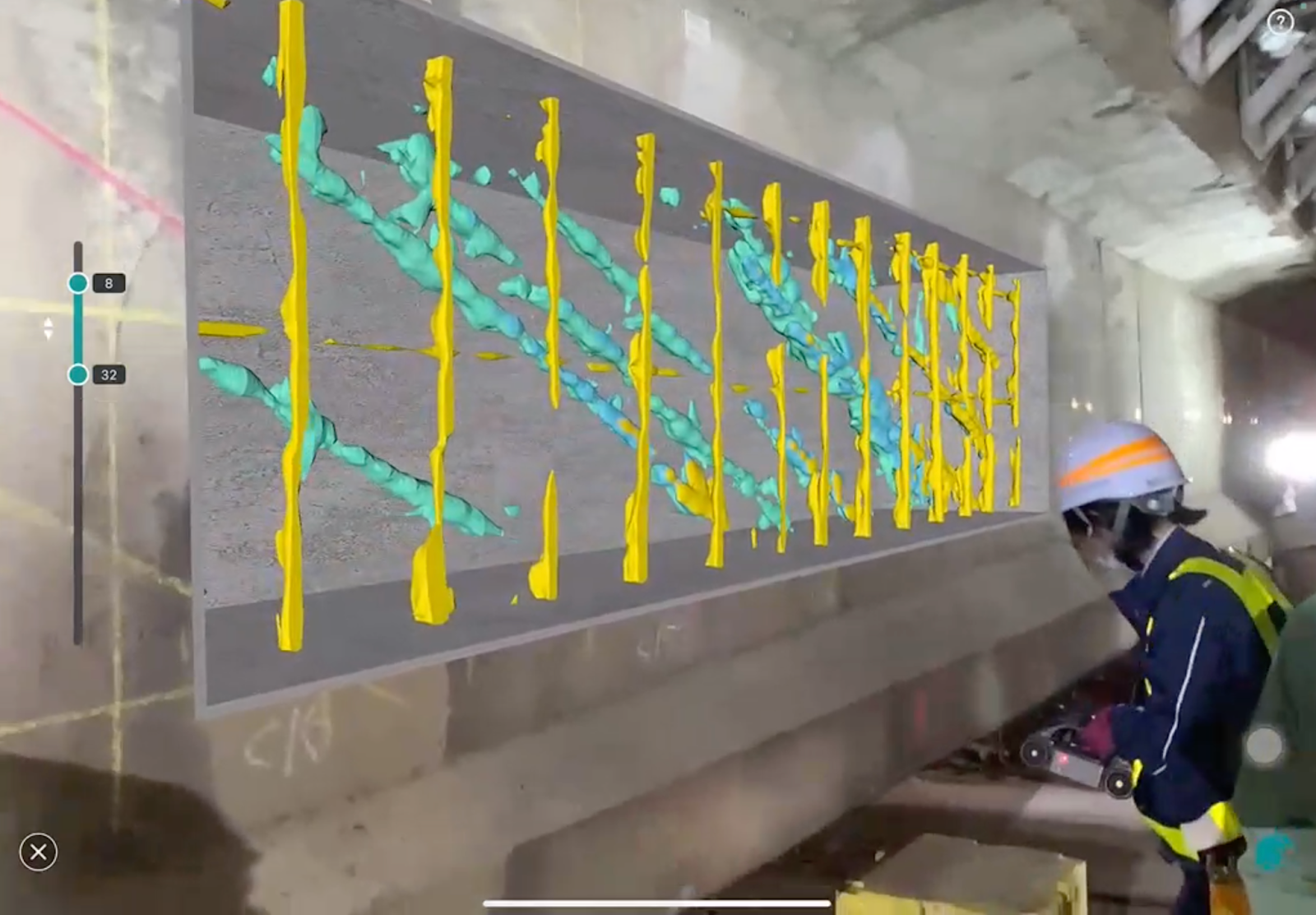
AI is the natural evolution. While Proceq’s AR and 3D views gave us the "eyes" to see through concrete, AI Auto Tagging now provides the "brain" to interpret and process the results faster.
The software has evolved from simply showing you where ojects like rebar are, to automatically quantifying them. This closes the gap in the in-field workflow and opens up new possibilities for concrete scanning and reporting.
The AI Auto Tagging is available now with all handheld Proceq GPRs (GP8800, GP8000 & GP8100) and the GP app version 6.0 at no extra cost to both existing and new users.
Don't have a Proceq GPR yet? Contact us to discover how you can bring this industry-first, time-saving technology into your NDT workflow. www.ScreeningEagle.com
There are no comments yet!