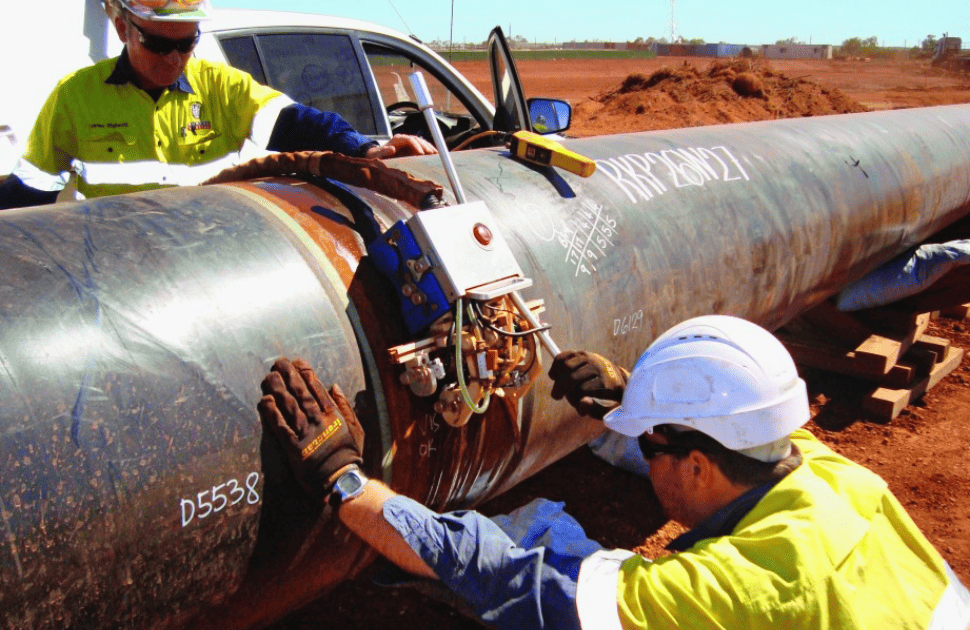
1. Introduction
Pipelines are a crucial component in the oil and gas sector. With 57.5% of global primary energy use from oil and natural gas, these two sources are the most commonly used (Dudley, 2019). However, flammable and explosive materials in pipelines can cause accidents, such as fires, explosions, and the release of toxic gases (Chen et al., 2020). Pipelines are also vulnerable to damage from natural disasters like lightning, earthquakes, and floods. Pipeline failures lead to financial losses, environmental damage, and safety risks. Ensuring pipeline integrity and safety is essential for reliable operation, environmental protection, and economic efficiency.
2. Onshore Pipelines
Oil and gas are transported via onshore pipelines, which are made of carbon steel and buried underground or erected above ground on land. These pipelines are subject to a variety of environments, including plains, mountains, and deserts, as well as different soil types and weather patterns.
3. Offshore Pipelines
Strong water currents and the marine atmosphere affect offshore pipes used for subsea transportation and the delivery of carbon products. These pipelines are difficult to construct and can get damaged by water pressure, corrosion, erosion, fishing nets, and boat anchors. Sand and other abrasive materials create erosion, while acidic substances and temperature changes induce corrosion. Ocean temperature fluctuations and strong water currents put strain on offshore pipes and can lead to wear.
4. Integrity & Safety of Pipelines
Evaluating and preserving the safety and condition of pipelines is known as integrity management of pipelines. It encompasses, in general, (a) appropriate design, construction, operation, and maintenance; (b) identifying any adverse behavior that could jeopardize integrity and safety; and (c) risk mitigation by eliminating or minimizing pipeline damage.
There are several obstacles to pipeline integrity and safety, including:
- Pipeline aging that increases the risk of catastrophic failures
- Weather and soil movement which can erode structural integrity
- Human error during operation and maintenance and this can lead to catastrophes
- Material problems such as erosion and corrosion causing leaks and failures
5. Pipeline Integrity Management
5.1. Assessment
Pipeline assessment involves thoroughly examining the internal and external parts of pipelines, calculating their geometry, modeling fluid flow, determining corrosion rates, and assessing risk. Detecting any damage or defects on the inside and outside of the pipelines helps evaluate their condition and develop necessary repair plans.
There are various benefits to performing pipeline integrity assessments:
5.1.1 Safety and reliability
To take proactive steps to stop damage, leaks, accidents, or malfunctions, regular assessment of pipelines is helpful. Early identification of damage or flaws enables prompt repair and ensures continuous operations, enhancing safety and reliability.
5.1.2 Reduced expenses and downtime
Downtime and emergency repairs are minimized and this reduces expenses.
5.1.3 Compliance with regulations
Adherence to regulatory compliance is crucial, and a thorough evaluation of pipeline integrity may make this possible.
5.1.4 Preservation of the environment
A thorough evaluation of integrity could reduce any environmental damage.
5.1.5 Extension of life
Assessment, routine maintenance, and testing of pipelines contribute to the extension of pipeline life.
5.2 Planning for Integrity
This entails establishing standards for maintenance and inspection in order to stop material deterioration and damage to pipeline integrity from outside sources.
5.3 Managing Projects
Among the several tasks involved in pipeline integrity management are material condition assessment, data accuracy verification, operational readiness assurance, burst resistance testing, and third-party verification.
6. Components of Pipeline Integrity Management
The following are important elements of pipeline integrity management:
- Examining the pipeline
- Data collection and analysis
- Strategies for maintenance and repairs
- Adherence to regulations
- Maintaining records
7. Pipeline Integrity Testing
7.1 Difficulties
7.1.1 Length of pipelines
Most pipelines are long-distance, which makes them difficult to inspect and maintain, and frequently calls for sophisticated tools and techniques.
7.1.2 Adverse operational circumstances
It is difficult to examine and maintain pipes in the gas and petroleum industries because they carry toxic, combustible, or high-pressure media that must be handled with extreme caution. For instance, handling significant amounts of water during hydrostatic testing necessitates careful attention, whereas pneumatic testing is extremely dangerous due to the energy stored in compressed gases.
7.1.3 Complex data interpretation
In the oil and gas industries, a large number of sensors are used to collect data from lengthy pipelines. This produces an enormous amount of data that needs to be processed, requiring specialist knowledge and the most recent tools.
7.2 Integrity Testing Methods
7.2.1 Hydrostatic testing
For pipeline integrity and leak-tightness testing, hydrostatic testing is frequently utilized. This involves holding pipelines at a pressure higher than their operating pressure for a certain amount of time. Pressure drops, leaks, or structural problems are used to ensure the integrity.
7.2.2 Pneumatic testing
In pneumatic testing, pipelines are pressurized using nitrogen, compressed air, or other inert gases. Because any structural or equipment failure during pneumatic testing releases a lot more stored energy than in water strict safety procedures are followed when testing pipelines during pneumatic testing as opposed to hydrotesting.
7.2.3 Non-destructive testing
(a) Magnetic flux leakage (MFL)
Applying a magnetic field to a portion of the pipe causes iron particles to move across its surface, a phenomenon known as magnetic flux leakage. Cracks or discontinuities are revealed when these particles collect at surface or near-surface flaws. This method is employed to identify corrosion and changes in the pipeline's wall thickness.
(b) Ultrasonic testing (UT)
High-frequency sound waves are employed to assess the thickness of pipe walls and find corrosion and fissures. UT needs qualified laborers and specialized equipment.
(c) Acoustic
Leakage causes pressure changes in pipelines, which produce sound waves. This can be detected by employing acoustic sensors.
(d) Fiber optic
Fiber-optic sensors can detect changes in temperature, strain, and vibration patterns in pipelines, and the resulting data are highly valuable for pipeline integrity monitoring.
(e) Radiographic testing (RT)
Porosity, inclusions, fissures, and other flaws in welds can be found using the image produced by RT, which is based on X-rays or gamma rays. Welds are tested using RT both during manufacture and after pipeline repairs.
(f) Smart pigging or intelligent pigging
Inspection gauges, sometimes referred to as "pigs," that are fitted with MFL or ultrasonic sensors are used in smart pigging, also known as intelligent pigging. The inside conditions of pipelines can be regularly monitored by pigs placed into them. For long-distance pipelines, smart pigging is particularly helpful in detecting pitting, metal loss, cracking, weld flaws, and other problems.
8. Maintenance towards Pipeline Integrity
8.1 Difficulties
- With ageing, chances of corrosion and crack damage increase
- Difficulty in maintaining pipelines in isolated areas and challenging terrain
- Robust solutions are needed to analyze a huge amount of inspection and maintenance data
- Adhering to intricate and dynamic safety and environmental regulations can be difficult
8.2 Important Maintenance Strategies
- Frequent examinations of pipes employing different methods
- Controlling pipeline material corrosion
- Using systems for leak detection
- Pigging activities are used to clear buildup and clean pipelines
- Upkeep of routines
8.3 Steps to Preserve Pipeline Integrity
- Consistent monitoring for leaks and defects
- Establishing a mechanism for risk-based evaluation
- Preventing corrosion
- Early warning of third-party damage
- Cutting-edge health monitoring technology
- Creating a precise operational procedure
- Integration and analysis of data
- Constant training
- Keeping up with regulations
- Being ready for emergencies
9. Technological Progress
9.1 Sensors for Pipeline Monitoring
Real-time data on temperature, pressure, flow rates, and other variables is provided by advanced sensors, and this data can be used to improve pipeline damage and flaw detection.
9.2 Analytics for Prediction
Proactive maintenance is made possible by the application of machine learning algorithms to anticipate possible faults.
9.3 Robotics
Robotic devices known as "crawlers" and drones can be used to navigate pipelines to do minor repairs and inspections. Robotic devices equipped with cameras and sensors are highly helpful for doing in-depth analyses in difficult-to-reach areas and inspecting the interior of pipelines.
9.4 Analysis of Multiple Gases
Multi-gas analysis is an additional method for measuring and identifying different gases in a pipeline. Such gases include carbon dioxide, hydrogen sulfide, and methane.
9.5 Things of Internet (IoT)
A revolutionary tool for pipeline integrity systems is the integration of real-time monitoring systems with sensors and Internet of Things (IoT) devices. It is possible to do pipeline health evaluation using data intelligence, which enables operators to promptly spot anomalies while gathering data on a variety of variables, such as material damage and temperature, pressure, and flow rate.
10. Artificial Intelligence (AI) in Pipeline Integrity
AI has made it possible to comprehend the reasons behind failures and take prompt action to maintain pipeline integrity.
10.1 Predictive Maintenance
AI is used to find patterns that indicate wear, erosion, corrosion, or leak. High-speed analysis of complex datasets allows for repair decisions to be made well before the damage becomes catastrophic. Pipeline conditions are continuously assessed to minimize downtime, eliminate unexpected failures, and increase cost effectiveness.
10.2 Leak Detection
In contrast to traditional manual and slow detection approaches, AI-assisted leak detection enable the analysis of massive data sets and assist in identifying anomalies in pressure, flow rate, and auditory signatures that suggest a potential leak. The accuracy of leak detection is also increased by the AI-enhanced acoustic approach.
10.3 Corrosion Monitoring
Pipeline corrosion detection can be aided by the integration and analysis of data from different NDT sensors, such as magnetic flux, ultrasonic, and fiber optic, utilizing AI techniques to identify changes in composition and thickness.
10.4 Automated Inspection
By taking high-resolution pictures to find defects, AI-enabled drones, robotic crawlers, and satellite photos are very helpful for automated pipeline inspections.
10.5 Satellite and Aerial Surveillance
High-resolution photography and satellite-based synthetic aperture radar (SAR) make it possible to identify pipeline anomalies, vegetation disturbances, and any unapproved excavation operations endangering the pipeline's structural integrity.
11. Advances in NDT sensors and AI
AI-integrated materials and embedded sensors are used in the creation of self-healing pipelines so that self-repair operations can start when minor damage is detected. These materials are nanoparticles and smart polymers. Blockchain technology and AI can produce tamper-proof recordings of sensor readings and data during maintenance. Self-optimizing pipelines that can function independently are becoming possible thanks to the developments in IoT, AI, and remote control.
References:
Dudley, B., 2019. B.P., Statistical Review of World Energy 2019. World Petroleum Congress, London.
Chen, C., Reniers, G., Khakzad, N., 2020. Cost-benefit management of intentional domino effects in chemical industrial areas. Process Saf. Environ. Protect. 134, 392-405. https://doi.org/10.1016/j.psep.2019.10.007.
Author: Chandan Mukhopadhyay

There are no comments yet!