Production is running. The components are ready. Inspection can begin.
But in X-ray inspection with analog film, every step takes time. Exposure, development and evaluation limit throughput and flexibility. What should be a smooth production flow is often disrupted by delays in the NDT process.
Many NDT teams are familiar with this situation. The results are reliable, but they are not fast. And while we wait, the backlog of parts waiting for inspection continues to grow.
This situation did not spare established global technology leaders. At Kongsberg Defence & Aerospace (KDA), film-based X-ray inspection had become a visible bottleneck. Additionally, rising prices for film consumables resulted in significantly increasing inspection costs that grows linearly with the production volume.
At the same time, a major production ramp-up was approaching. Continuing with film was not sustainable. The challenge was clear: remove the bottleneck without introducing new risk.
KDA had a strategic decision to make. Replacing film in a safety-critical aerospace environment means touching qualified processes, customer approvals, and audited workflows. A failed transition would slow down production and risk the ability to deliver. Yet doing nothing carried an even greater risk. So KDA made a decision.
Eight years later, Jan Danielsson, Radiation Protection Officer and Responsible Level 3 at KDA, looks back on this moment at the NDT Forum in Prague.
“Introducing digital radiography was one of the most important investments we have made in the last eight years,” he says.
With it, the bottleneck had disappeared. But how was it done? And what advice is there for companies facing the same issues today?
Choosing a partner
Film radiography is still widely used across the aerospace industry. It is fully accepted. However, Standards that have evolved over decades, customer-specific specifications, and established audit processes make change complex. Film radiography is documented and familiar. Auditors, customers and inspectors know exactly what to expect and trust the outcome. Any new method must prove that it reliably detects the same defects. And it must prove that it delivers stable, reproducible results over the long term.
The planning process, from film to digital X-ray inspection, was about a complete process. KDA needed an end-to-end solution partner.
They therefore defined their requirements very clearly. This is a key recommendation for anyone facing similar challenges. For KDA the system should be able to inspect metals and composite materials for foreign objects (FOD), defects, and other deviations from quality specifications. It should work manually and automatically. It should reliably detect all relevant defect types. And above all, it should demonstrably deliver this performance during the test period before going into production. This pre-deployment evaluation saves later effort and cost for everyone who wants to introduce such a system.

Figure 1 - Various test specimens: 1. Honeycomb Sandwich cut out, 2. VLW cut out, 3. Rudder cut out, 4. ASTM E2737 Duplex Plate Phantom IQI, 5. Reference Quality Phantom IQI © Kongsberg
The five non-negotiables before ordering a DR System
Know exactly what the system must detect
Define materials, geometries, and defect types upfront.
If this is unclear, qualification will fail later.
Prove performance before installation – not after
Verify image quality, sensitivity, and defect detection during FAT and, where possible, through pre-order performance validation.
Do not rely on promises. Rely on evidence.
Treat the detector as the heart of the system
Pixel size, signal-to-noise ratio, and stability define what you can see.
Do not optimize around the detector. Build the system around it.
Standardize processes from day one
Operation, calibration, maintenance, and verification must follow defined procedures.
Standards do not slow you down. Missing standards do.
Think beyond inspection: data, traceability, availability
Define data formats, storage (e.g., DICONDE), backups, and spare-part strategy early.
Qualification is not the finish line. Availability is.
This clear understanding of the requirements shaped the selection of the partner. The search was for a provider who would take responsibility for the entire system. For planning, setup, testing, qualification, and training.
KDA found this partner in VisiConsult X-ray Systems & Solutions from Germany. VisiConsult specializes in customized solutions for the most demanding inspection tasks. Together, they developed an XRHGantry system with seven axes that was precisely tailored to KDA's components and testing requirements.
This end-to-end approach was crucial. It reduced interfaces, simplified communication, and ensured that technical decisions were always made in the context of subsequent approval. For KDA, this was a prerequisite for implementing the system change in a controlled manner and without surprises.
However, the real test was still ahead at this point: testing, qualifying, and accepting the system under real-world conditions. And the crucial question of whether the task could even be accomplished within the set time limit.
Qualification as the Critical Path
In the field of aerospace NDT digitalization fails when the qualification process breaks down. For KDA, it was therefore clear from the outset that digital radiography had to meet existing standards fully, demonstrably, and without exception.
International standards such as ASTM E2737 defined performance and long-term stability requirements for the digital detector array. These were complemented by additional ASTM standards and customer-specific specifications. Above all, Nadcap approval according to AC7114/10 was non-negotiable. Without it, digital radiography would not enter production.
Before installation, KDA submitted reference specimens that had already been inspected using film radiography. The digital system had to demonstrate equivalent defect detection with equal clarity and reliability. This requirement made the Factory Acceptance Test a decisive proof point rather than a formal milestone. “Despite the challenging specimens, the first tests were excellent. All defects were clearly visible,” recalls Lennart Schulenburg, CEO of VisiConsult. With these results, confidence in the system increased. Installation could proceed, followed by qualification under production-relevant conditions.

Figure 2 - Tests for Image quality requirements © Kongsberg
Training, qualification, and approval were executed in parallel. Inspectors were trained according to NAS-410 and EN-4179 while technical verification progressed. Issues were identified early, documentation was prepared in advance, and verification followed a clearly defined structure.
As a result, the system was fully qualified and approved after eight weeks. This was significantly earlier than initially planned.
“I have heard that qualification and approval in only eight weeks is a world record in the aerospace business,” says Jan Danielsson.
The timeline was the consequence of an end-to-end approach that aligned engineering, standards, and training from the start.
Life after the bottleneck
With the approval, everyday life in X-ray inspection at KDA changed fundamentally. Around 90 percent of the previous film work was converted to digital X-ray inspection. The bottleneck disappeared.
Where multiple inspectors were previously required to work in shifts and plans existed to increase the team further, two qualified inspectors are now sufficient to inspect the same number of components. The total inspection effort was reduced by more than 85 percent.
The difference was most visible in the workflow. Digital images became available within seconds. Adjustments could be made immediately. Image enhancement and magnification no longer affected quality. Waiting times caused by film development and re-exposure disappeared.
Automation played a key role. Today, around 95 percent of components are inspected using automated programs. Inspectors focus on evaluation and decision-making rather than repetitive manual steps.
An effect KDA did not fully anticipate was the impact on people. “I have more motivated and engaged inspectors today,” says Danielsson.
Technology was not perceived as a threat, but as support. Instead of slowing production, inspection now moves at its pace.
Detector quality: the make-of-break factor
For KDA digital X-ray inspection had to deliver at least the same image quality as film and ideally exceed it. In practice, this comes down to one component: the detector.
Pixel size, signal-to-noise ratio, and long-term stability determine whether small defects can be reliably detected. For KDA, the detector was therefore treated as the core of the system, not an accessory.
The selected detector technology met all relevant standards and delivered higher sensitivity than film, particularly in complex composite structures and thin-walled areas. And digital image handling has added another advantage. The images can be archived without degradation and retrieved at any time. This is an essential factor for audits. And feedback confirmed the results to Jan Danielsson.
“Customers come back and say: ‘Wow, how can you make such good images?’”
At KDA, film is now used only where component geometry physically limits detector placement. Wherever digital radiography is technically feasible, it has replaced film. For the remaining applications, KDA is currently implementing a computed radiography (CR) scanner with digital software from VisiConsult, continuing its transition toward fully digital X-ray inspection.

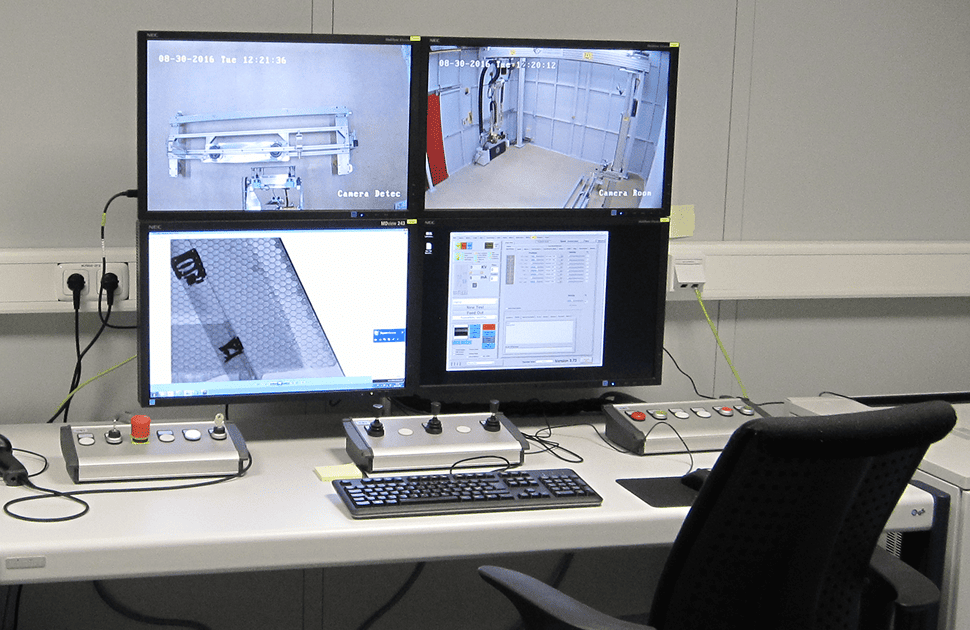
Figure 3 - XRHGantry Control Room © Kongsberg
Conclusion – Digital Radiography in Aerospace Practice
The transition to digital radiography at Kongsberg Defence & Aerospace was driven by necessity. Film-based X-ray inspection had become a bottleneck in a production environment that could no longer afford delay. It also alleviated strain caused by rising film and consumables cost. Replacing it meant touching qualified processes, customer approvals, and established workflows. This undertaking carried real risk.
What made the transition successful was the combination of clearly defined requirements and an end-to-end implementation approach, supported by a partner willing to take responsibility beyond system delivery.
Working closely with VisiConsult, KDA implemented a digital radiography system that was engineered, tested, qualified and trained as a single, integrated solution. This alignment allowed performance to be proven early and qualifications to be completed without compromising standards or timelines.
Today, X-ray inspection at KDA no longer slows production down. It supports it and keeps pace with manufacturing.
Production is running. The components are ready.
And inspection can begin.