
Non-Destructive Testing (NDT) plays a mission-critical role across energy, infrastructure, fabrication, and industrial sectors. Yet despite the sophistication of testing techniques, many NDT workflows remain surprisingly manual.
In today’s competitive and compliance-driven environment, relying on fragmented, paper-based processes is not just inefficient, it’s a business risk. For NDT company owners, managers and operations leaders, the challenge is how to scale operations, ensure profitability, and maintain compliance without compromising inspection quality. Across the industry, one question echoes:
How do we bring the same rigor and precision in our operations and reporting that we apply to our testing techniques?
The Operational Reality
In a typical NDT project, multiple steps must align seamlessly - resource allocation, equipment readiness, consumable availability, data capture, report preparation, approval, and client delivery. When these depend on spreadsheets or memory, friction quickly builds.
1. Resource and Equipment Blind Spots
Operations managers often lack real-time visibility. Assigning technicians is slow when availability, certification, and deployment details are scattered across files or calls. Poor tracking of calibration and maintenance causes last-minute disruptions, re-deployments, and compliance risks. Without a centralized resource and equipment calendar, project delays are inevitable.
2. The Data Capture Bottleneck
The foundation of reports, test data in the field during testing, is still captured on paper and re-entered manually on excels/documents when back in the office. This duplication wastes up to 30% of a technician’s time and introduces human errors requiring additional validations for each report. The process adds effort, delays, and reduces accuracy across the reporting chain.
3. Slow and Error-Prone Reporting
Manual report preparation and formatting to meet standards like ASME consumes valuable hours. Without structured approval workflows or visibility, reports often sit in inboxes, delaying delivery and invoicing.
4. Lack of Financial Control
Manual tracking of timesheets, equipment use, and consumables leaves managers with incomplete data. Costs cannot be accurately linked to projects, making profitability analysis and bid optimization difficult.
5. The Challenge of Institutional Knowledge
Inspection data and reports often remain scattered across drives and personal systems. Creating AI-
based insights related to inspection, retrieving correct versions for client revisions or audits becomes tedious and person-dependent, risking inconsistency and data loss.
These are not minor issues; they are systemic inefficiencies that limit productivity, compromise compliance, and impact profitability.
20251216154206.png)
The Imperative of Digitization
To overcome these challenges, NDT companies must move beyond incremental fixes and embrace comprehensive digital transformation. Digitization is not about adding another tool, it’s about building a connected, transparent, and standardized operational ecosystem.
Two pillars define digital maturity in NDT: process connectedness and central visibility. A unified digital platform enables organizations to achieve:
- Data integrity at the source: Capture inspection data directly in the field through mobile applications, eliminating paper and manual transcription.
- Proactive management: Shift from reactive firefighting (e.g., missed calibration) to proactive operations with automated alerts and dashboards.
- Standardized reporting: Automatically generate reports using predefined templates aligned with company and industry standards such as ASME.
- Accelerated cash flow: Streamlined approvals reduce turnaround time from job completion to report submission, speeding up invoicing cycles.
The results are tangible. Companies that digitize their inspection workflows report up to 90% greater operational visibility, 70% less paperwork, and significant improvement in audit readiness and profitability.
Digitization turns administrative effort into operational intelligence—empowering teams to focus on inspection excellence rather than clerical tasks.
InspectO: Your Partner in Digital Transformation
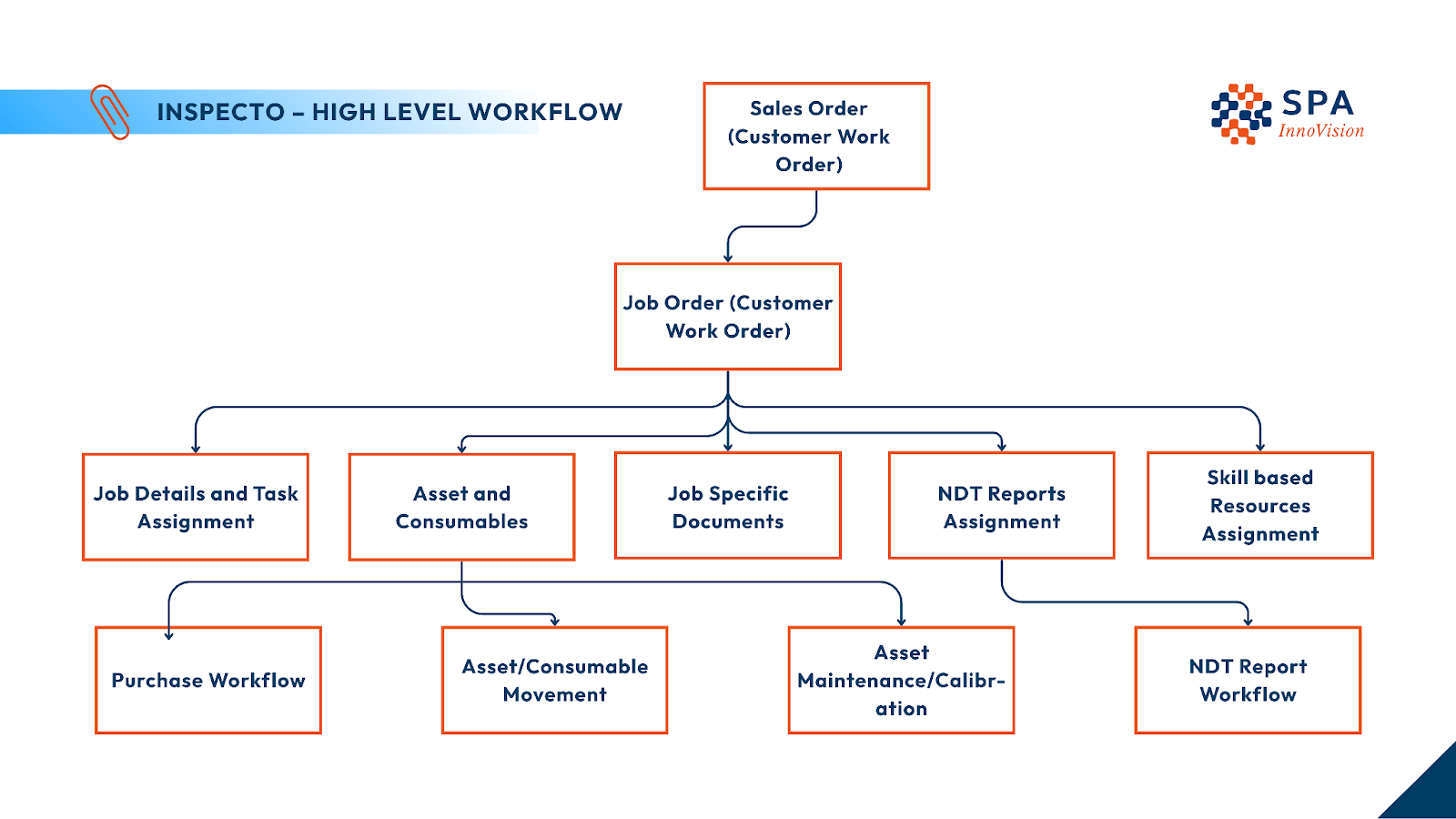
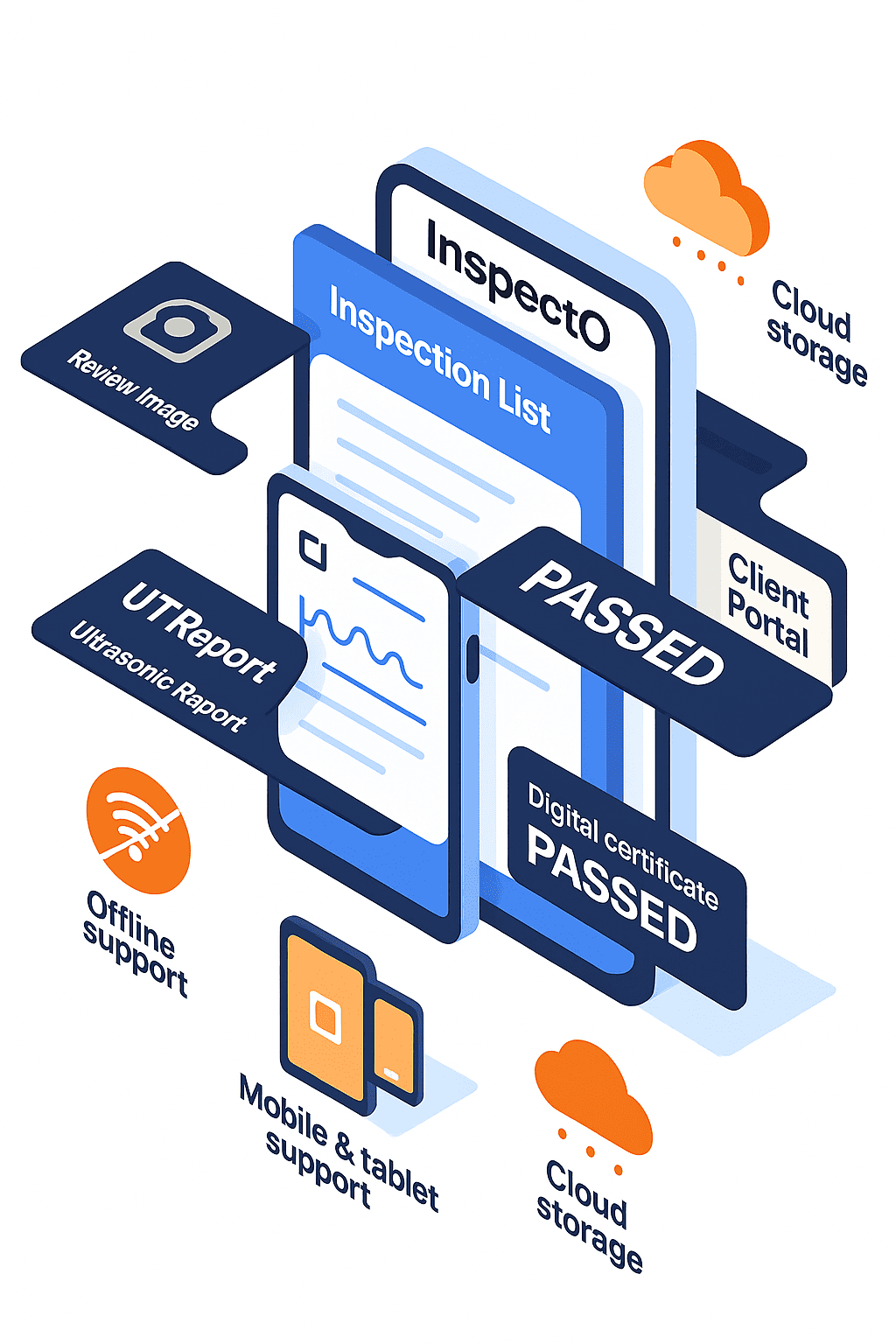
Digital transformation in NDT requires a solution purpose-built for inspection realities. InspectO answers this need. Developed by industry experts, it is a comprehensive, end-to-end platform that unifies job management, field operations, reporting, and analytics into a single system of record.
High-Impact Capabilities
1. Seamless Field Data Capture (with Offline Capability)
InspectO’s mobile app allows technicians to capture data, readings, and images directly on-site— even offline in remote areas. Its AI-powered Optical Character Recognition (OCR) capability eliminates up to 70% of manual data entry effort, converting scanned readings into structured digital input.
2. Smart Resource and Inventory Management
InspectO maintains a centralized master database for all resources, equipment, and consumables. Managers gain instant visibility into technician availability, certification status, and calibration schedules. Automated maintenance and expiry alerts ensure readiness and eliminate downtime.
3. Accelerated, Compliant Reporting
Field data flows seamlessly into draft reports, automatically formatted using predefined templates aligned with ASME and company-specific standards. InspectO also supports AI-based interpretation for advanced methods such as PAUT. A configurable approval workflow provides real-time visibility
into pending reports, bottlenecks, and average turnaround time, ensuring timely sign-offs and delivery.
4. Financial Control and Profitability Insights
By linking timesheets, consumable usage, and equipment utilization directly to each job, InspectO gives leaders a clear picture of cost per project. This enables accurate profitability analysis and smarter tender pricing, transforming from guesswork to actionable insight.
5. AI-Powered Data Management and Retrieval
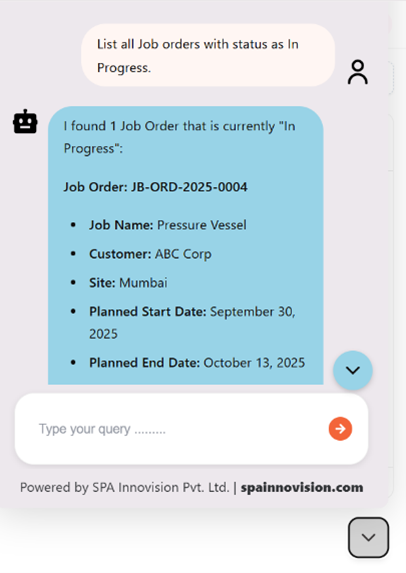
All project records, reports, and job histories are securely stored in a centralized repository. The integrated AI chatbot, Jive, allows users to retrieve reports and insights instantly.
A leading NDT service provider in South Africa faced inconsistent reporting and limited visibility across multiple sites. By implementing InspectO, the company unified its operations under one platform, achieving a 40% reduction in report turnaround time and 100% audit readiness in a short span of time. InspectO became their trusted backbone for data-driven inspection management.
Why Now and How to Start
Digital transformation in NDT doesn’t have to be complex or disruptive. The most effective journeys start small: assess current processes, identify manual choke points, and pilot digital workflows for one method or location.
With the right platform, measurable value can be realized within weeks, not months. As the industry shifts toward connected, data-driven operations, organizations that digitize early will gain lasting competitive advantage through agility, visibility, and customer trust.
This is not a technology race; it’s a business opportunity to strengthen compliance, efficiency, and profitability at the same time.
Ready to Take the First Step?
Digitization in NDT is as much about discipline and consistency as it is about speed and efficiency. The organizations that act now will define tomorrow’s standards—reliable, transparent, and data-driven.
SPA InnoVision’s team will be happy to help you build your digitization roadmap and realize real business benefits.
Frequently Asked Questions
Q: How long does InspectO implementation take?
Implementation time depends on project complexity, but most clients see value from core modules within weeks, thanks to our structured, industry-specific approach. Write to us at [email protected] and we can connect and discuss further
Q: Does InspectO support both conventional and advanced NDT methods (e.g., PAUT, RT)?
Yes. InspectO covers all conventional and advanced NDT techniques, including full PAUT analysis and ASME-based interpretation.
Q: Can InspectO integrate with our ERP or accounting systems?
Yes. InspectO is a cloud-based, API-enabled platform that integrates seamlessly with existing ERP or accounting software for unified data management.
Q: How does InspectO work in remote areas without internet access?
Technicians can capture all inspection data offline. Once connectivity is restored, the data syncs automatically with the central system.
Q: Can reports and workflows be customized?
Yes. InspectO offers standardized templates for consistency, while also allowing full customization to align with company SOPs and client requirements.



There are no comments yet!