
The End of the Static Inspection
For generations, the role of inspection was straightforward. Engineers and inspectors assessed the condition of an asset, recorded measurements, documented observations, and compiled their findings into reports. Those reports became the official record of an asset's health until the next scheduled inspection, whether that was months or even years later.
This approach has supported industries such as oil and gas, power generation, aerospace, manufacturing, transportation, and infrastructure for decades. It has helped organisations operate complex assets safely and make informed maintenance decisions. But it was built around one limitation. Every inspection captured only a single moment in the life of an asset.
Industrial assets, however, do not exist in moments.
Pipelines continue to corrode after an inspection has been completed. Pressure vessels experience thousands of operating cycles before the next shutdown. Offshore structures face changing environmental conditions every day, while bridges, turbines, and processing equipment continue to age under constant use. The condition of these assets changes continuously, even though their documented condition is often updated only during periodic inspections.
For years, this gap between inspections was accepted as part of normal operations. Engineering judgement, conservative design margins, and planned maintenance helped manage the uncertainty.
Today, that approach is being tested.
Across industries, assets are operating well beyond their original design life. Organisations are expected to maintain high levels of reliability while controlling maintenance costs and meeting stricter safety and regulatory requirements. At the same time, inspection technologies are generating more information than ever before. Advanced ultrasonic testing, digital radiography, robotics, drones, laser scanning, and continuous monitoring systems can produce vast amounts of inspection data during a single campaign.
The challenge is no longer collecting information. The challenge is understanding what that information is telling us.
Reports stored as PDFs, spreadsheets maintained across different departments, and isolated inspection databases often make it difficult to see how an asset has changed over time or what actions should come next. Valuable inspection data exists, but too often it remains disconnected.
That is beginning to change.
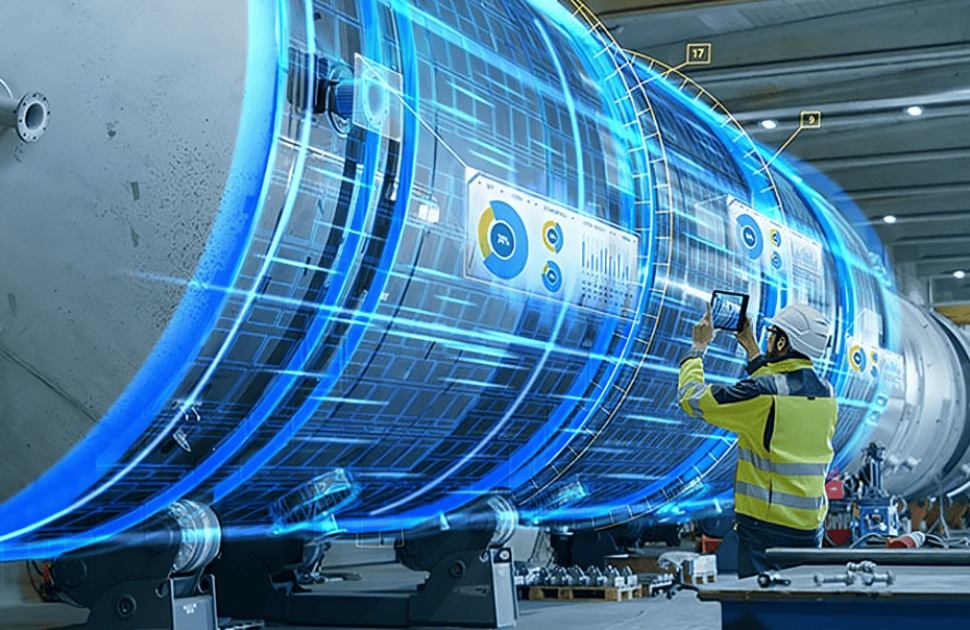
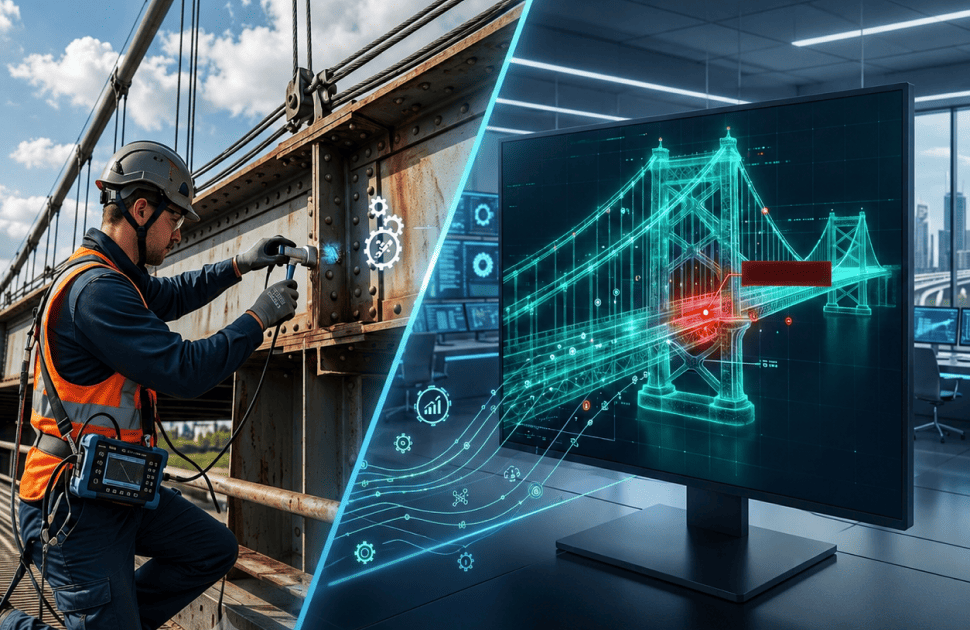
Every inspection is becoming more than a record of an asset's condition. It is becoming part of a connected source of engineering knowledge where historical data, operational information, engineering models, and integrity assessments work together to support better decisions.
The inspection report is no longer the end of the process. It is becoming the beginning of continuous asset intelligence.
From Reports to Connected Intelligence
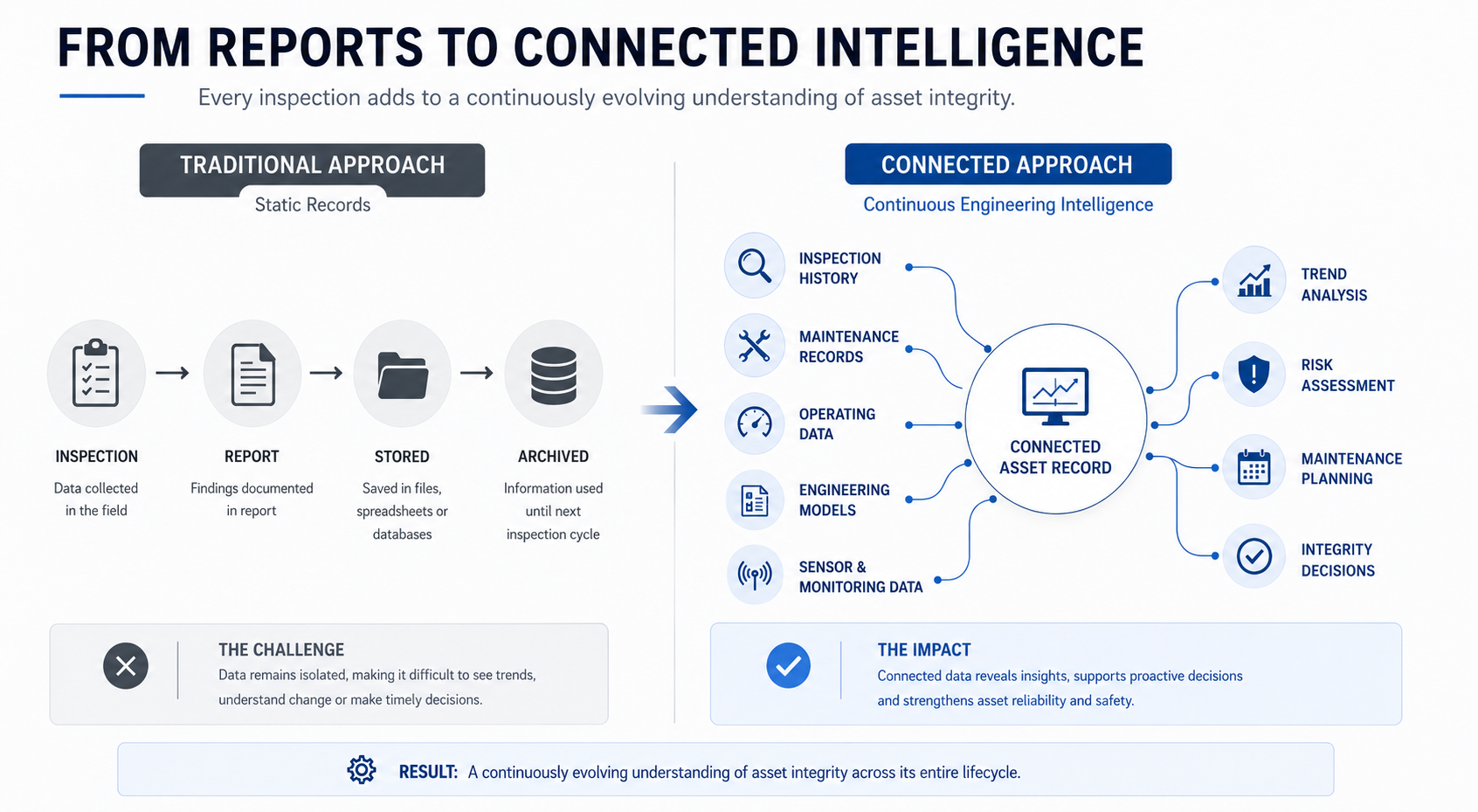
For many years, the inspection report marked the end of the process. Once measurements were recorded and findings documented, the information was stored until the next inspection cycle. While this approach established a reliable record of an asset's condition, it also meant that valuable inspection data often remained isolated across reports, spreadsheets, and databases.
Today, organisations are looking at inspection data differently.
Rather than viewing every inspection as an independent activity, they are beginning to connect information collected over months and years into a continuous record of an asset's condition. Historical inspection results, maintenance activities, operating data, and engineering assessments are increasingly being brought together to provide a broader understanding of how assets are performing throughout their service life.
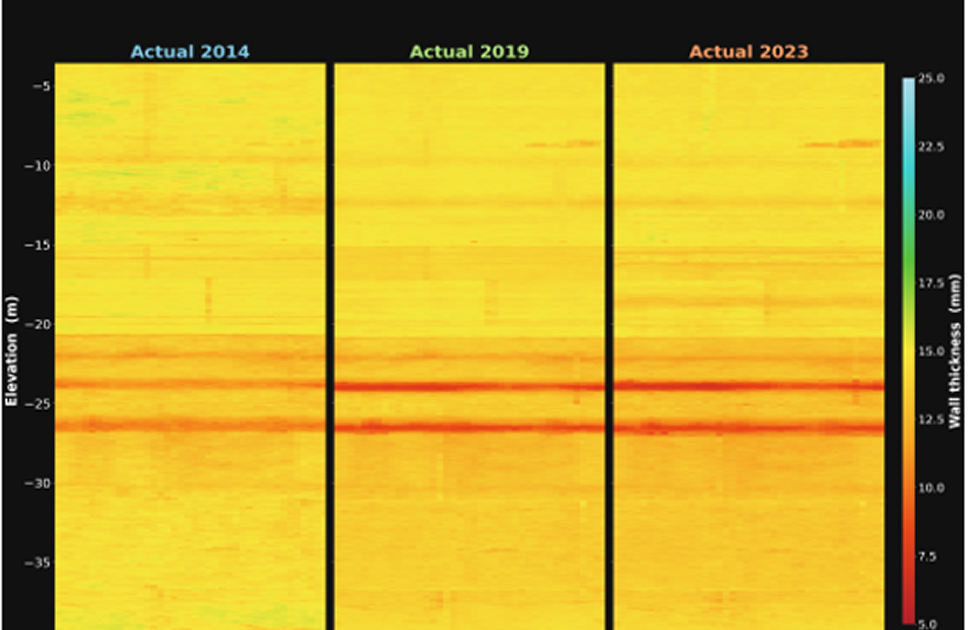
This connected approach changes the questions engineers can ask. Instead of focusing only on what was found during the latest inspection, they can compare inspection intervals, identify developing trends, and understand how an asset has changed over time.
The report still matters. What has changed is its role. Rather than being the final outcome of an inspection, it has become another source of information that contributes to a much larger picture of asset integrity.
Digital Twins: Giving Data Context
As inspection data becomes more connected, organisations are looking for better ways to understand it. This is where Digital Twins are beginning to play an important role.
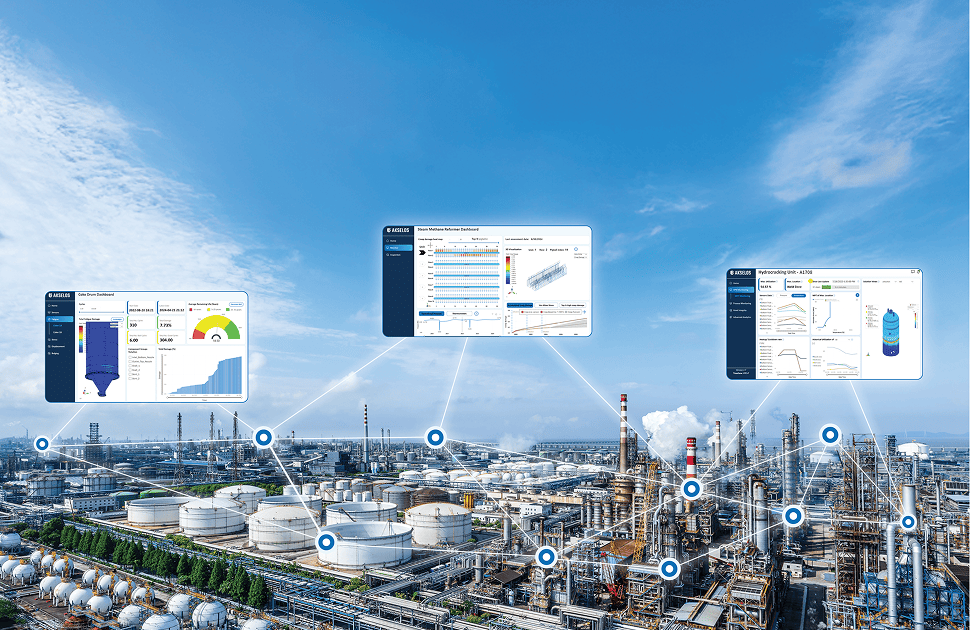
A Digital Twin is far more than a three-dimensional model of an asset. It provides a digital representation that brings together inspection results, engineering data, maintenance history, and operational information into a single environment. Instead of viewing measurements as individual data points, engineers can understand how an asset has changed over time and what those changes mean for its future performance.
This added context helps transform inspection data into practical engineering insight. Corrosion trends can be tracked across multiple inspection campaigns, recurring issues can be identified more quickly, and the impact of repairs or operational changes can be understood with greater confidence.
As more inspection data is added over an asset's life, the Digital Twin continues to evolve. It becomes a living engineering record that supports integrity assessments, maintenance planning, and informed decision-making. Rather than replacing traditional inspections, it increases the value of every inspection by ensuring that the knowledge gained continues to support future decisions.
Better Data, Better Decisions
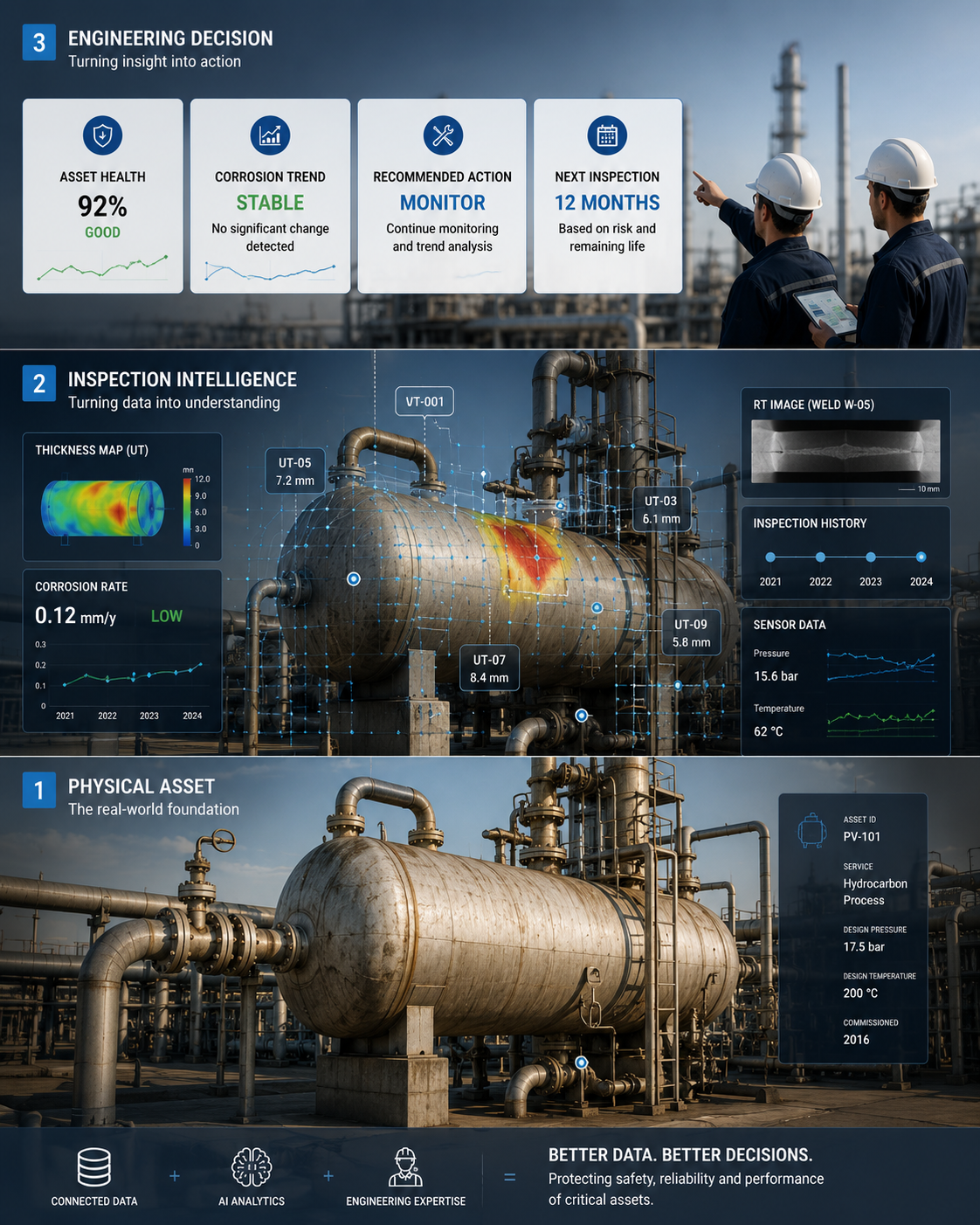
The growing volume of inspection data is creating new opportunities, but it is also creating new challenges. Modern inspections can generate thousands of measurements, images, scans, and reports, making it increasingly difficult to identify trends and draw meaningful conclusions using traditional methods alone.
This is where connected data and intelligent analytics are beginning to make a difference.
By bringing inspection records together with maintenance history, operational data, and engineering assessments, organisations can build a more complete understanding of an asset's condition. Artificial intelligence can then help analyse these large datasets, identify patterns, compare inspection histories, and highlight changes that may require further attention.
The role of AI, however, is to support engineering decisions, not replace them. Inspectors and engineers continue to evaluate inspection findings, assess risk, and determine the most appropriate course of action based on industry standards, operational experience, and the specific conditions of the asset.
Ultimately, better decisions come from combining technology with engineering expertise. Connected data provides the context, AI helps process the information, and experienced professionals provide the judgement needed to protect the safety, reliability, and performance of critical assets.
Conclusion
The inspection industry is entering a new phase where data is becoming just as valuable as the inspection itself. Digital Twins, connected information, and AI are helping organisations see beyond the condition of an asset today and make better decisions for tomorrow.
Technology will continue to evolve, but the goal remains the same: helping engineers understand assets more clearly, manage risk more effectively, and extend the life of critical infrastructure.
The inspection report is no longer the end of the process. It is the beginning of continuous asset intelligence.
There are no comments yet!