

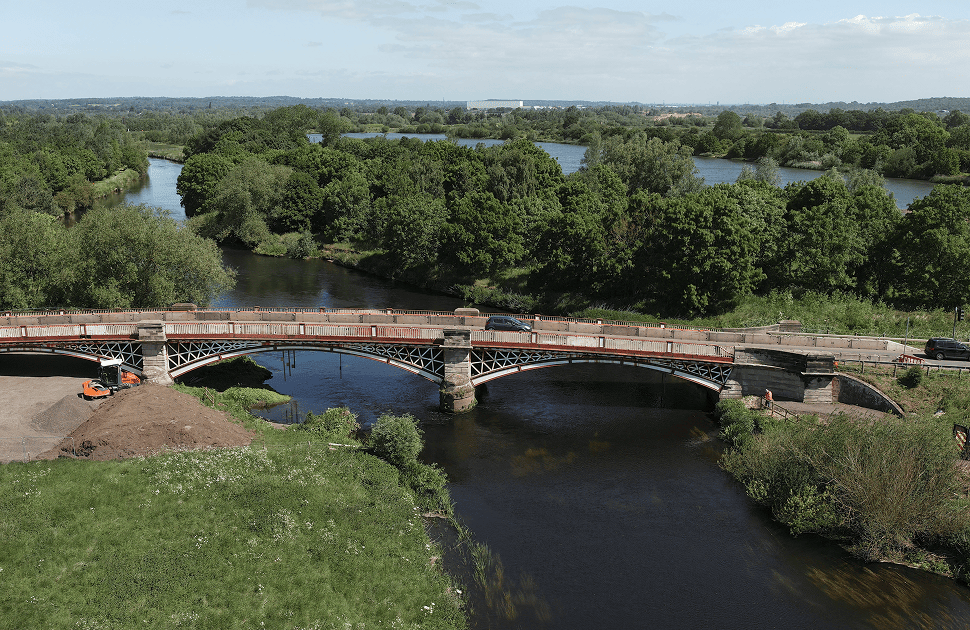
Chetwynd Bridge is a three-arch, Grade II* listed cast-iron bridge in Staffordshire, UK, and is the largest pre-1830 cast-iron arch bridge in England and the second largest in the world. It was built in the early 19th century and is one of the most significant examples of cast-iron arch bridge construction in the world. Since it was restored, including a repair of the ironwork and coating system, the Staffordshire County Council (SCC), with Amey as the asset manager, has carried out a structural assessment of the bridge. This evaluation was conducted by Amey Consulting, including load testing and vision-based sensing systems, to measure movement. After analysing the data, backed up by finite element analysis, Amey concluded that the cast-iron arches were being subjected to loads that exceed their capacity, resulting in a load restriction of 7.5 tonnes.
To gain a better understanding of the structural response of the bridge when in operation, Amey recommended to SCC to involve its supply chain partner, Terra Measurement. This partnership led to the establishment of a structural monitoring scheme, designed to better understand the bridge's behaviour under live traffic loads, as well as to preserve the bridge's heritage and architectural value.
UK-based consultancy Terra Measurement, which is a specialist in geospatial surveying and structural monitoring of complex systems, was engaged to develop the monitoring system. One of the project's requirements was that the monitoring system must be non-invasive, reversible and aesthetically unobtrusive. The monitoring system required a reliable long-term performance solution that would not affect the bridge structure in any permanent way, or cause damage to the historic structure.
To meet these criteria, Terra Measurement used a consultancy-driven, technology-enabled approach by choosing wireless structural health monitoring devices from Move Solutions. Move Solutions specialises in the development of wireless monitoring technologies for civil infrastructure and built assets with a focus on non-invasive installation, long-term operational independence and cable-free installation. They are complemented by remote data management via the MyMove platform. During the monitoring project, Move Solutions conducted modal frequency analysis on the vibration measurements from a series of accelerometers, and Terra Measurement reviewed the results for the client.
This partnership effectively leveraged Terra Measurement's skills in monitoring strategy, installation planning and interpretation for a client, with Move Solutions' expertise in sensor technology, data handling, and analysis.
Monitoring Strategy and Heritage Constraints
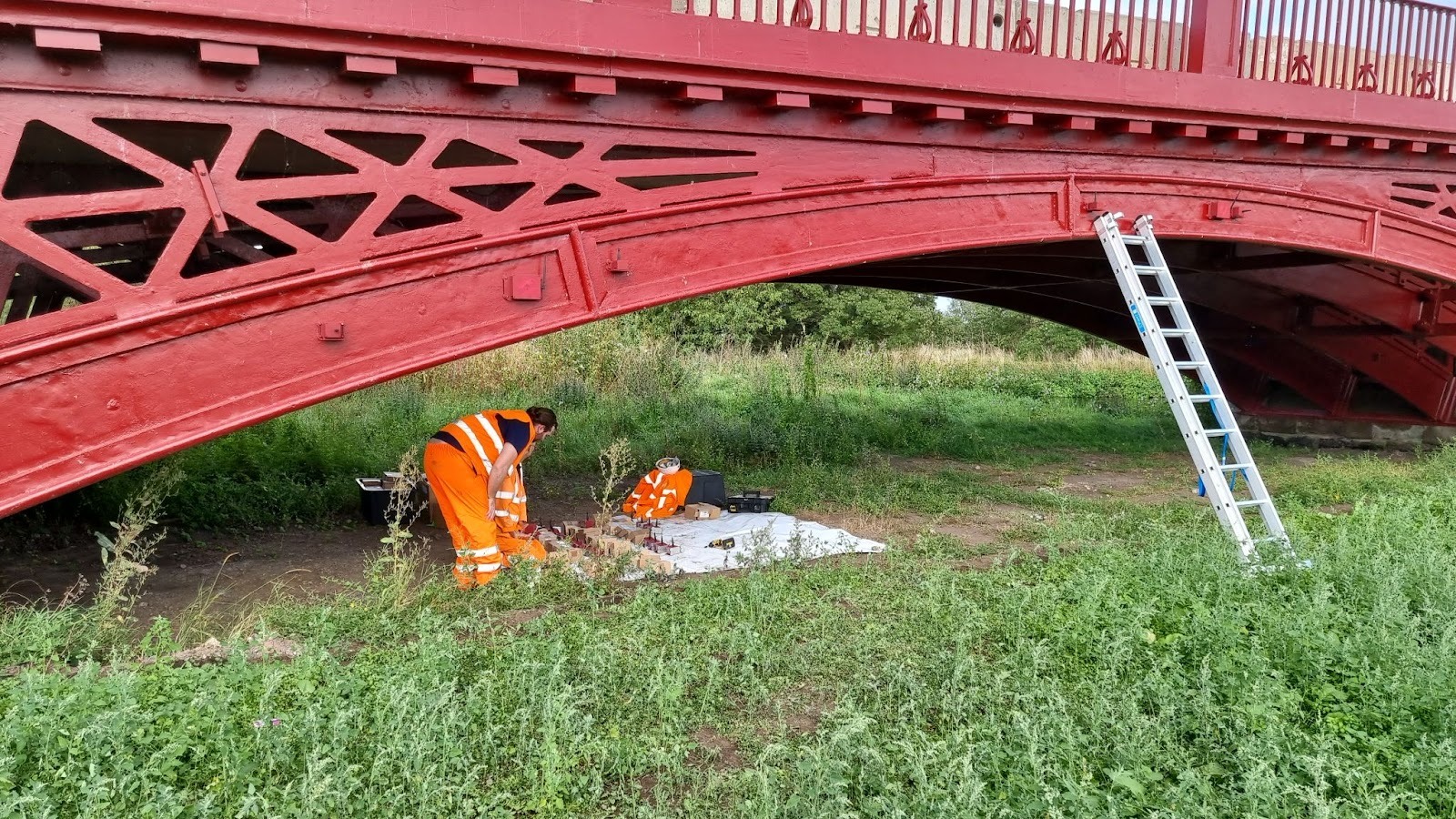
Prior to defining the monitoring strategy, Terra Measurement undertook a detailed engineering assessment and site inspection to establish the most important parameters to be monitored, and to understand the constraints that exist due to the bridge’s heritage status, environment and usage. This assessment paid special attention to the dynamic response of the cast-iron arches to traffic loading, as well as environmental effects from temperature variations and possible flooding from the river.
On the basis of this assessment, Terra Measurement established the monitoring goals, sensor locations, monitoring strategy and installation methods in consultation with SCC and Amey. The monitoring approach was formulated to deliver reliable and useful information on the bridge’s performance, while remaining fully compliant with the heritage and environmental constraints. These include a strict no-drill, no-bond, no-permanent-attachment policy, as well as the bridge's appearance should remain unchanged.
Technology Partnership and System Configuration
The new monitoring system was set up to monitor the dynamic performance of one arch of the bridge due to the effects of traffic and other environmental factors. The measurements involved vibration, displacement and tilt, supplemented with video monitoring for correlation with traffic activities.
The monitoring system is an all-wireless sensor network without the need for cables and complex installation.
The system comprises:
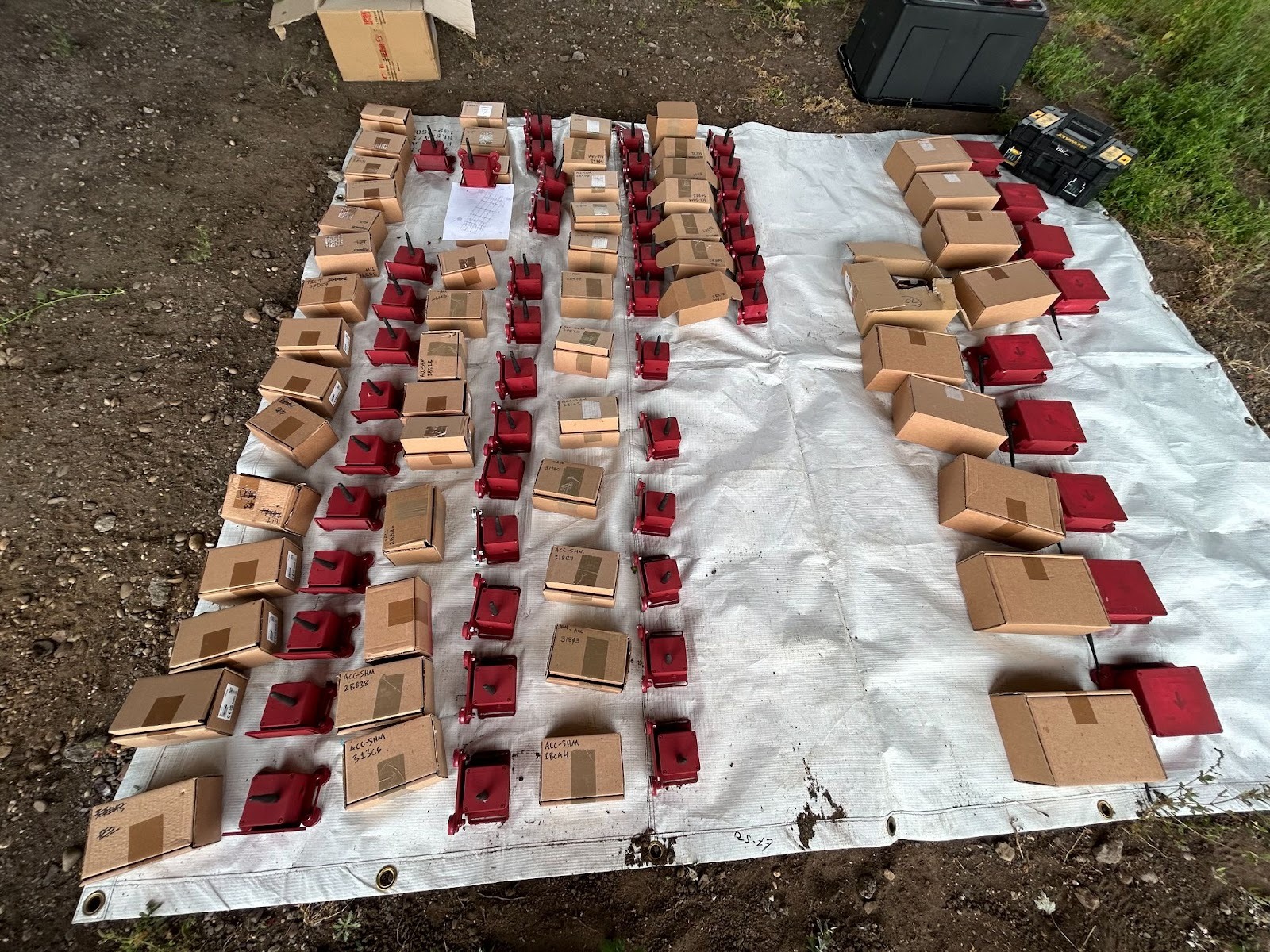
- 36 wireless triaxial accelerometers for vibration and modal analysis
- 9 dynamic displacement sensors for tracking displacements
- 15 wireless tiltmeters for angular measurements
- 2 gateways for local and remote data collection
- 3 cameras for simultaneous video recording
Move Solutions provided the monitoring equipment and the MyMove system to allow monitoring, remote access and storage of data. Move Solutions performed Modal frequency analysis on vibration data from the accelerometers, which was delivered via the MyMove system, creating a reference data set. Terra Measurement then provided technical assessment and interpretation to the client.
Installation Methodology
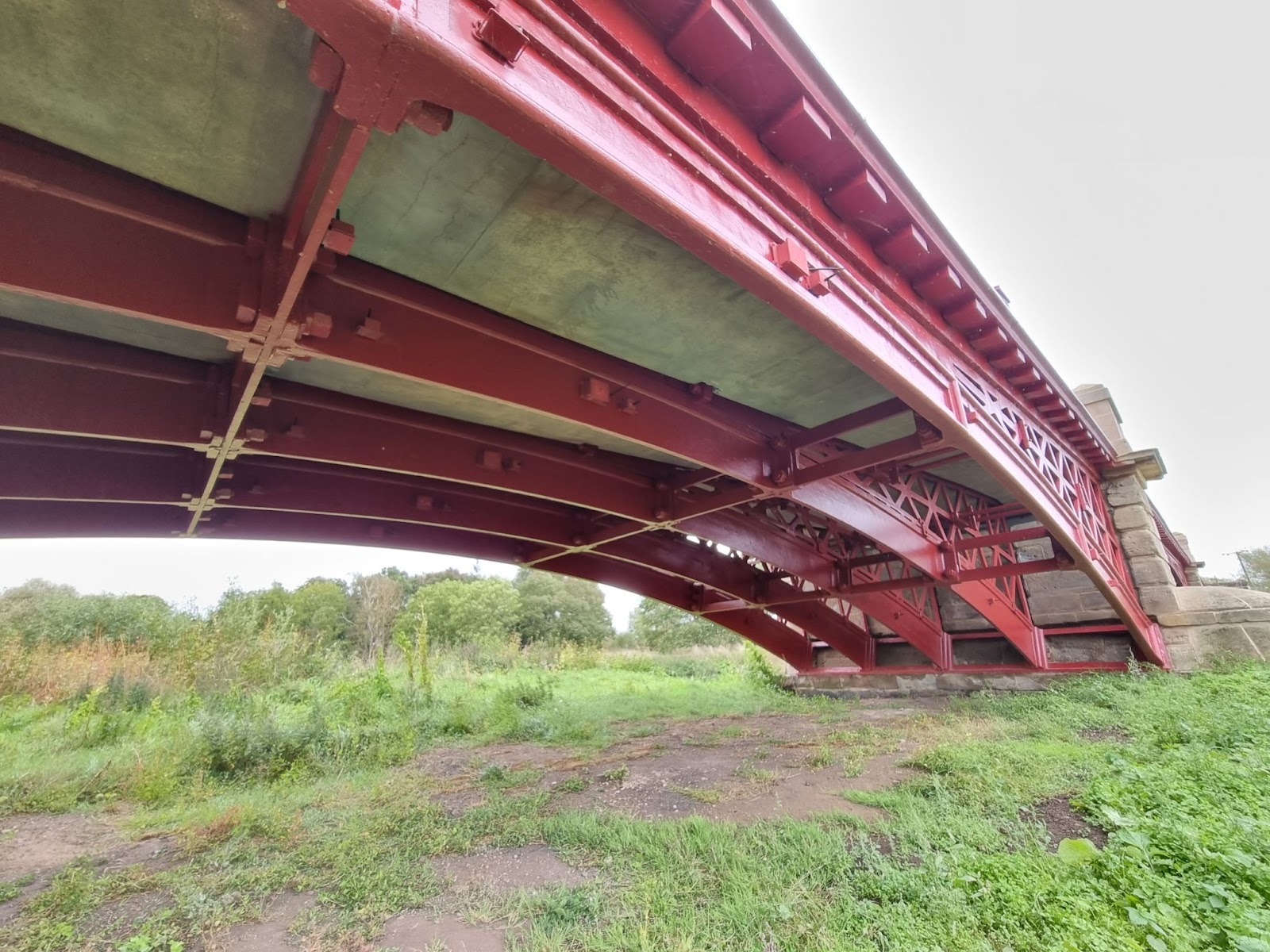
Heritage constraints were significant in how the installation was achieved. It was not allowed to drill, bond or fix anything in place; everything had to be removable. Furthermore, as the bridge is over a flood-prone river, the equipment was installed well above historical flood limits.
Terra measurement installed all sensors using non-invasive magnetic mounting systems. This ensured robust mechanical attachment to the cast-iron structure, but left it reversible. It also facilitated accurate vibration data transfer without altering the structure or causing damage. The mounting arrangements were tested to ensure they were vibration-, temperature-, and weather-resistant before being installed.
Maintaining the aesthetic integrity of the bridge was also important. The sensors were painted to blend with the bridge's cast-iron structure, making them less visible and meeting heritage authority standards. This enabled ongoing monitoring without compromising the visual appeal of the bridge.
The sensors were installed without traffic disruptions, scaffolding, or modifications. Magnetic mounting allowed quick placement and real-time signal testing and wireless calibration allowed pre-calibration.
Power Supply and Data Management
Powering monitoring systems for heritage buildings can be challenging. Solar power was not allowed because of the effect on the structure's appearance and new wiring was also not allowed. Instead, the system was linked to a 24-volt street-lighting circuit, which recharges a battery, providing power during occasional outages. This approach guarantees robust operation while avoiding physical and maintenance issues.
Monitoring data is wirelessly reported to the MyMove cloud service using cellular gateways, enabling real-time data access, automatic notifications when thresholds are breached and secure data storage for future trend analysis.
Acceleration, displacement and tilt data are correlated with video footage, allowing direct comparison of structural response with vehicle crossings. This combined data set facilitates quantitative, objective engineering evaluation without the need for regular inspections.
Outcomes and Engineering Value
The monitoring system has captured the dynamic response of the chosen arch since its installation in September 2023. This has included the detection of all vehicle crossings, including the occasional overweight vehicles that pose a risk to cast-iron bridges.
Modal analysis data has been used to define the dynamic behaviour of the structure, allowing changes in behaviour to be monitored and assessed. By continuing to analyse the data, Terra Measurement has detected changes in structural behaviour that may not be evident in a visual inspection.
These insights are a powerful resource for SCC and Amey in supporting asset management strategies, maintenance strategies and preservation strategies. The monitoring information supports decision-making, especially in the consideration of interventions, even for structures in apparent good health.
Engineering Significance
The Chetwynd Bridge project highlights the power of continuous, non-invasive structural monitoring for historic structures. Through a clear monitoring strategy and strong stakeholder collaboration, vibration monitoring with advanced techniques can be used to provide high-quality engineering data while preserving heritage integrity.
Lessons from the project include:
- Magnetic mounting is suitable for measuring vibration in metallic heritage structures
- Designing for visual continuity in heritage structures is crucial
- Leveraging existing power systems enables stand-alone operation
- Wireless systems ease installation and ongoing maintenance
- Technology platform notifications can alert to potential damage caused by excessive loads
- Continuous monitoring is more informative than inspections
- Past information can inform predictions of future behaviour
This research provides a precedent for other monitoring programs for historic bridges and other structures in the world.
Conclusion
The case study of Chetwynd Bridge shows how a technology-based approach by consultants can preserve a heritage asset. Terra Measurement's approach to monitoring and its execution, and Move Solutions' non-invasive wireless sensors, MyMove monitoring platform and data analysis have delivered a comprehensive, fully non-invasive monitoring system that delivers on heritage, operational and engineering objectives. The partnership between the two companies has been successful on other infrastructure projects.
The Chetwynd Bridge project offers an important example of the monitoring of historic bridges and protected infrastructure around the world, showing that it is possible to gain preservation and high-quality structural monitoring outcomes.
There are no comments yet!