Table Of Content
1. Why Asset Integrity Management Matters for Industrial Safety
2. Core Components of an Asset Integrity Management System
- 2.1 Risk Assessment
- 2.2 Inspection and Testing
- 2.3 Maintenance Planning
- 2.4 Performance Monitoring
- 2.5 Compliance Management
3. Key Benefits of a Digital Asset Integrity Management System
4. Asset Integrity vs Maintenance Management
5. Industries That Rely on Asset Integrity Management Systems
6. Conclusion
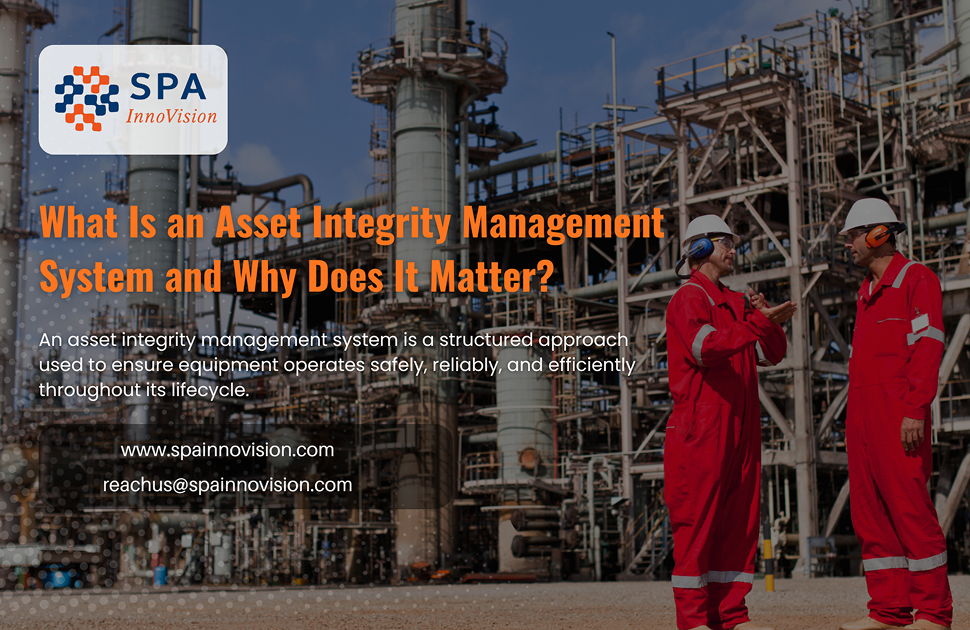
In industries such as oil & gas, construction, power generation, and manufacturing, equipment reliability is critical for safe operations. An Asset Integrity Management System (AIMS) is a structured framework that ensures industrial assets operate safely, efficiently, and reliably throughout their lifecycle.
It combines inspection processes, maintenance planning, risk analysis, and compliance monitoring into one integrated system. Instead of reacting to equipment failures, organizations use asset integrity management to prevent incidents before they occur.
Why Asset Integrity Management Matters for Industrial Safety
Equipment failures can lead to serious consequences, including safety incidents, environmental damage, operational downtime, and financial losses.
An asset integrity management system helps organizations:
- Reduce operational risks
- Improve equipment reliability
- Ensure regulatory compliance
- Protect workers and infrastructure
By shifting from reactive repairs to preventive and predictive strategies, companies can maintain stable and safer operations.
Core Components of an Asset Integrity Management System
1. Risk Assessment
Risk assessment identifies potential failure points in equipment. Teams evaluate the likelihood and impact of failures to prioritize inspections and maintenance tasks.
Risk-based inspection software helps organizations schedule inspections based on risk levels rather than fixed timelines.
2. Inspection and Testing
Regular inspections help detect early signs of corrosion, fatigue, or damage. Non-destructive testing methods allow engineers to evaluate equipment without disrupting operations.
Digital inspection systems store findings and maintain traceable inspection records.
3. Maintenance Planning
Maintenance management tools schedule preventive maintenance activities based on equipment condition and usage.
Predictive maintenance software analyzes historical data to identify patterns that may indicate potential equipment failure.
4. Performance Monitoring
Digital dashboards and monitoring systems track equipment performance in real time. Sensors and monitoring tools provide alerts when abnormal conditions appear.
This enables faster response to potential issues.
5. Compliance Management
Industrial compliance systems ensure that inspections, repairs, and maintenance activities meet regulatory requirements. Digital documentation simplifies audits and reporting.
Key Benefits of a Digital Asset Integrity Management System
Organizations that implement digital asset integrity systems gain several advantages:
- Improved workplace safety
- Reduced equipment downtime
- Lower maintenance costs
- Stronger regulatory compliance
- Better visibility into asset performance
Centralized dashboards also help managers track inspection data and asset health across multiple sites.
Asset Integrity vs Maintenance Management
Maintenance management focuses mainly on scheduling repairs and preventive maintenance tasks.
Asset integrity management takes a broader approach. It includes risk assessment, inspection programs, compliance tracking, and lifecycle planning.
In simple terms, maintenance is one part of a larger asset integrity management strategy.
Industries That Rely on Asset Integrity Management Systems
Asset integrity systems are widely used in industries where equipment reliability is critical, including:
- Oil and gas
- Petrochemical plants
- Power generation facilities
- Marine operations
- Manufacturing plants
- Construction projects
These industries rely on structured inspection and monitoring systems to maintain safe operations.
Conclusion
An Asset Integrity Management System plays a crucial role in maintaining safe and reliable industrial operations. By integrating inspections, risk analysis, maintenance planning, and digital monitoring tools, organizations can detect issues early and prevent costly failures.
Companies that adopt digital asset integrity strategies in 2026 will achieve better safety performance, improved compliance, and long-term operational resilience.