
Requirement
The client, based in Southern Ireland, wanted to find a different way of doing the conventional radiographic testing and wanted to put in place an automated encoded ultrasonic inspection system that meets BS EN ISO 13588. The decision was made due to the growing site restrictions being imposed on their NDT contractor during onsite industrial radiography operations.
The client sought a more flexible inspection method that would be safer and meet the same weld examination criteria that would not interfere with the current site operations and required radiation safety precautions, restricted work areas, and additional operational controls associated with using radiographic testing.
Solution
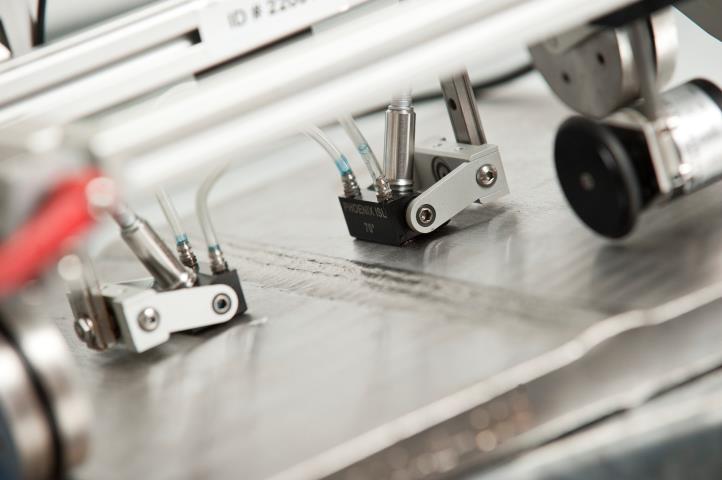
Time of Flight Diffraction (TOFD) was selected as the most reliable of the Automated Ultrasonic Testing (AUT) techniques for this application due to its ability to be a very effective screening method. TOFD can also quickly survey welds and provide very accurate sizing and positioning of defects found.
The client had a very broad spectrum of weld bevel types and sizes for which 2D radiography was challenging to detect planar defects. TOFD was chosen in particular due to its ability to detect and measure defects without any regard to their orientation in the weld. This was particularly beneficial for complex weld geometries where conventional radiography techniques may be limited.
A full validation process has been conducted as per BS EN ISO 13588 to ensure the compliance and reliability. Several welded test pieces with seeded defects were manufactured and inspected, scanned and analysed to successful completion during the qualification process. The validation proved acceptable for the TOFD system to be able to detect and characterise the discontinuities across the different weld types being used in the project.
The TOFD inspection procedure was developed by the Forth Inspection Service who also supervised the validation activities and remain technical support for the project. This support also featured offline Data interpretation and analysis through an exclusive Dropbox platform for secure data sharing and analysis.
The automated encoded ultrasonic system also enabled the recorded data to be digitally captured and stored for future traceability and review for the client. The coding function for scanning was essential for uniform coverage of the weld areas and to minimise human error for inspection activities.
Benefits
The use of an automated ultrasonic inspection method rather than radiography yielded a number of operational and technical benefits, such as:
- Reduced overall inspection time
- Removal of radiation hazards and limited exclusion areas
- No need for an extra radiation licence or special radiation safety staff.
- Correct size and flaw dimensions regardless of direction of flaw
- New flexibility in inspection for complex weld geometry.
- Data from the inspections are recorded digitally for later reference and review.
- Less impact on other construction site activities during inspection period
- Increased efficiency of the automated encoded scanning methods.
The successful use of TOFD allowed the client to maintain all inspection requirements and overcome the operational difficulties and problems that could arise in the onsite application of Radiographic testing.
Source: ForthInspection




There are no comments yet!